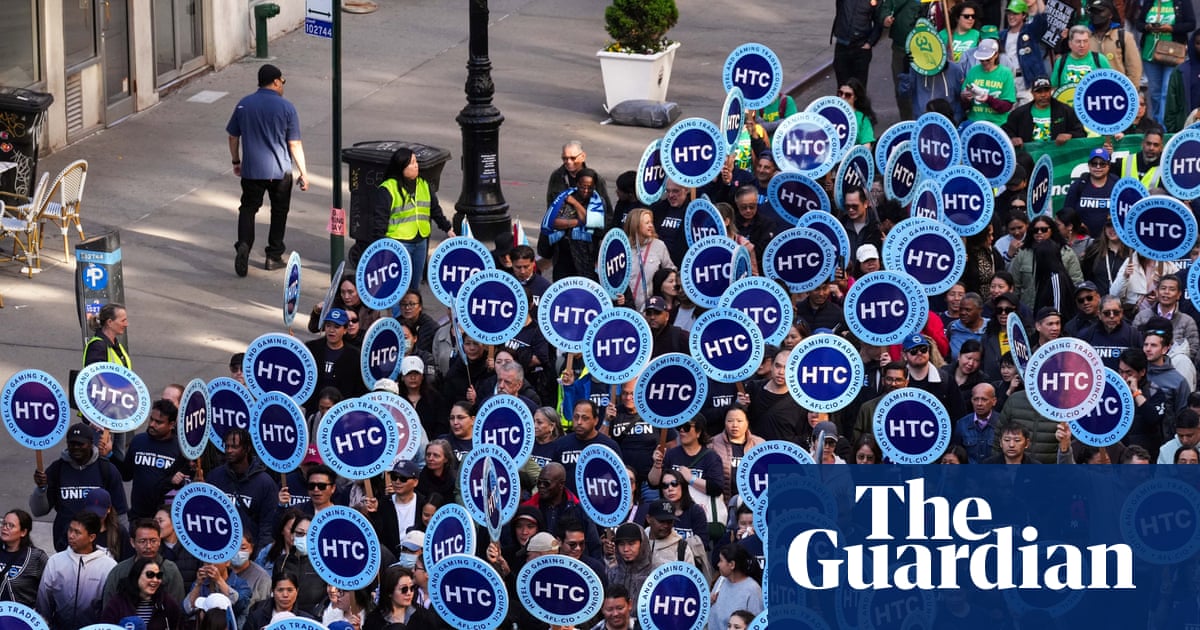
New York hotel workers secured an eight-year contract that lifts housekeepers' pay from nearly $40 an hour to more than $61 an hour, adds free family healthcare, higher pension contributions, and helps avert a potential strike during the FIFA World Cup. The deal is positive for labor peace and worker compensation, but it raises hotel operators' cost base and may force room rates higher in an already high-priced market averaging about $335 a night. Broader market impact should be limited, though the agreement reduces near-term operational risk for the city’s hotel sector.
This is a cost-push event with limited immediate operating leverage for quoted hotel REIT proxies because labor is only one leg of the margin stack and the bigger issue is demand elasticity. The more interesting second-order effect is that management teams now have cover to push rate architecture higher not just in New York, but as a benchmarking tool for other gateway cities; that creates a slow-burn inflation impulse for room rates across the urban leisure/corporate mix over the next 2-4 quarters.
The near-term loser is anyone reliant on high-occupancy, low-discount group bookings into the city during the World Cup window. If occupancy is still running soft into spring, rate hikes may not fully pass through, which means margin compression shows up first in labor-intensive full-service operators and second in adjacent vendors that depend on hotel throughput, including convention-related services and local experiential spend. That also raises the odds of promotional discounting later in the year if hoteliers overestimate event-driven demand.
The contrarian point: the market is likely overestimating how much incremental demand the World Cup contributes and underestimating how much of this agreement is already a symptom of weak pricing power rather than a catalyst for it. A deal that avoids disruption is actually negative for the strike-volatility trade, but positive for the "higher-for-longer room rates" thesis only if consumer demand proves sticky; otherwise the industry ends up with structurally higher fixed costs and no matching RevPAR uplift.
From a public-market angle, this is more relevant to hotel-asset owners and urban hospitality lenders than to broad consumer names. The biggest risk is a delayed demand reset after the event: if summer bookings fail to inflect, operators will have to choose between protecting occupancy and defending ADR, and that choice usually resolves in favor of occupancy, which compresses pricing into the back half of the year.
AI-powered research, real-time alerts, and portfolio analytics for institutional investors.
Request DemoOverall Sentiment
mildly positive
Sentiment Score
0.15
Ticker Sentiment
