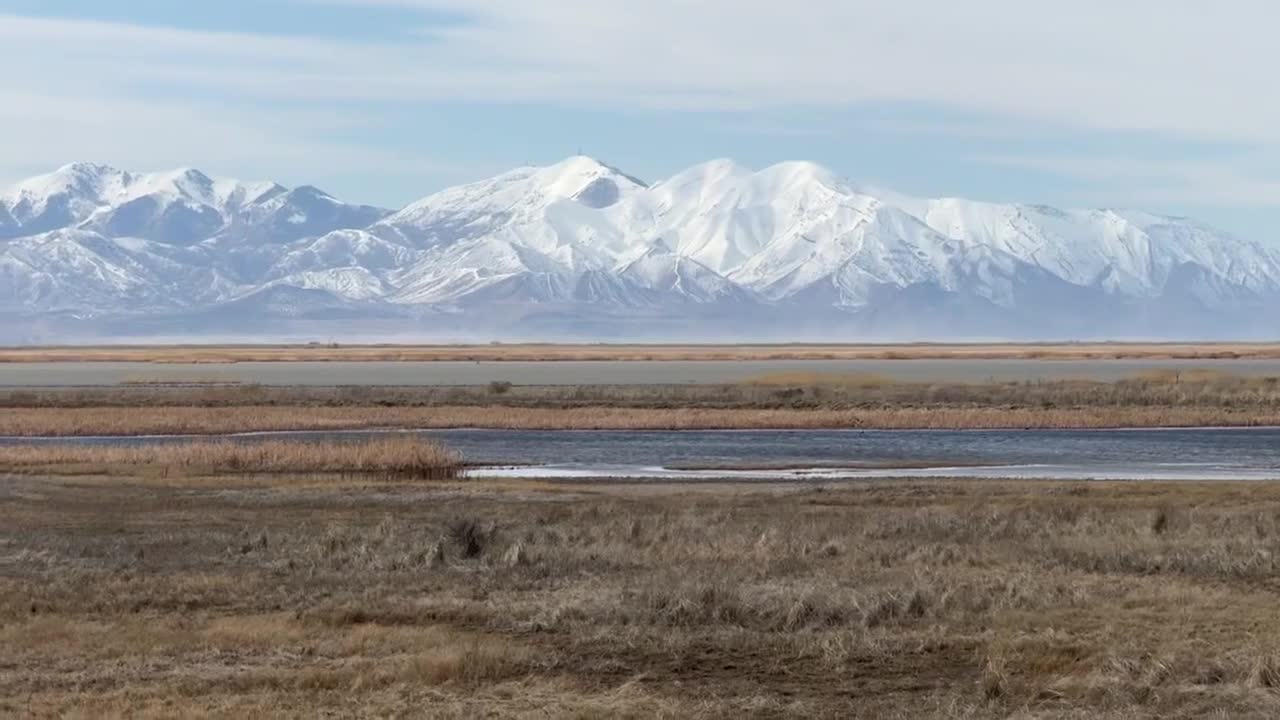
Discovery: University of Utah researchers identified a freshwater reservoir beneath the exposed Great Salt Lake bed between Antelope Island and Farmington Bay using airborne electromagnetic surveys; the reservoir's extent and volume remain unknown. The find could provide a new water source to help suppress windblown toxic dust (which can contain arsenic) affecting nearby communities, but researchers and the Utah Department of Natural Resources say extensive mapping, drilling decisions and additional funding are required before remediation can begin.
The immediate investable implication is a bifurcation between capital goods/service providers (geophysics, drilling, water-treatment engineering) and commodity extractors that rely on stable surface-water regimes. If state and municipal programs scale remediation across the basin, listed engineering and equipment vendors could see mid-single to low-double digit percentage revenue upside over 12–36 months from new contracts and follow-on maintenance programs, with outsized margin expansion from high-margin monitoring and consulting work.
Regulatory and operational execution are the dominant risks and will set timing: mapping and permitting cycles will likely take 6–24 months, while scalable drawdown or extraction strategies stretch to multiple years. Key reversal triggers include legal challenges to groundwater extraction, saline intrusion into shallow aquifers, or state policy shifts toward reallocating surface water instead of pumping, any of which would compress project IRRs and delay cash flows materially.
Second-order supply-chain effects favor local-capex suppliers and integrated service platforms over pure commodity producers: route-to-market advantages accrue to firms with land‑use, permitting, and remediation track records because fixed-cost mobilization and long-term O&M contracts create durable revenue streams. Conversely, miners and mineral processors face higher compliance costs and potentially lower throughput if mitigation reduces accessible acreage or raises royalties.
The consensus mistake would be to assume a near-term production miracle; the market should instead price optionality — pay for exposure to project awards and technology sales, not for speculative resource monetization. That suggests a barbell: concentrated exposure to engineered solutions with short contract lead times and a small, hedged exposure to any downstream commodity upside.
AI-powered research, real-time alerts, and portfolio analytics for institutional investors.
Request DemoOverall Sentiment
mildly positive
Sentiment Score
0.15
