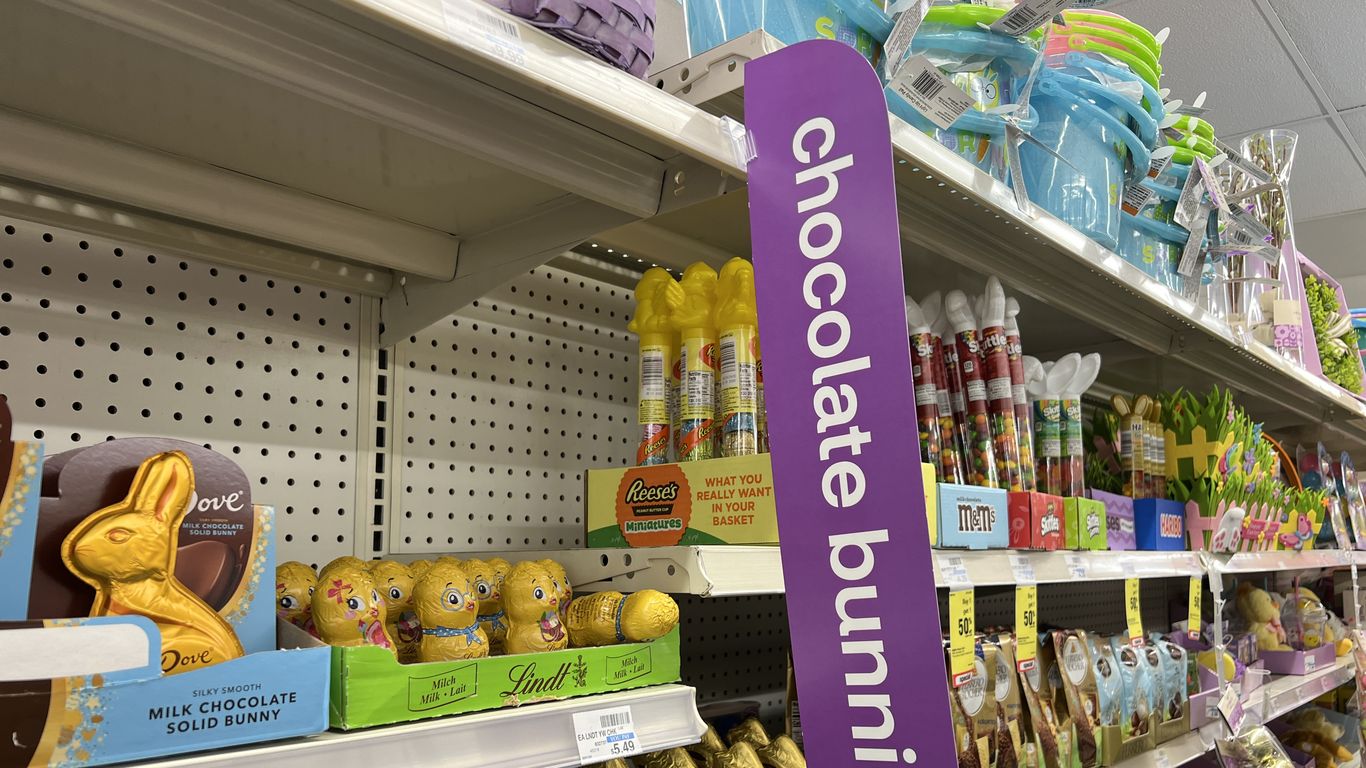
Cocoa fell from >$12,000/metric ton in late 2024 to roughly $3,000–$3,300 today, yet retail chocolate prices are ~14% higher year‑over‑year and firms raised prices up to 20% during the 2024–25 cocoa spike. A full Easter basket is up 71% over five years and consumers are expected to spend a record $24.9B this Easter, supporting demand despite input price declines. Major makers (Hershey, Mondelez) remain hedged above current cocoa levels and are working through higher‑cost inventory, so passthrough of lower cocoa costs is slow and margins are being protected. Supply is improving with a modest global surplus expected, so price relief could arrive later in 2026 but not immediately.
The key driver here is timing mismatch between input-cost normalization and retail pricing mechanics: manufacturers face multi-quarter hedges and finished-goods sitting in the supply chain, so margin and price adjustments operate on a 6–12 month cadence rather than in lockstep with spot cocoa. That lag creates a predictable window where consumer-facing companies either (a) defend margins through sustained higher shelf prices or (b) accelerate promotional activity to protect volume — the choice they make will determine who wins share in the next two retail seasons.
Second-order beneficiaries are private-label grocers and value confectionery makers that can reprice faster because they carry thinner, fresher cocoa exposure and can lean into SKU rationalization (smaller sizes, fewer SKUs) to optimize margin per shelf-foot. Conversely, pure-play chocolate companies with concentrated product portfolios and large US seasonal exposure are most vulnerable to volume loss and multiple compression if consumers down-trade or if promotional cadence steps up.
Tail risks cluster on supply-side shocks and hedge-roll dynamics: an adverse weather event in West Africa or slower-than-expected hedge roll-offs could force a sharp reversion in cocoa costs and reignite input inflation, compressing retail volumes further. On timing, expect most meaningful retail price and margin signals to materialize over the next two seasonal milestones (mid-year promotional cycle and Q4 seasonal), not instantly.
For risk management, prioritize strategies that express relative exposure (pure-play confectionery vs diversified snacking/retail) and maintain optionality around seasonal catalysts. Small, asymmetric commodity option positions can act as low-cost hedges against supply shocks while equity pairs capture the secular move in private-label share and promotional intensity.
AI-powered research, real-time alerts, and portfolio analytics for institutional investors.
Request DemoOverall Sentiment
mildly negative
Sentiment Score
-0.20
Ticker Sentiment
