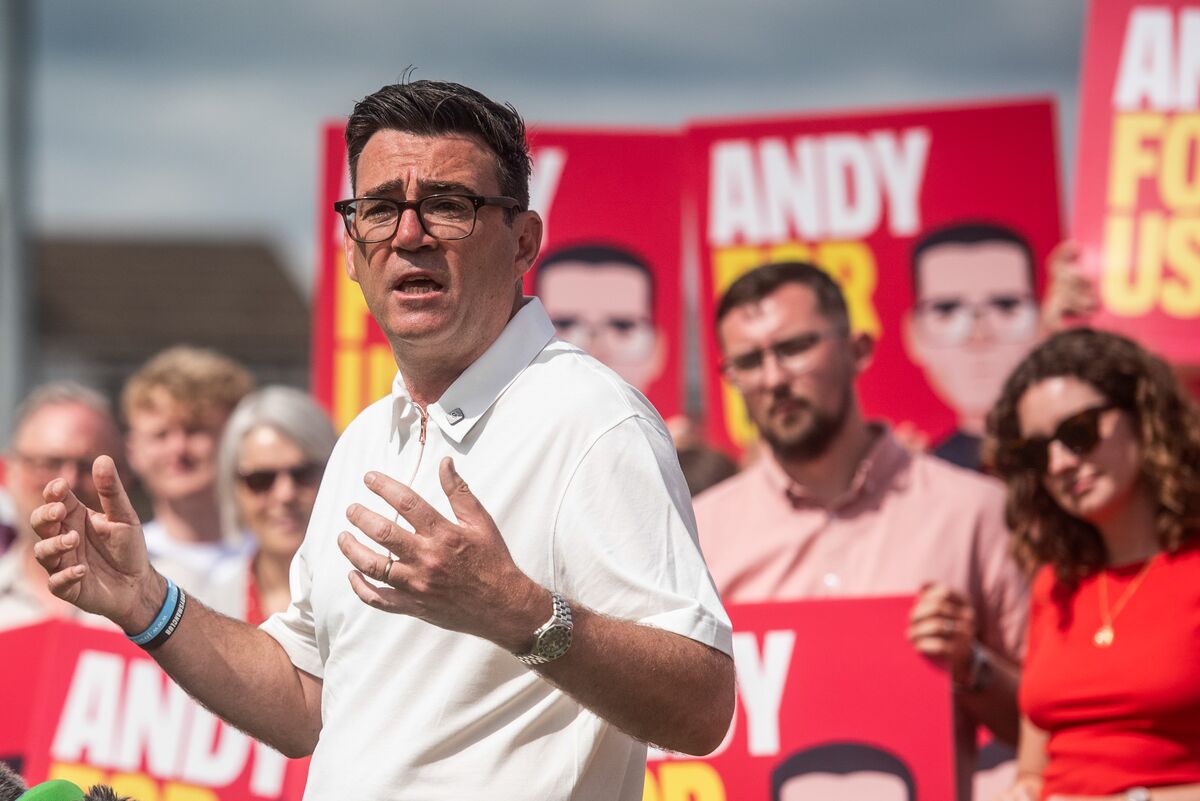
Andy Burnham is poised to become UK prime minister in less than a month, setting up a leadership transition amid several major geopolitical flashpoints. The article highlights Britain’s exposure to support for Ukraine, deterrence of Russia, securing the Strait of Hormuz, and managing tensions with President Trump over the transatlantic alliance. The tone is cautious and reflects elevated foreign-policy risk rather than an immediate market-moving event.
The market implication is not the leadership change itself but the implied policy gap: a new UK PM with weak foreign-policy priors tends to outsource crisis management to the civil service and allies, which lowers decision velocity exactly when escalation cycles are shortening. That typically benefits defense primes, intelligence/communications contractors, and firms exposed to coalition rearmament budgets, while punishing domestically focused UK cyclicals if headlines force a risk premium into sterling and gilt markets. The first-order move may be modest, but the second-order effect is a higher probability of episodic defense-spending repricing over the next 3-12 months. The most actionable tail risk is a credibility test in one of the flashpoints the UK is expected to touch: any Iran/Hormuz or Ukraine shock would expose whether the incoming government can translate rhetoric into logistics, munitions, and naval assets. If it cannot, the market will likely price a larger burden-sharing gap onto the US and select EU allies, which is structurally bullish for U.S. defense and cyber names but negative for European sovereign risk sentiment. A weaker UK strategic posture also increases the chance of procurement delays, which can create sharp relative moves between headline beneficiaries and actual delivery-capable contractors. Consensus likely underestimates how much this story is about institutional capacity rather than ideology. A leader perceived as untested on foreign affairs may be more constrained by bureaucracy, which can reduce policy surprise but increase the odds of a slow-burn deterioration in alliance credibility—something markets often misprice until a crisis forces action. The overdone view would be a straight-line bearish read on the UK; the more nuanced trade is that geopolitical weakness can coexist with higher domestic defense outlays, even if growth-sensitive UK assets struggle in the interim.
AI-powered research, real-time alerts, and portfolio analytics for institutional investors.
Request DemoOverall Sentiment
mildly negative
Sentiment Score
-0.15
