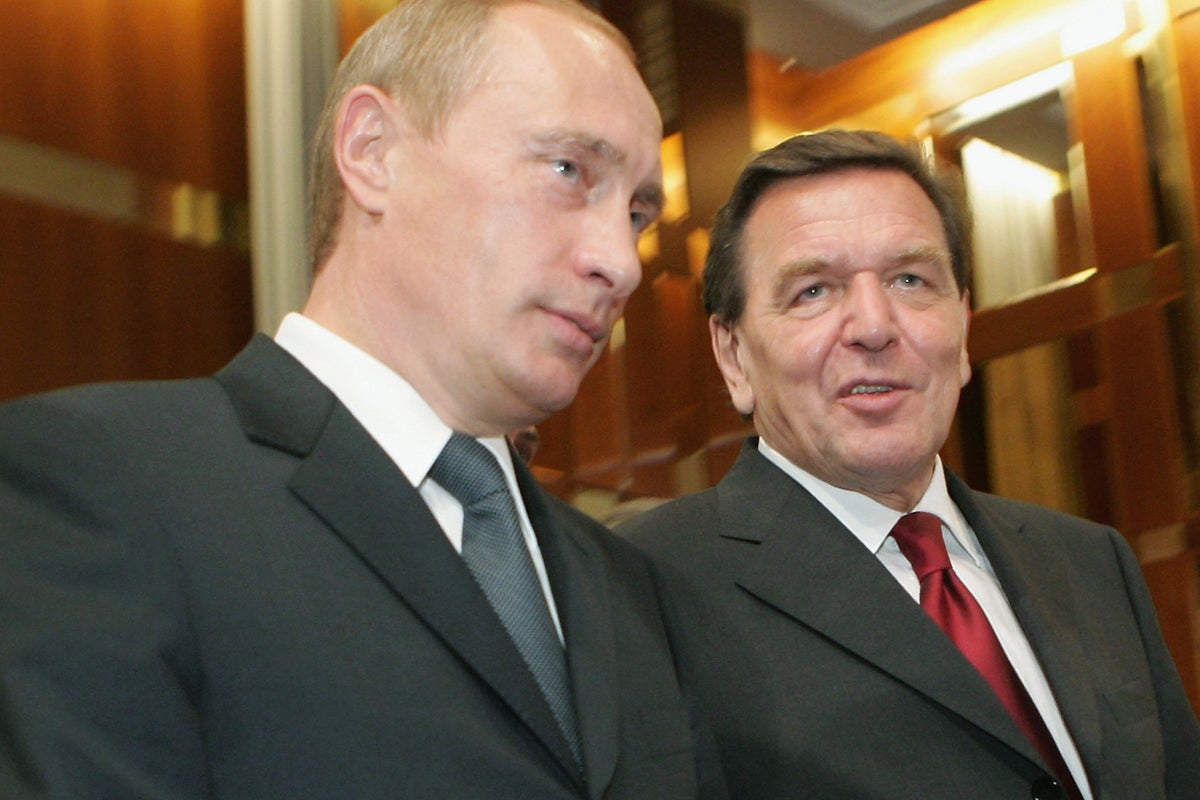
Putin said he would be open to reopening communication with Ukraine and Europe, preferably mediated by former German chancellor Gerhard Schröder, but European officials quickly rejected the idea and stressed Schröder is too close to Putin to be an impartial broker. The article highlights Schröder’s long ties to Russian energy, including Nord Stream and Rosneft, and the political fallout from those links after Russia’s invasion of Ukraine. The market impact is mainly through geopolitics and European security, rather than direct financial data.
The market implication is not a direct peace-dividend trade, but a signal that Moscow is trying to reframe the diplomatic channel in a way that splits Europe from the US and tests whether German political fragmentation can be exploited. That matters because even a low-probability negotiation headline can compress the geopolitical risk premium in European power, gas, and defense names for days, while the broader supply curve for LNG and crude is unlikely to change without verifiable enforcement mechanisms.
The second-order effect is on European industrials and utilities with the highest exposure to energy normalization narratives. If the market starts pricing even a modest chance of de-escalation, the beneficiaries are the most energy-sensitive cyclicals and rate-sensitive domestic EU names; the losers are defense contractors and parts of the LNG value chain that have been trading on a durable rearmament and reconfiguration thesis. But the structural setup still favors caution: any “mediation” headline without Ukrainian and EU buy-in is more likely to generate a short-lived risk-on squeeze than a durable policy reset.
The contrarian read is that this is less about peace and more about bargaining leverage ahead of winter and post-war security discussions. Russia benefits from signaling optionality while keeping pressure on European cohesion, and that means headline risk is asymmetric: upside for European risk assets is capped, while downside from renewed escalation remains real. The right trading response is to fade overly aggressive peace pricing unless there is concrete evidence of corridor/security guarantees or sanctions relief, which would be the only catalyst strong enough to justify a multi-week repricing.
AI-powered research, real-time alerts, and portfolio analytics for institutional investors.
Request DemoOverall Sentiment
mildly negative
Sentiment Score
-0.15
Ticker Sentiment
