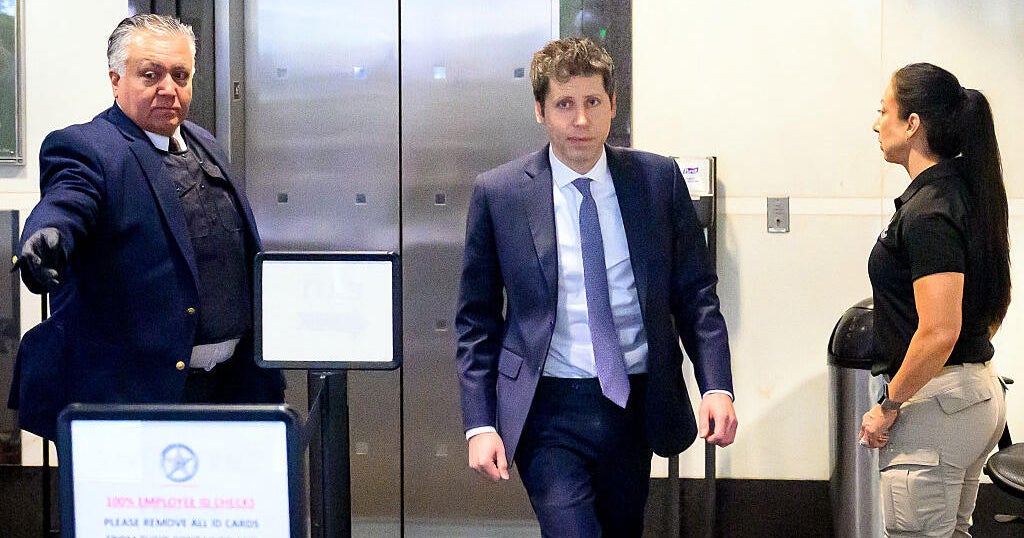
Sam Altman testified in a federal trial brought by Elon Musk, defending his leadership and denying testimony that portrayed him as dishonest. The lawsuit centers on OpenAI’s shift from nonprofit roots to a capital-intensive business now valued at $852 billion, with Musk seeking damages and Altman’s ouster. The case adds governance and reputational risk for OpenAI, Musk’s xAI, and the broader AI sector as major IPO plans loom.
The immediate market read is not about courtroom optics; it is about governance discount. For AI private markets and any pre-IPO process, the bigger second-order effect is that the “founder premium” is becoming harder to underwrite when board independence and disclosure quality are publicly litigated. That should modestly widen the dispersion between AI platforms with cleaner governance and those still dominated by personality risk, especially as capital markets prepare to price multiple large AI IPOs over the next 6-18 months.
For TSLA, the direct earnings impact is negligible, but the narrative spillover is not. Musk’s bandwidth is now exposed as a real constraint across multiple capital-intensive bets, and public scrutiny of his control style raises the probability that investors demand a higher governance discount across his ecosystem, especially if a SpaceX IPO window opens in the next few months. The risk is not an immediate fundamental hit; it is a valuation multiple headwind if the market starts to treat Musk-led entities as litigation-prone, board-fragile, and harder to diligence.
The contrarian angle is that the market may be overestimating the probability of a damaging verdict while underestimating how much the process itself benefits OpenAI structurally. Even a messy trial can function as a moat if it forces rivals to spend management time and investor attention on governance theater rather than product velocity. That said, the near-term public perception overhang on AI is real: if this trial reinforces “unstable founder politics,” it could slightly delay institutional comfort with the first wave of AI IPOs and cap enthusiasm for the whole cohort.
The cleanest trade is to fade the governance overhang on Musk assets only tactically, not structurally. The bigger opportunity is in relative positioning: firms with clearer boards and less founder entanglement should command a premium when the IPO calendar opens, while names tied to litigated governance stories may see a temporary multiple compression before fundamentals catch up.
AI-powered research, real-time alerts, and portfolio analytics for institutional investors.
Request DemoOverall Sentiment
mildly negative
Sentiment Score
-0.15
Ticker Sentiment
