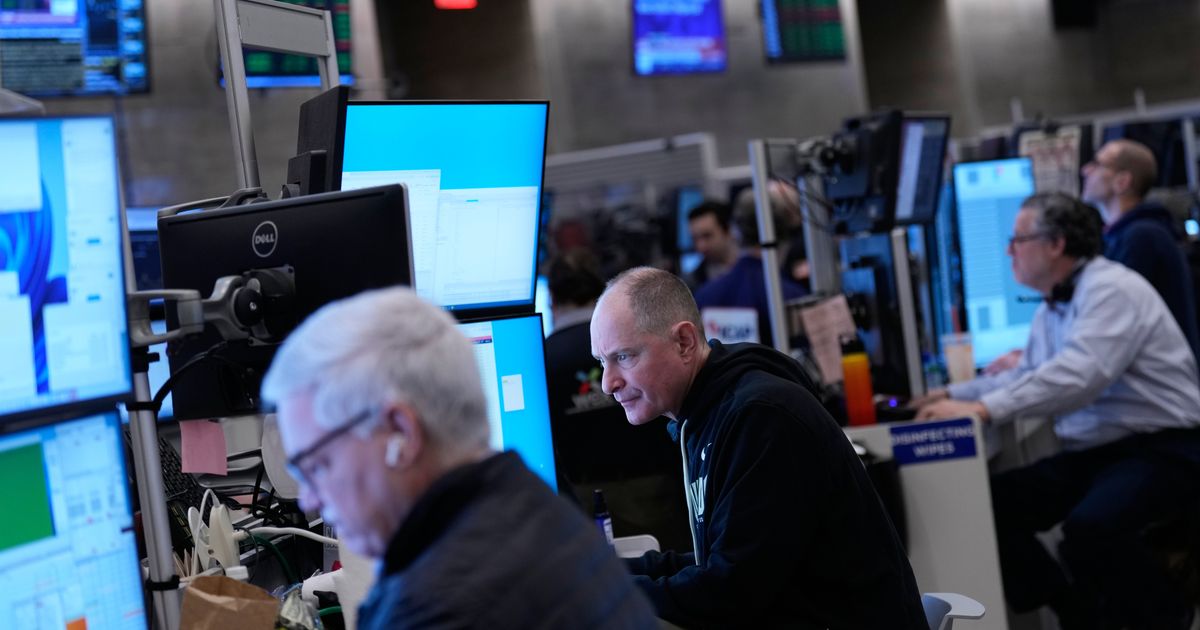
The DOJ subpoenaed the Federal Reserve and threatened a criminal indictment tied to Chair Jerome Powell’s testimony and building renovations, prompting Powell to warn the action undermines Fed independence; Powell’s term ends in May and the White House is publicly pressing for changes. Markets moved risk-off: the S&P 500 slipped 0.3% from its record, the Dow fell ~432 points (0.9%) while the Nasdaq was roughly flat; safe havens like gold rose and the dollar weakened versus the euro and Swiss franc. The 10-year Treasury yield ticked up to 4.19% and US financials saw sharp losses (Capital One -6%, American Express -4%) amid additional White House proposals to cap credit card interest at 10% for one year. The episode raises the odds of politicized pressure on monetary policy, increasing policy risk and volatility for rate-sensitive assets and financials.
Market structure: Immediate winners are traditional safe-havens (gold/GLD, CHF, EUR) and volatility instruments; losers are consumer-credit dependent names (COF -6% intraday, AXP -4%) and the broad financial complex (XLF). Political risk to Fed independence raises the political risk premium: expect episodic equity drawdowns of 2-6% on headline shocks and >20% single-name moves for exposed lenders if rule changes materialize within 3–6 months.
Risk assessment: Tail risks include a forced Powell removal or a legislative 10% cap on card APRs — both low probability (<25%) but high impact (could cut COF/AXP card NIMs by 200–400bps and reduce EPS 10–25% over 12 months). Near-term (days) volatility spikes are most likely; 1–3 month horizon is dominated by regulatory/DOJ headlines; 3–12+ months the key variable is term premium: Fed credibility loss could add +30–75bp to 10-year yields.
Trade implications: Favor convex downside protection and relative-value shorts in card-specialists vs diversified banks. Buy short-dated volatility (1-month VIX calls or 20–30% OTM call spreads) and purchase 1–3% portfolio exposure to GLD and long EURUSD as insurance. Reduce XLF weight and shift 2–4% into TLT for duration ballast if headlines escalate.
Contrarian view: The panic may be overdone — past political tensions (2018) were transitory and Fed operations continued; regulatory caps face strong industry and GOP resistance, so drawdowns could be buying opportunities. Look to re-enter selective financial longs on 15–25% single-name drawdowns or if DOJ action is dropped; use pair trades to capture relative weakness.
AI-powered research, real-time alerts, and portfolio analytics for institutional investors.
Request DemoOverall Sentiment
moderately negative
Sentiment Score
-0.50
Ticker Sentiment
