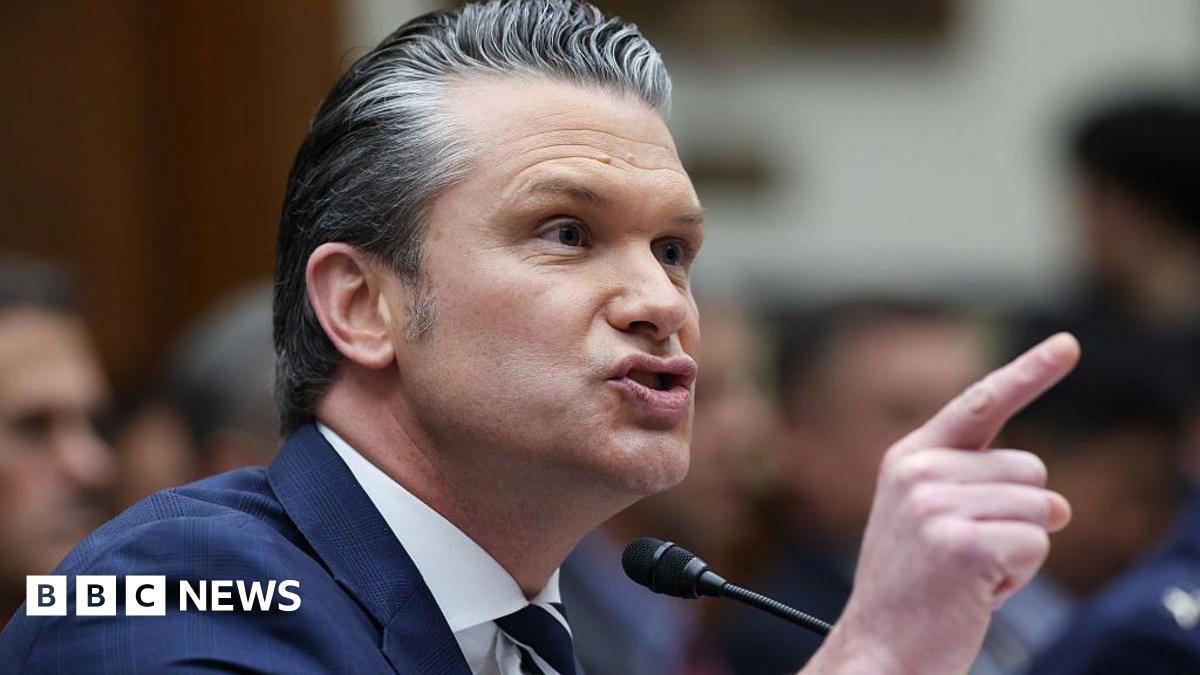
US operations tied to the Iran war have cost $25bn so far, with most spending on munitions and equipment replacement, while the White House is seeking a $1.5tn defense budget request. The hearing highlighted partisan divisions over the conflict, including criticism of the war's legality and accountability, alongside Republican support for continued pressure on Iran. The conflict's broader market implications include higher oil prices and knock-on effects for other goods, while a school strike remains under investigation.
The immediate market read is not the ceasefire itself, but the policy regime it legitimizes: a larger, faster defense-spending cycle with less congressional friction and more tolerance for emergency procurement. That favors prime contractors, munitions suppliers, electronic warfare, and logistics vendors over platforms that rely on multi-year budget certainty; the second-order effect is a re-rating of backlog quality and production bottlenecks, not just top-line growth. The funding mix also matters: replacement and replenishment spend tends to compress margins for OEMs in the short run, but it improves visibility for suppliers with scarce capacity and high switching costs. The bigger underappreciated loser is not defense alone but margin-sensitive end markets that are already absorbing higher input costs from oil volatility. Even a temporary spike in energy can hit airlines, chemicals, trucking, and consumer discretionary through fuel and packaging pass-throughs, while inflation optics can keep rates higher for longer if the conflict widens or shipping lanes become riskier. That creates a subtle cross-asset setup where defense can outperform even if broad equities wobble, because the macro shock is stagflationary rather than growth-positive. The political dynamic raises the tail risk that a future escalation forces a second wave of spending before the first wave is digested, which would be bullish for select defense names but negative for fiscal-duration trades. Conversely, if ceasefire talks hold and investigation headlines fade, the premium for urgency may decay quickly over 4-8 weeks, especially if Congress resists a blank-check budget. The market may be overpricing durable escalation while underpricing how fast political attention shifts once the immediate shock passes. Contrarian angle: the most attractive trades may be in the suppliers that benefit from replenishment without headline dependence, rather than the obvious national champions already owned as geopolitical hedges. If the conflict remains contained, the rerating should migrate from 'war winners' to 'capacity-constrained enablers' and energy beneficiaries that gain from higher volatility, while the broader market starts to fade the defense premium as the ceasefire narrative stabilizes.
AI-powered research, real-time alerts, and portfolio analytics for institutional investors.
Request DemoOverall Sentiment
neutral
Sentiment Score
-0.10
