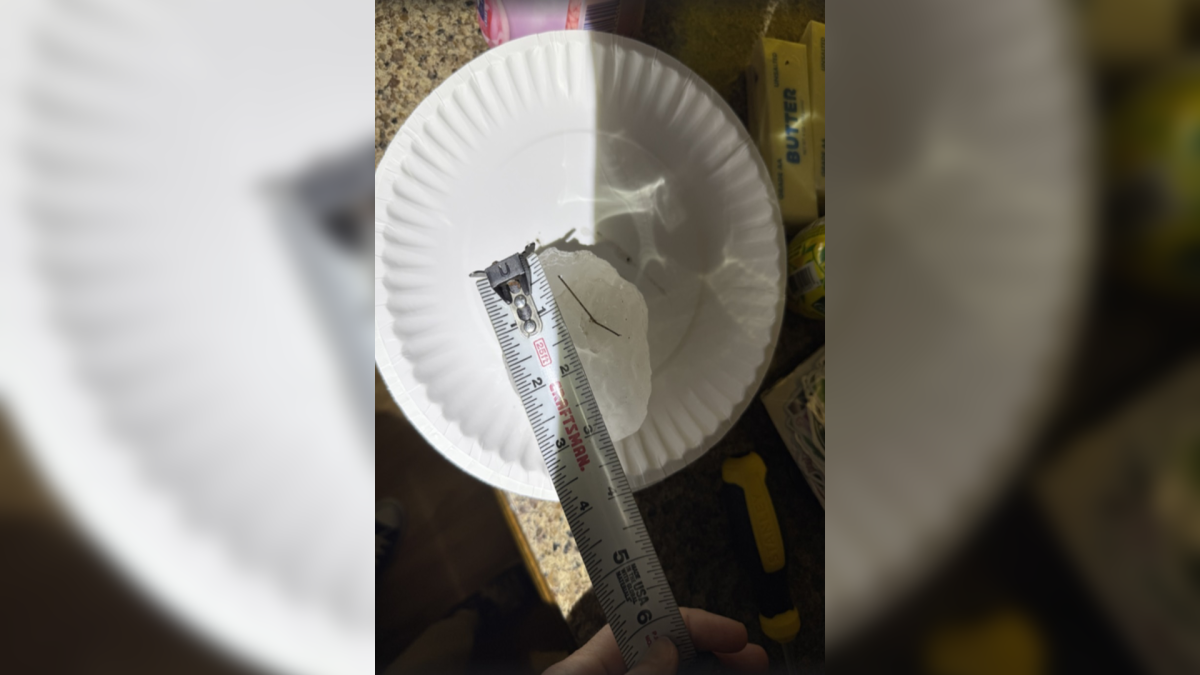
Severe storms produced destructive hail across the Chicago area with multiple reports of golf ball- to tennis ball-sized hail and the NWS warning pieces up to 2 inches in diameter; storm tops reached ~50,000 ft while the freezing level was ~11,000 ft. A level 3/5 hail threat was posted for areas including Woodridge, Downers Grove, Darien, Westmont and west-central Cook County, with vehicle damage reported in Kankakee County. Localized damage could drive incremental auto repair and property insurance claims, but the event is unlikely to move broader markets.
Local, high-severity hail events create a concentrated transfer of economic value from insurers to repair/salvage ecosystems rather than to OEMs. Expect a 6–12 week uplift in demand for used collision parts, paint, glass, and salvage processing that benefits specialists with national networks and inventory flexibility; this is a volume-driven margin tailwind rather than an immediate gross-margin expansion because labor and logistics are the gating constraints.
For insurers the immediate P&L effect will be headlineable but contained: a single metro storm of this scale is likely to move quarterly combined ratios in the low-to-mid single-digit basis points for national carriers but can produce 100–300bps swings for regionally concentrated writers. Importantly, frequency of these convective events is driving pricing momentum in small commercial/residential property filings — expect underwriters to lean on premium resets in the next 6–12 months, which benefits reinsurers and larger diversified carriers with rate-setting power.
Building materials and distribution chains are the second-order winners: shingles, underlayment and fast-moving repair SKUs see reorder spikes that can tighten supply in certain SKU buckets within 1–3 months, enabling suppliers to reprice or mix to higher-margin SKUs. Conversely, OEM parts suppliers and new-vehicle-centric value capture are less exposed; a surge in total-loss events routes value into the aftermarket and salvage parts market instead.
Catalysts to watch: (1) clustering of additional convective outbreaks across adjacent states within 2–8 weeks — would scale insured losses materially; (2) early insurer reserve updates over the next 7–21 days — these will reveal real claims severity and move names; (3) state-level regulatory or legislative claims handling shifts over months that could alter loss payouts. Reversal risk: rapid reinsurance response or aggressive reserving will mute second-order gains and compress aftermarket pricing within a quarter.
AI-powered research, real-time alerts, and portfolio analytics for institutional investors.
Request DemoOverall Sentiment
neutral
Sentiment Score
0.00
