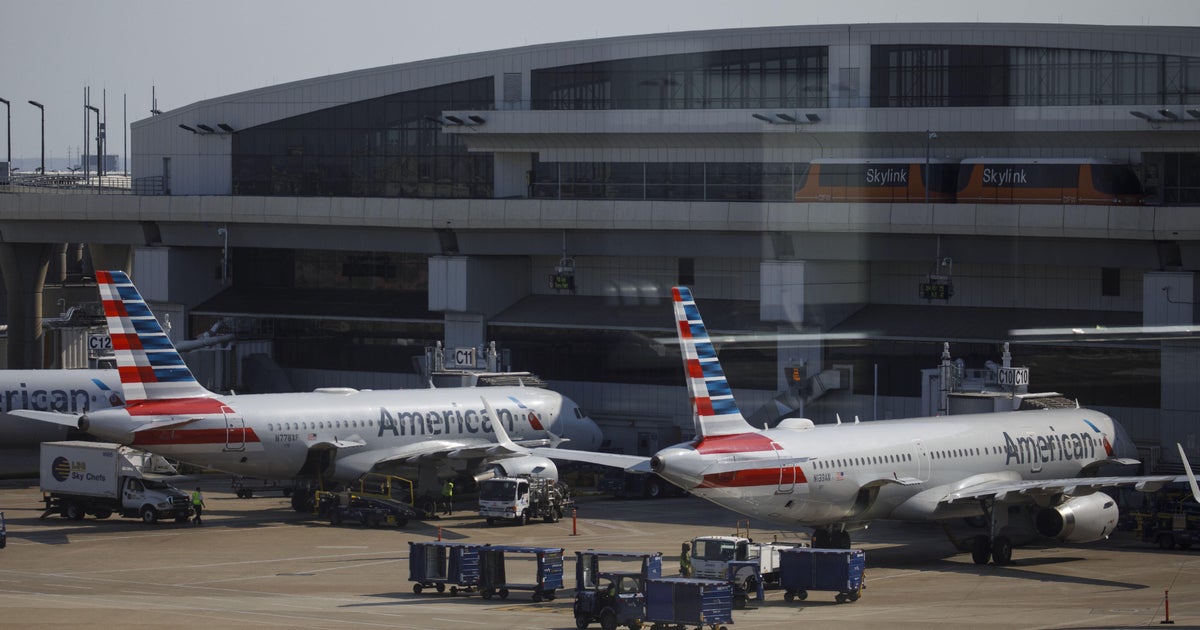
A winter storm is triggering significant operational disruption at North Texas airports: as of 9 a.m. Friday more than 100 flights at Dallas-Fort Worth International (DFW) and 42 at Love Field were canceled, with anticipated Saturday cancellations exceeding 1,000 at DFW and 139 at Love Field. Airlines have issued travel waivers and are repositioning crews and aircraft (American) while warning of prolonged rebooking times (Southwest), creating near-term revenue and cost risks from delays, crew/aircraft standbys and customer reaccommodation that could pressure airline operations in the short term.
Market structure: Short-term winners are ground-handling contractors, hotel/ground-transport aggregators, and travel insurers collecting cancellation-related claims; losers are network-dependent carriers with point-to-point exposure (Southwest/LUV) and short-term gate-constrained operations. Pricing power shifts minimally for major legacy carriers (AAL) that can reallocate aircraft/crews; LUV’s hubless model raises rebooking/cascade costs and spot-overtime labor spend, pressuring RASM by an incremental ~1–3% for the affected week.
Risk assessment: Tail risks include multi-day operational paralysis from ice leading to crew legality breaches, regulatory fines or mandatory schedule reductions—each could cost a carrier 1–3% of quarterly revenue if sustained >3 days. Immediate window (0–7 days) is cash-flow and IV shock; short-term (weeks) sees rebooking costs and customer refunds; long-term (quarters) only material if repeated storms or regulatory changes increase opex structurally. Hidden dependencies: third-party IT (rebooking systems), crew domicile networks, and regional de-icing capacity.
Trade implications: Relative-value favors AAL over LUV: AAL benefits from hub flexibility and lower idiosyncratic routing risk. Tactical trades: small, short-dated volatility plays on LUV (30-day puts) and long AAL equity or covered-call sells to collect premium. Cross-asset: expect a 10–25bps widening in high-yield airline credit spreads and +15–40% knee in AAL/LUV short-dated implied vol; use options to isolate that.
Contrarian angle: Consensus likely overstates permanent damage—histor winters (2014, 2018) produced sharp 2–6 week rebounds as networks reflow and yield recovers; if cancellations are <5% network-wide and resolved within 72 hours, LUV IV and equity drawdown are overdone. Unintended consequence: aggressive rebooking can lift future load factors and yields, creating a mean-reversion trade if one buys the dip within 1–3 weeks.
AI-powered research, real-time alerts, and portfolio analytics for institutional investors.
Request DemoOverall Sentiment
mildly negative
Sentiment Score
-0.30
Ticker Sentiment
