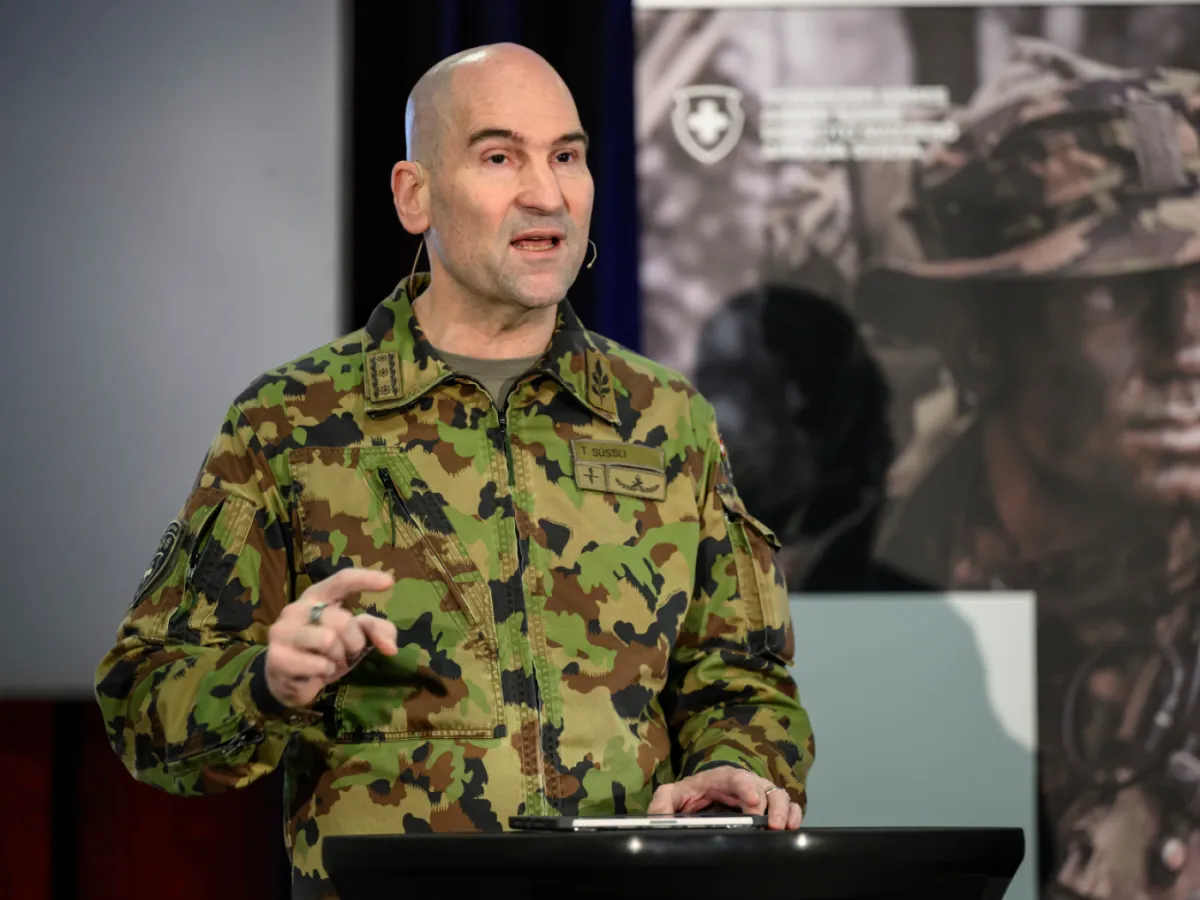
Switzerland's outgoing army chief warned that the country has shown no urgent response since Russia's 24 February 2022 invasion of Ukraine, saying only about one-third of soldiers would be fully equipped in an emergency. In an interview he urged 'ruthless honesty' with the public and politicians about the military's limited defensive capabilities and will step down at year-end, highlighting political and preparedness gaps that the next defence minister must address.
Market structure: A slow but measurable reallocation toward defence and security suppliers is the likeliest outcome — winners are large EU/US primes with export reach (Rheinmetall RHM.DE, Lockheed LMT, RTX) and cybersecurity vendors (CRWD, PANW); losers are Swiss fiscal assets (long-duration CHF sovereign bonds) and discretionary sectors if taxes/defence levies rise. Procurement dynamics favor incumbents with scale and proven supply chains, increasing pricing power and order-book visibility for the majors; steel/aluminium and electronic component demand should rise 5–15% regionally over 12–36 months.
Risk assessment: Tail risks include a sudden regional incident that forces rapid Swiss rearmament or mobilization (low probability, very high market impact) or a political rejection of budgets (mid probability) that stalls demand. Immediate (days) impacts are limited to FX/volatility spikes; short-term (weeks–months) is repricing of defence equities and CHF strength; long-term (2–5 years) is durable revenue growth for primes and suppliers if budgets are increased. Hidden dependencies: Swiss neutrality and parliamentary approval are gating factors — absence of those caps upside until formal budget lines are passed.
Trade implications: Direct plays — establish tactical exposure: 2–3% long in RHM.DE and 2% long in CRWD as asymmetric plays; use 6–12 month call spreads to cap premium (example: buy RHM Sep2025 200 call / sell 260 call). Pair trade — long RHM.DE vs short SMI ETF (e.g., CS SMI ETF CH) 1:1 beta-neutral to capture relative re-rating if EU defence spends accelerate. Cross-asset — small short in 10y Swiss government bond futures (0.5–1% NAV) if parliament signals >€1bn incremental defence spending; hedge FX by taking 0.5–1% long USD/CHF short.
Contrarian angles: The market underestimates timelines: procurement cycles are 12–36 months, so immediate weakness in Swiss defence readiness is an underpriced multi-year demand signal for suppliers. Reaction is underdone in cybersecurity and niche systems suppliers vs headline primes; consider small stakes in Tier-2 industrials (OERLN.SW/Oerlikon) 0.5–1% as optionality. Watch for the risk that political backlash forces cost-cuts or redirects spending — if public support for higher military budgets fails to exceed 60% in polls or parliamentary committees delay >6 months, unwind spread positions quickly.
AI-powered research, real-time alerts, and portfolio analytics for institutional investors.
Request DemoOverall Sentiment
moderately negative
Sentiment Score
-0.40
