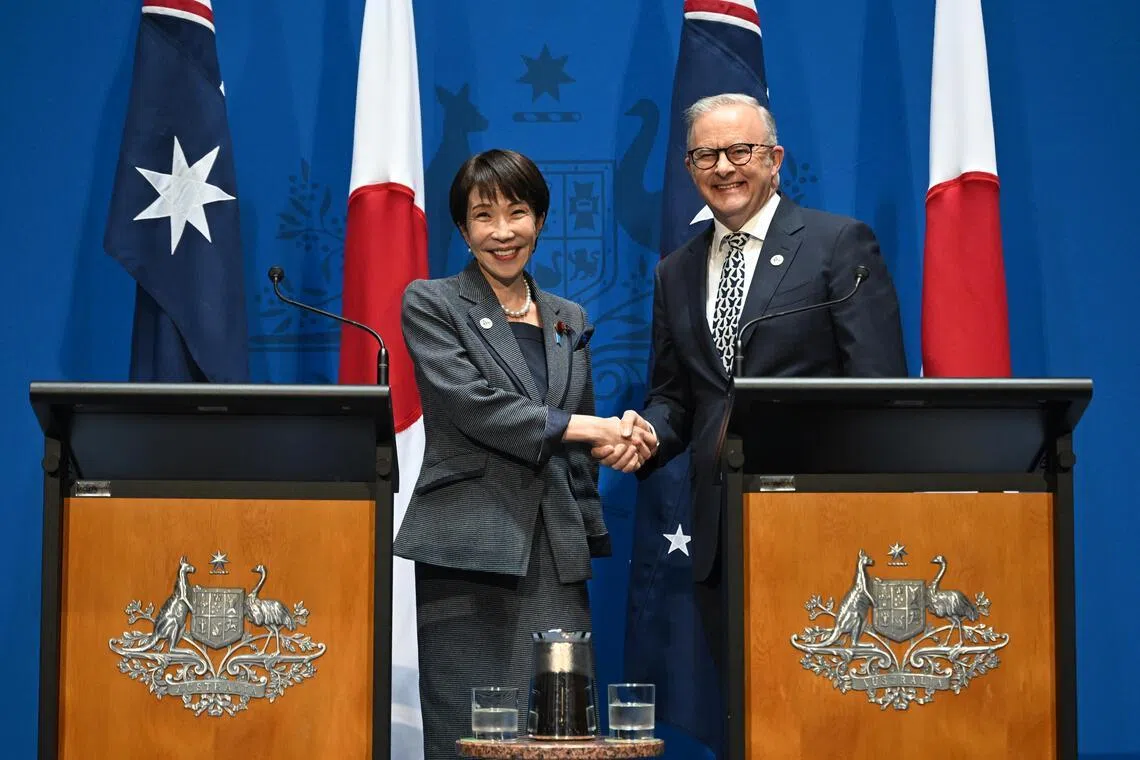
Japan’s PM said the effective closure of the Strait of Hormuz is having an "enormous impact" on the Indo-Pacific, highlighting a global oil supply squeeze with roughly 20% of world oil normally flowing through the strait and 80% of that destined for Asia. Japan and Australia pledged urgent coordination to secure stable energy supplies and strengthen resilience in energy and critical minerals. The backdrop is a broader Middle East conflict that raises risks for oil, LNG, and regional trade flows.
This is less about an immediate oil bid and more about a forced re-pricing of Asia’s vulnerability premium. Japan’s public urgency signals that regional importers will start paying up for optionality: longer-term LNG contracts, higher spot cargo competition, and potentially more strategic inventories. The second-order winner is not just upstream energy, but infrastructure that improves route resilience — LNG shipping, storage, and alternative pipeline-linked suppliers — while the losers are the most import-dependent utilities and refiners in Japan, Korea, and parts of Southeast Asia. The market may underappreciate how quickly this can transmit from crude to power, petrochemicals, and industrial margins. Japan and Australia tightening energy cooperation also reinforces a broader de-risking trade that favors allied supply chains in critical minerals and defense, which could persist for quarters even if the Strait disruption eases. That creates a structural tailwind for Australian resource projects with non-China offtake and for defense primes tied to Indo-Pacific procurement cycles. The key catalyst is whether shipping disruptions remain a days-to-weeks headline or morph into a multi-month bottleneck. If flows normalize, the immediate oil spike can fade fast, but the strategic response — stockpiling, contract repricing, and inventory rebuilds — tends to outlast the crisis. The contrarian angle is that the crowd may be overstating the durability of the crude shock while underpricing the longer-lived earnings impact in LNG, freight, and defense procurement.
AI-powered research, real-time alerts, and portfolio analytics for institutional investors.
Overall Sentiment
moderately negative
Sentiment Score
-0.35
