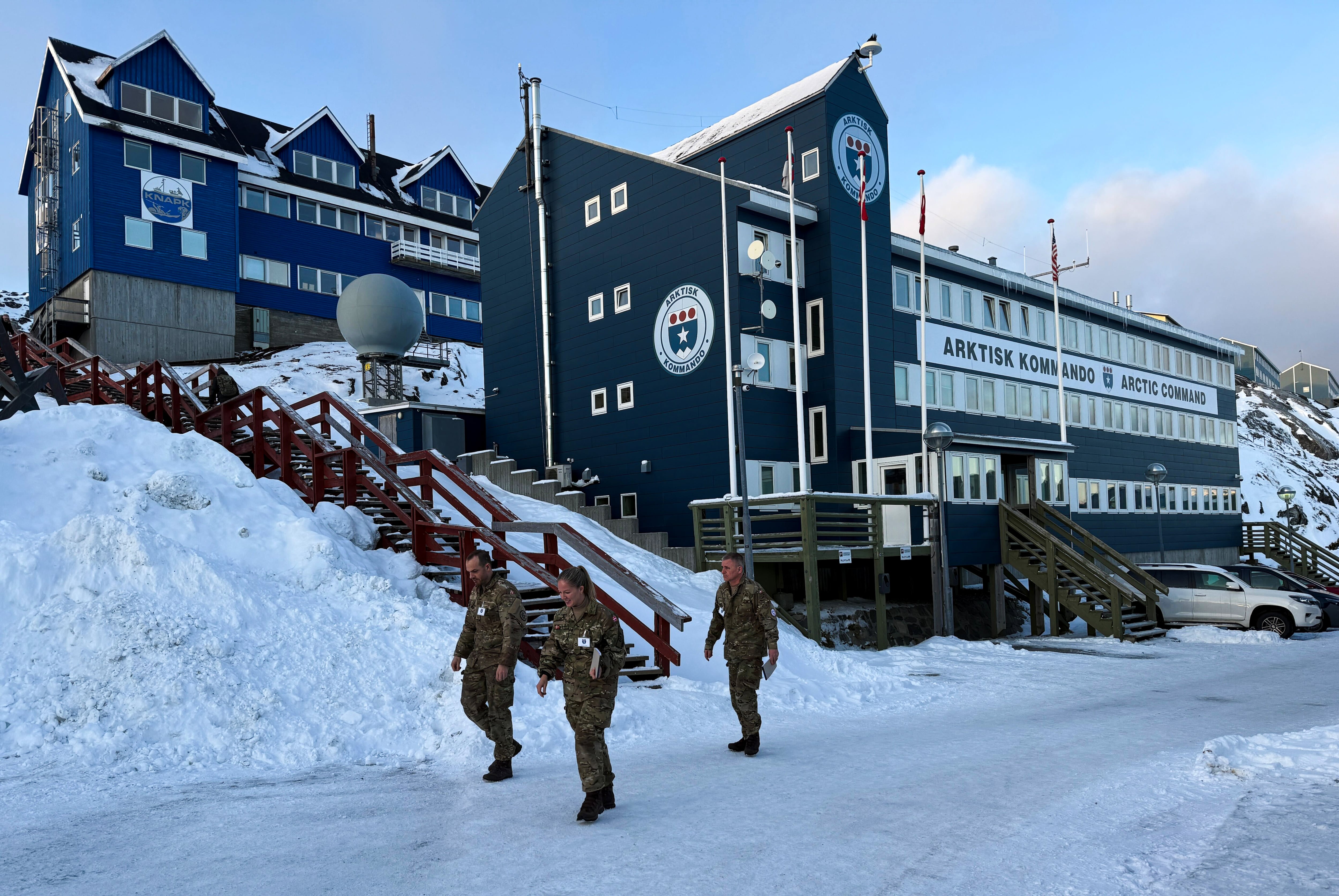
The Trump administration’s bid to acquire Greenland has prompted a muted but strategic Russian response, with Moscow privately concerned that expanded U.S. military infrastructure and surveillance in Greenland could threaten access for Russian ballistic submarines and complicate operations from the Kola Peninsula. Analysts say the episode amplifies NATO divisions, may accelerate Russian Arctic militarization and investments, and heightens the geopolitical risk around the Northern Sea Route as melting ice opens new commercial passages that could challenge Suez-based trade flows. For investors, the story raises downside geopolitical risk to shipping and energy route assumptions and a potential lift in defense spending and regional risk premia rather than an immediate market-moving event.
Market structure: The Greenland episode is a net positive for U.S. and NATO-aligned defense contractors, ASW/ISR suppliers, and Arctic logistics providers while hurting commercial Arctic shipping incumbents that rely on unchallenged Northern Sea Route access. Expect 12-month relative outperformance of U.S. defense equities vs. S&P500 of roughly 10–25% if Washington formalizes base expansion or ASW procurement (probability 30–50% over 12 months). Increased military demand will push pricing power for specialized sensors, sonars, and Arctic-capable platforms, tightening supply of niche components (lead times +20–40% in 6–18 months). Commodities: oil/gas explorers with Arctic acreage (pricing power) and gold as a safe haven should benefit; expect a modest upward pressure on 10y UST yields (10–30bp) if risk premium rises.
Risk assessment: Tail risks include kinetic naval incidents (low probability <5% but high impact), major sanctions shifts targeting Arctic trade, or an accelerated Russian militarization response triggering NATO supply-chain disruptions. Immediate (days) impact is FX volatility—NOK and RUB sensitive; short-term (weeks–months) sees re-rating of defense capex; long-term (years) structural Arctic investment and legal fights over shipping lanes. Hidden dependencies: defense primes rely on long lead-time suppliers (semiconductors, titanium, specialized coatings) vulnerable to export controls; insurance and reinsurance costs for Arctic shipping could spike 50–150% if militarization increases. Catalysts: formal US-Denmark basing agreement (30–90 days) and public RFPs for ASW assets.
Trade implications: Direct plays: overweight large-cap defense (LMT, NOC, RTX, LHX) and satellite/ISR (MAXR, LHX) for 6–18 months; buy GLD as 1–2% portfolio hedge. Use call spreads on ISR names to leverage upside while capping premium bleed (6–9 month expiries). Pair trade: long XAR (or LMT) vs. short IYT (US transports ETF) to capture defense outperformance vs. commercial shipping. Entry trigger: increase exposure if a basing agreement or >$1bn ASW RFP is announced; cut if diplomatic de-escalation occurs or NATO reverses course.
Contrarian angles: Consensus assumes sustained Arctic militarization; that may be overdone—legal/labor constraints and cost (> $5–10bn per major base) will cap rapid buildup, favoring firms with pre-existing Arctic experience over general primes. Historical parallels: Cold War Arctic investments produced long tail returns concentrated in specialized contractors, not broad defense indices. Unintended consequences: accelerated U.S. presence could prompt Arctic cooperation frameworks that commoditize some ISR services, compressing margins for new entrants; avoid small-cap pure-play ASW names without multi-year backlog.
AI-powered research, real-time alerts, and portfolio analytics for institutional investors.
Request DemoOverall Sentiment
moderately negative
Sentiment Score
-0.35
