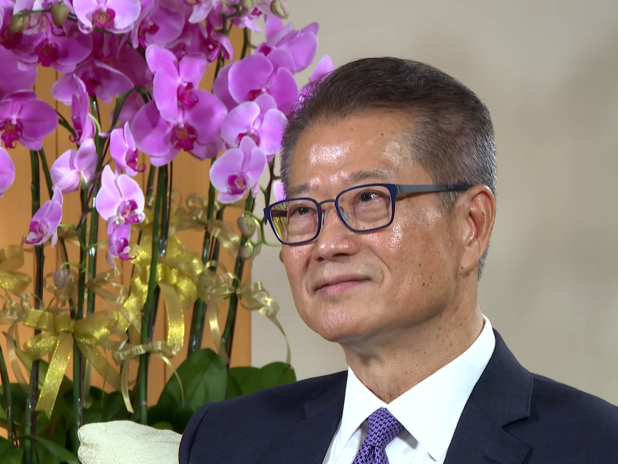
Hong Kong Financial Secretary Paul Chan said the city will push to become an international gold trading hub and accelerate digitalisation of trade and logistics as part of efforts to upgrade its trade ecosystem, remarks he plans to bolster at the World Economic Forum in Davos. Chan framed the initiatives against rising unilateralism and protectionism, and signalled his upcoming budget will prioritise industry support, job creation and social welfare while balancing fiscal discipline—policy direction that could modestly influence commodity trading flows and long-term infrastructure/technology investment decisions tied to Hong Kong's role as a trade and financial conduit.
Market structure: Hong Kong’s explicit push to be an international gold trading hub and digitalise logistics disproportionately benefits exchange operators, custodians and large universal banks with custody/clearing footprints (e.g., HKEX 0388.HK, HSBC 0005.HK) and port/logistics operators (e.g., COSCO 1919.HK, CK Hutchison 0001.HK). Expect a 5–15% incremental trading/take-up in bullion-linked flows to Hong Kong over 12–36 months if policy + incentives are meaningful; Singapore and niche regional centres face share erosion. Commodity price effects are modest near-term but structural: marginally higher physical gold demand supports gold ETF/futures open interest and could tighten nearby bullion premiums.
Risk assessment: Tail risks include sudden regulatory changes (China/HK imposing extra capital or AML constraints) or US secondary sanctions that could curtail international bank participation — low probability but high impact (could wipe out >30% of projected throughput). Immediate (days) effects are sentiment; short-term (weeks–months) depends on budget incentives and bilateral MOUs; long-term (1–3 years) requires market infrastructure, clearing links and RMB liquidity. Hidden dependencies include custodial capacity, insured vault space, and clearing link approvals with Mainland/foreign CCPs.
Trade implications: Direct plays: overweight HKEX and large custodial banks; buy gold exposure (physical/ETF) via 6–12 month call spreads to express structural incremental demand while limiting premium. Relative-value: long HKEX (0388.HK) vs short SGX (S68.SI) to capture market-share migration over 6–18 months. For logistics, overweight COSCO/CK Hutchison for digitalisation capex; size positions 1–3% each with 12–24 month horizons and 10–15% target returns.
Contrarian angles: Market may underprice implementation frictions — vault capacity, insurance, and cross-border clearing could take 12–36 months and materially compress margins. Consensus assumes seamless bank participation; if major global banks hesitate, HK volumes could be underwhelming (scenario: <5% flow shift). Historical parallels (Dubai, London niches) show policy intent ≠ rapid market share; risk-adjust entries and prefer options to asymmetric payoff.
AI-powered research, real-time alerts, and portfolio analytics for institutional investors.
Request DemoOverall Sentiment
mildly positive
Sentiment Score
0.25
