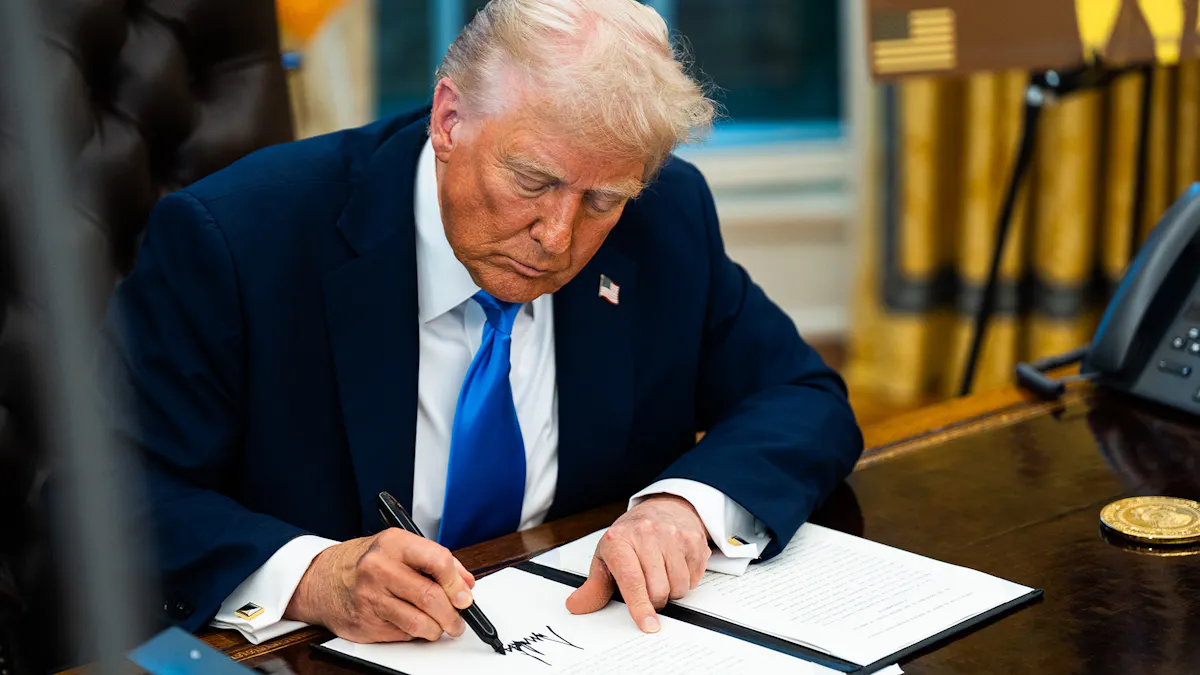
The White House is working on an executive order intended to pre-empt state-level AI regulations, according to reporting by Sylvia Varnham O'Regan and Aaron Holmes; the move signals an effort to centralize AI policy at the federal level and to block divergent state rules, a development that would materially affect technology companies, investors and state policymakers by reshaping the regulatory landscape for AI.
The White House is reportedly working on an executive order intended to pre-empt state-level AI regulations, according to reporting by Sylvia Varnham O'Regan and Aaron Holmes; the stated aim is to centralize AI policy and block divergent state rules that could fragment the market. The article frames this as a federal effort that would materially reshape the regulatory landscape for AI, directly affecting technology companies, investors and state policymakers. Market signals label the development as mildly positive with a risk-on tone (sentiment_score 0.32) and a moderate market impact (market_impact_score 0.45), suggesting investors see potential upside from reduced regulatory fragmentation. Timing and substantive details remain unspecified in the report, creating a window of policy uncertainty during which market reactions will be sensitive to draft language and legal defensibility.
A federal pre-emption order would likely lower compliance costs and simplify go-to-market strategies for national-scale AI platform providers by replacing a patchwork of state rules with a single federal framework. That dynamic favors large incumbents with nationwide operations and resources to adapt to federal mandates, while potentially disadvantaging smaller vendors or state-focused incumbents that had positioned to benefit from local rules. The prospect of pre-emption also raises litigation risk from states and interest groups, and political pushback ahead of elections could alter timing or scope, so the net effect hinges on the order's text, enforcement mechanisms and any carve-outs.
Investors should treat the report as a policy development with directional but not definitive economic consequences; the moderate market_impact_score implies trading opportunities but also headline-driven volatility. Key near-term catalysts are publication of the executive order draft, legal challenges, and administrative guidance on enforcement; these will determine which segments gain durable regulatory advantage and which face transitional disruption.
AI-powered research, real-time alerts, and portfolio analytics for institutional investors.
Request DemoOverall Sentiment
mildly positive
Sentiment Score
0.32
