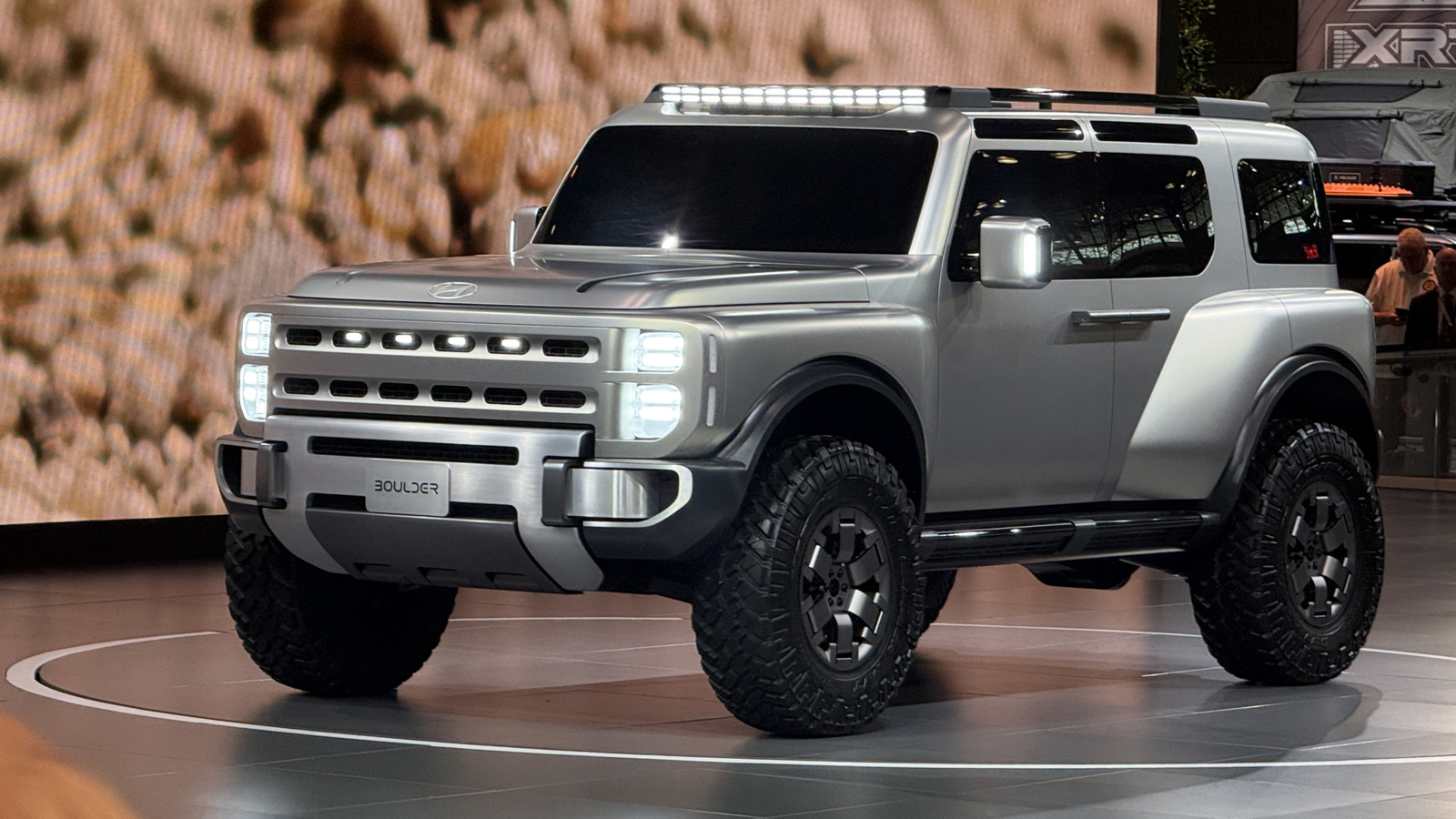
Nine vehicle reveals at the 2026 New York International Auto Show highlight continued OEM investment in EVs, hybrids and off-road concepts: Hyundai unveiled the body-on-frame Boulder concept (production unconfirmed), Kia showed the EV3 with up to 320 miles range (58.3 kWh base / 81.4 kWh upper pack; DC fast-charge 10–80% in ~29–31 min) and a 288-hp GT, Subaru debuted the Getaway EV (420 hp, <5s 0–60, 95.8-kWh battery, ~300-mile range, 10–80% DC charge ~30 min) plus a Forester Wilderness Hybrid (~32 mpg, 194 hp), and VW’s new Atlas outputs 282 hp/258 lb-ft. Price anchors noted: 2027 Chrysler Pacifica $43,490–$60,250 and 2027 Infiniti QX65 $55,535–$64,135; the show signals product-driven differentiation rather than near-term sector-moving corporate or regulatory events.
The product activity observed at the show is a structural signal: OEMs are broadening their addressable segments simultaneously (mainstream, off‑road, accessibility, and compact EVs) rather than concentrating on one transition path. That multiplies short‑cycle SKU complexity for suppliers and dealers, raising near‑term working capital and inventory risk while creating multi‑year content opportunities for modular platform specialists.
A bifurcation in technology choices (moderate‑voltage architectures vs. high‑voltage systems) will produce distinct supplier winners over different horizons — power electronics and 400V cell suppliers capture early share and faster volume growth, while 800V specialists and fast‑charging infrastructure benefit later if premium EVs scale. Municipal and fleet procurement for accessible/rideshare conversions offers predictable, lower‑margin volume that can stabilize utilization for converters and seating/chassis vendors.
Near‑term catalysts that matter for valuations are cadence and execution: certification cycles, dealer order banks over the next 3–12 months, and supplier backlog visibility over 12–36 months. Key risks that could reverse the positive tilt include a macro pullback hitting SUV/utility demand, commodity‑driven OEM margin squeezes that force incentive escalation, or a regulatory pivot that reallocates subsidy flows away from the segments gaining product investment.
AI-powered research, real-time alerts, and portfolio analytics for institutional investors.
Request DemoOverall Sentiment
mildly positive
Sentiment Score
0.20
Ticker Sentiment
