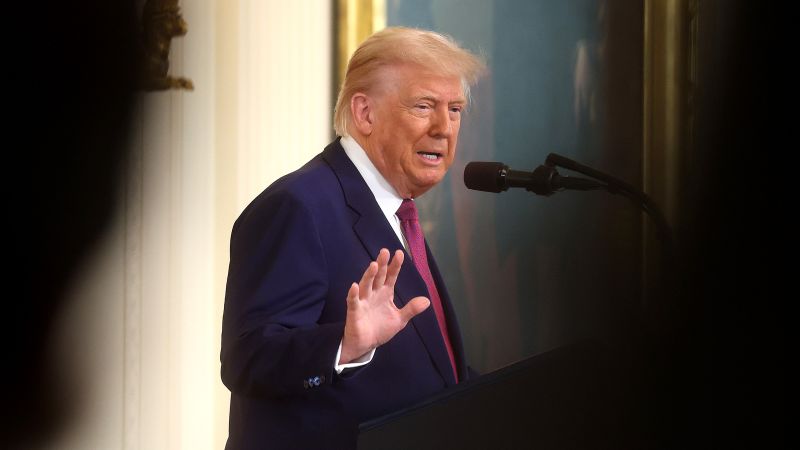
President Trump is resisting pressure to deepen US involvement in the escalating conflict between Israel and Iran, prioritizing his pledge to avoid new Middle East wars and focusing on potential negotiations despite canceled talks. While offering defensive support to Israel, Trump has refrained from joining offensive actions against Iran's nuclear facilities, signaling that direct US military intervention would be triggered only by an attack on American assets. Despite internal White House skepticism and Trump's aversion to foreign entanglements, Israel is proceeding with its operation against Iran with implicit US approval, aiming to neutralize Iran's nuclear and ballistic missile programs.
The United States, under President Trump, is currently navigating the escalated conflict between Israel and Iran with a pronounced strategy of avoiding direct military entanglement, as evidenced by Trump's public statements and private discussions. While the US has provided defensive support to Israel, intercepting Iranian retaliatory strikes, Trump has explicitly conditioned deeper American offensive involvement on a direct attack against US facilities or personnel by Iran. This cautious approach reflects Trump's longstanding pledge to prevent new Middle East wars and his administration's internal skepticism about further intervention, despite pressure from some Republican factions for a more robust pro-Israel stance. Israel's military operation targeting Iran's nuclear and ballistic missile capabilities is reportedly anticipated to extend for "weeks, not days" and proceeds with implicit US approval, though detailed discussions on offensive US support have not yet reached a "practical basis." The administration's hope for a negotiated settlement to curb Tehran's nuclear ambitions persists, even after planned US-Iran talks in Oman were called off. The overall situation is characterized by significant geopolitical uncertainty (reflected in the provided "Uncertain" tone and "Neutral" sentiment score of -0.1), with a moderate market impact score of 0.6, suggesting that while tensions are high, the current US policy of restraint is somewhat mitigating immediate broader market panic, though the risk of escalation remains contingent on regional developments and adherence to stated red lines.
AI-powered research, real-time alerts, and portfolio analytics for institutional investors.
Request DemoOverall Sentiment
Neutral
Sentiment Score
-0.10
