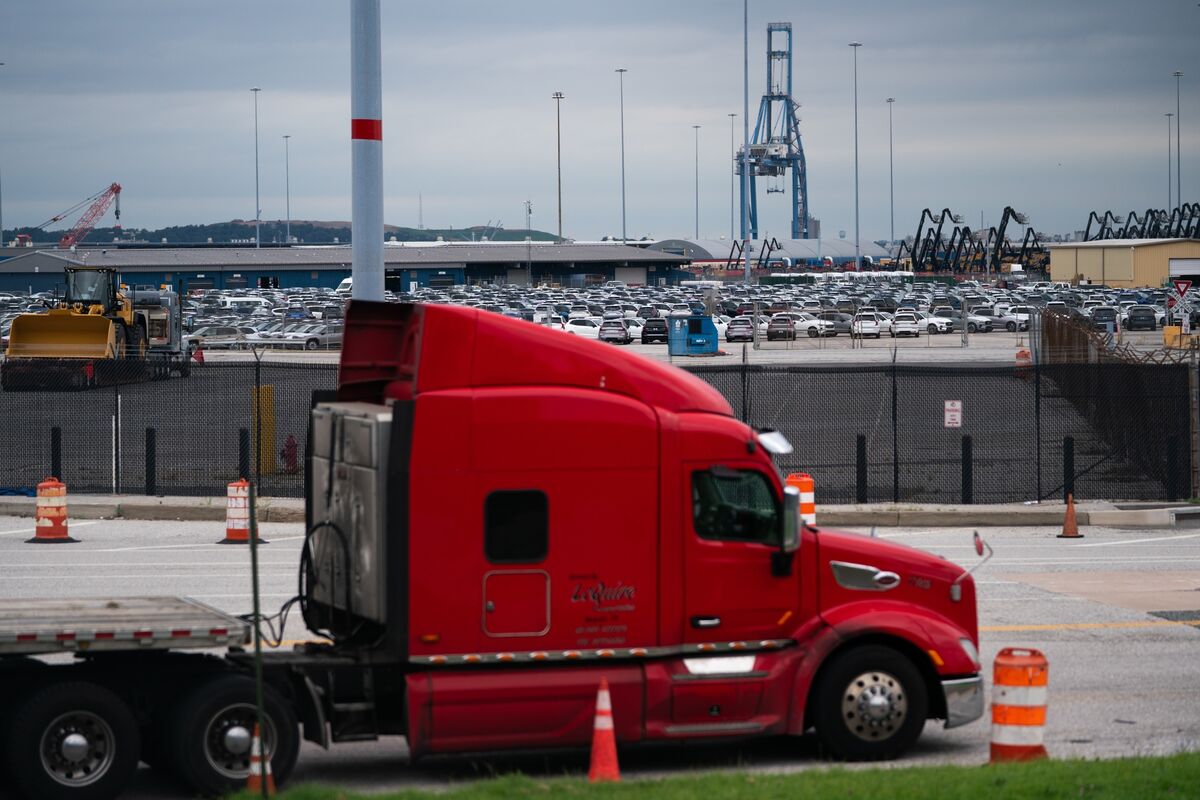
The World Trade Organization (WTO) has revised its 2025 global merchandise trade growth forecast upwards to 0.9% from an earlier projected 0.2% decline, primarily due to US importers front-loading purchases ahead of anticipated higher tariffs. While this indicates a less severe near-term slowdown, the WTO emphasizes that overall trade activity remains clouded by the impact of US tariffs, suggesting persistent policy-related uncertainty.
The World Trade Organization has materially revised its forecast for global merchandise trade growth for the current year to a 0.9% expansion, a significant improvement from its previous projection of a 0.2% contraction. This upward revision, however, is not indicative of a fundamental strengthening in global economic activity. Instead, it is primarily attributed to a temporary, policy-driven distortion: the front-loading of imports by US companies to build inventories ahead of the implementation of higher tariffs. While this stockpiling has cushioned the near-term slowdown, it has likely pulled forward future demand, suggesting potential weakness in subsequent periods. The WTO's explicit statement that the outlook remains 'clouded' by US tariff policy underscores that underlying risks persist, and the sharp deceleration from the 2.9% growth seen in 2024 highlights a still-fragile trade environment.
AI-powered research, real-time alerts, and portfolio analytics for institutional investors.
Request DemoOverall Sentiment
mildly positive
Sentiment Score
0.25
