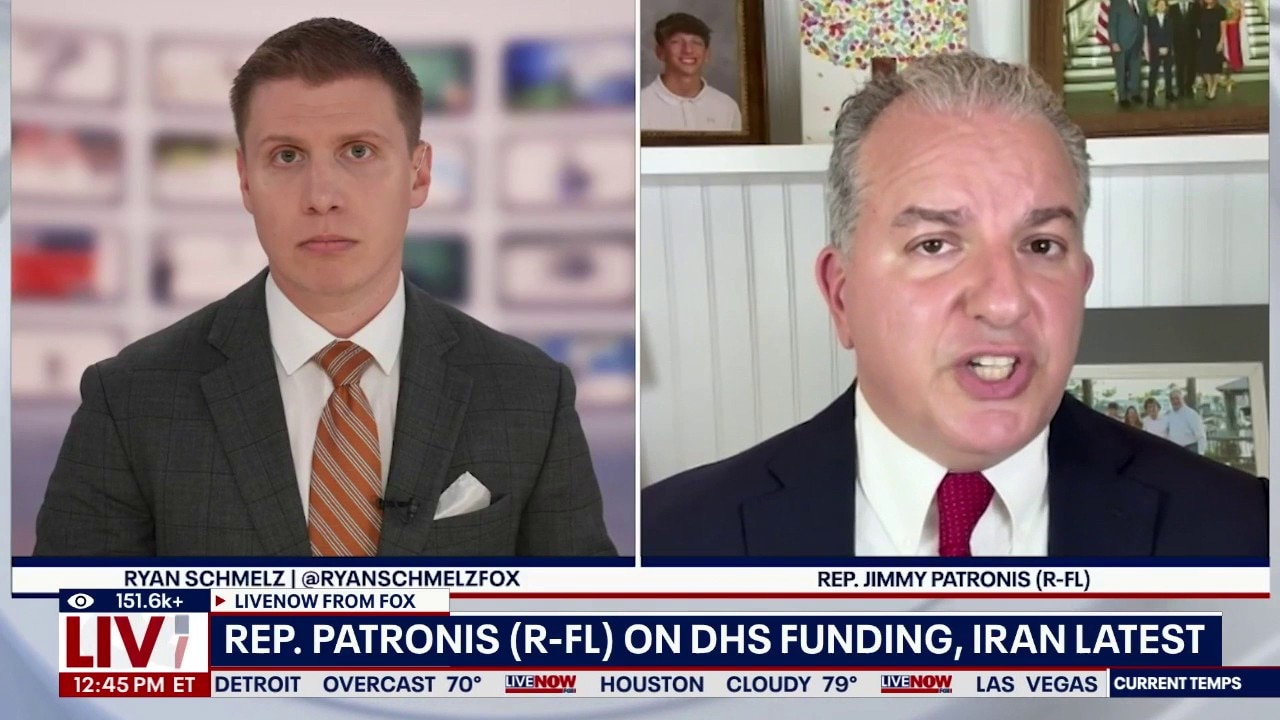
Republican leaders Mike Johnson and John Thune announced a two-track plan to fully fund the Department of Homeland Security: first by adopting the Senate plan that funds most DHS components but excludes ICE and Border Patrol, and second by pursuing party-line legislation later to fund those agencies. The approach has presidential support from Trump but is not guaranteed and could face opposition within the GOP.
The split funding approach creates asymmetric cashflow restoration across DHS sub-agencies: core homeland functions get operational clarity within days-to-weeks while border-enforcement programs remain an episodic political fight for months. That asymmetry will compress risk premia for logistics and transportation names tied to port/air security (near-term downside tail risk reduced) but leave a concentrated cohort of border-specific contractors and private detention operators exposed to an outsized revenue cliff into the next appropriations episode.
Second-order supply-chain effects are subtle but meaningful: fewer ad-hoc manpower gaps at ports and TSA reduces the probability of shipment/dwell-time shocks that typically show up as inventory-to-sales dislocations one to two quarters later. Conversely, delayed ICE/Border Patrol funding shifts discretionary procurement (surveillance sensors, detention services, mobile assets) into a condensed re-bid window — that will produce lumpy win-or-lose quarters for mid-cap contractors and equipment vendors.
Key catalysts to watch are internal GOP whip counts and the timing of the party-line reconciliation vote; either can compress or extend the funding gap. Tail risks include intra-party defections or last-minute riders that reopen appropriations elsewhere — these flip outcomes quickly and are the primary near-term risk to any position that assumes a prolonged border funding delay.
AI-powered research, real-time alerts, and portfolio analytics for institutional investors.
Overall Sentiment
neutral
Sentiment Score
0.00
Ticker Sentiment
