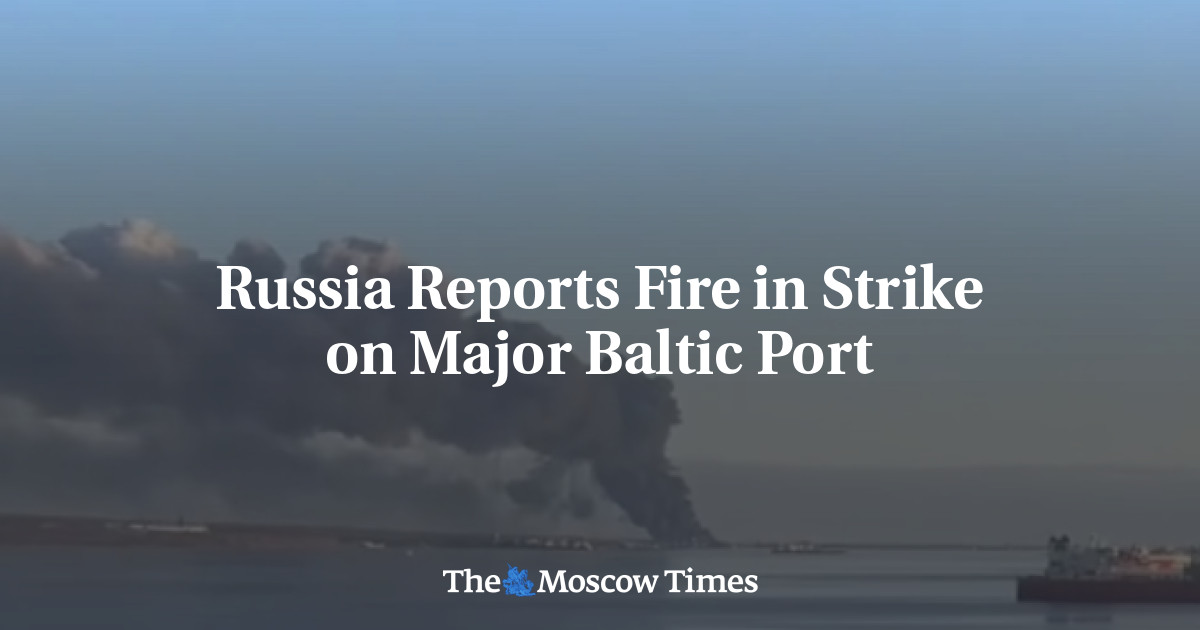
A drone strike ignited a fire at Russia's major Baltic export hub Ust-Luga, causing new damage to facilities handling fertilisers, oil and coal; regional governor reported no casualties and said rescuers were extinguishing the blaze. Authorities reported 36 drones destroyed overnight in the region, and Kyiv said Russia fired 442 drones and one missile with 380 UAVs shot down, while nearby Primorsk was also struck and a civilian was killed in Belgorod. The attacks risk curbing Russian energy and commodity exports and may tighten regional supply flows, posing upside pressure on prices and raising short-term logistics and geopolitical risk for energy/commodity markets.
The immediate market implication is a sustained increase in effective seaborne export costs out of northwest Russia — higher insurance, diversion to longer routes and on-the-water layups raise per-tonne export economics by an estimated mid-single-digit to low-double-digit percent for fertilizers and coal over the next 4–12 weeks. That margin shock favors non-Russian producers who can rapidly fill displaced volumes; it also structurally favors buyers who can substitute inputs (e.g., ammonia-to-urea conversion or alternative nutrient mixes) if prices spike above breakeven thresholds for crop economics.
Freight and logistics knock-on effects are asymmetric: dry-bulk and tanker charter rates are more sensitive to route disruption than headline oil prices because a small diversion multiplier (e.g., +10–25% sailing time) compounds daily hire and insurance costs. Expect volatility in short-duration freight contracts and tighter counterparty credit lines for regional terminals — banks and trading houses that finance receivables for Russian-origin shipments will face elevated margin calls and working capital strains in the coming quarters.
Geopolitical risk now increases odds of second-order policy responses (targeted export controls, accelerated port hardening, or retaliatory interdictions) that could turn a weeks-long premium into a months-long structural wedge. A plausible mean path is renewed episodic disruption over the next 3–6 months with step-ups around planting and harvest seasons; a reversal catalyst would be a negotiated tacit ceasefire on infrastructure or rapid scale-up of alternative export corridors within 30–60 days.
AI-powered research, real-time alerts, and portfolio analytics for institutional investors.
Request DemoOverall Sentiment
strongly negative
Sentiment Score
-0.60
