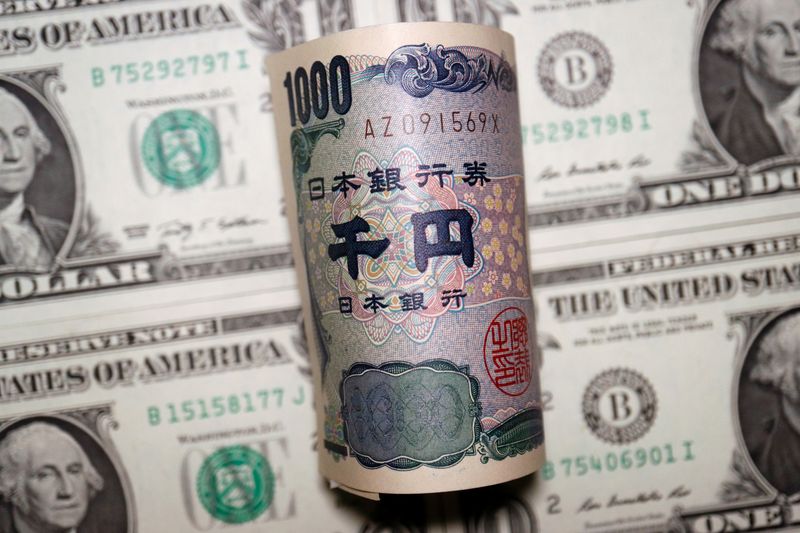
Oil prices fell more than 6% on hopes of a U.S.-Iran deal and easing tensions around the Strait of Hormuz, relieving inflation and trade-balance pressure across oil-importing Asian economies. Most Asian currencies were little changed after strong gains, with USD/JPY flat, USD/CNH and USD/CNY down 0.1%, USDKRW up 0.5%, and USD/INR up 0.2%. Markets are now focused on Friday's U.S. payrolls report and the Bank of Japan's comments on whether energy-driven inflation risks persist.
The immediate winner is not just Asia FX, but the entire short-vol, risk-sensitive complex that had been priced for a prolonged energy shock. If crude stays contained for even a few sessions, the second-order effect is lower imported inflation expectations across Japan, Korea, India, and parts of ASEAN, which should steepen the odds of less hawkish local policy paths and support domestic-duration assets. The biggest macro beneficiary is therefore not the currencies themselves, but the beta assets that trade off lower rates and lower input costs.
The market is likely underestimating how fast the reversal in energy can bleed into earnings revisions for transport, airlines, chemicals, and consumer discretionary across Asia. A sustained $5-$10/bbl move lower in Brent can matter more for margins than the FX move, especially for import-reliant economies where fuel is a direct pass-through to CPI and freight. That creates a favorable setup for relative performance in sectors with high operating leverage to input costs, while energy exporters and commodity-linked currencies lose the inflation tailwind that had been supporting their terms-of-trade story.
The key risk is that this is a headline-driven retracement, not a durable regime shift. Any delay in diplomacy, renewed shipping disruption, or a stronger-than-expected U.S. payroll print could restore the dollar and rebound crude quickly, especially given how crowded the de-escalation trade may become. The market is also vulnerable to a policy mismatch: if lower oil prices ease inflation faster than growth weakens, rate-cut expectations may be pulled forward, which is bullish for duration but not necessarily for cyclicals.
The contrarian angle is that the biggest upside may actually be in assets that were punished by the prior energy spike but have not yet fully repriced for relief. Asian importers and domestically oriented equities could have more room than FX, because currencies already moved on the first-order shock while equity margins have not yet reflected the possible earnings uplift. Conversely, if the move in oil proves temporary, the consensus may have over-owned the relief trade in currencies and under-owned the re-inflation risk in commodities.
AI-powered research, real-time alerts, and portfolio analytics for institutional investors.
Request DemoOverall Sentiment
neutral
Sentiment Score
0.15
Ticker Sentiment
