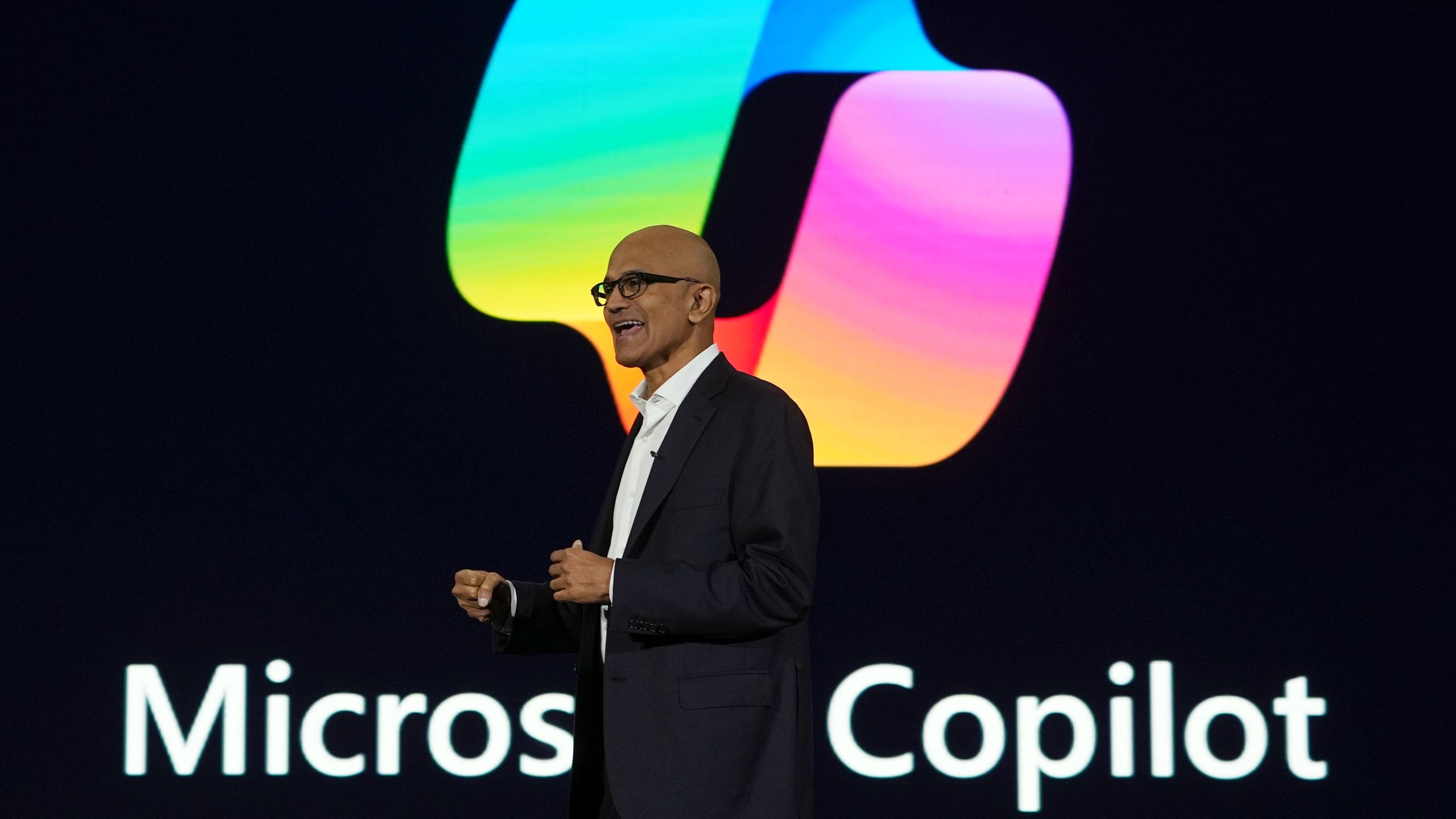
Microsoft CEO Satya Nadella framed 2026 around AI in a LinkedIn post, emphasizing a shift from “spectacle” to “substance” as the company doubles down on Copilot (integrated with OpenAI/ChatGPT) and broader AI systems. The piece highlights strategic risks — intensifying competition from Google’s Gemini, customer backlash over product quality (Copilot reliability, Windows dissatisfaction), and recent large-scale layoffs (tens of thousands) alongside Microsoft’s claim that ~30% of code is now AI-assisted — suggesting potential customer churn and execution risk despite AI-driven growth ambitions.
Market structure: Microsoft’s renewed AI push concentrates power with large cloud/AI incumbents but exposes legacy-product revenue to churn; expect Google (GOOGL/GOOG) to capture disproportionate enterprise AI wallet share if Gemini outperforms, implying a potential 2–5 percentage-point reallocation of enterprise AI spend over 12–24 months. Hardware/OS erosion (Windows/Xbox/Surface) increases optionality for open-source/linux players and raises switching risk for Microsoft enterprise customers, pressuring MSFT pricing power in consumer segments while keeping cloud stickiness intact near term.
Risk assessment: Tail risks include regulatory action on AI data/use or an operational AI failure causing enterprise liability—each could trigger 10–30% market repricing for affected names within 3–12 months. Immediate (days) risk is sentiment-driven (±1–3% moves); short-term (weeks–months) risk centers on guidance/contract announcements; long-term (2–5 years) risk is structural: model quality, chip supply (NVIDIA dependence), and OpenAI partnership dynamics. Hidden dependency: MSFT’s fortunes hinge on OpenAI outcomes and third-party model accuracy more than disclosed revenues.
Trade implications: Favor relatively more GOOGL exposure and defensively trim MSFT consumer/OS risk; implement dollar-neutral long GOOG / short MSFT pairs to harvest dispersion over 6–12 months. Use options to express convexity: buy 6–9 month GOOGL calls 8–12% OTM and MSFT puts 12–20% OTM sized to 0.5–1.5% of portfolio each. Rotate incremental proceeds into cloud infra and select semiconductors if AI enterprise KPIs accelerate.
Contrarian angles: Consensus ignores MSFT’s deep enterprise contracts and balance-sheet cushion—downside could be limited if product fixes restore corporate trust, so short positions must be hedged and sized conservatively. Market may overprice downside volatility; consider selling premium after confirmed negative headline moves. Historical parallel: “metaverse” overhang depressed sentiment but not long-term cash flow; AI narrative could follow similar two-year reassessment.
AI-powered research, real-time alerts, and portfolio analytics for institutional investors.
Request DemoOverall Sentiment
moderately negative
Sentiment Score
-0.50
Ticker Sentiment
