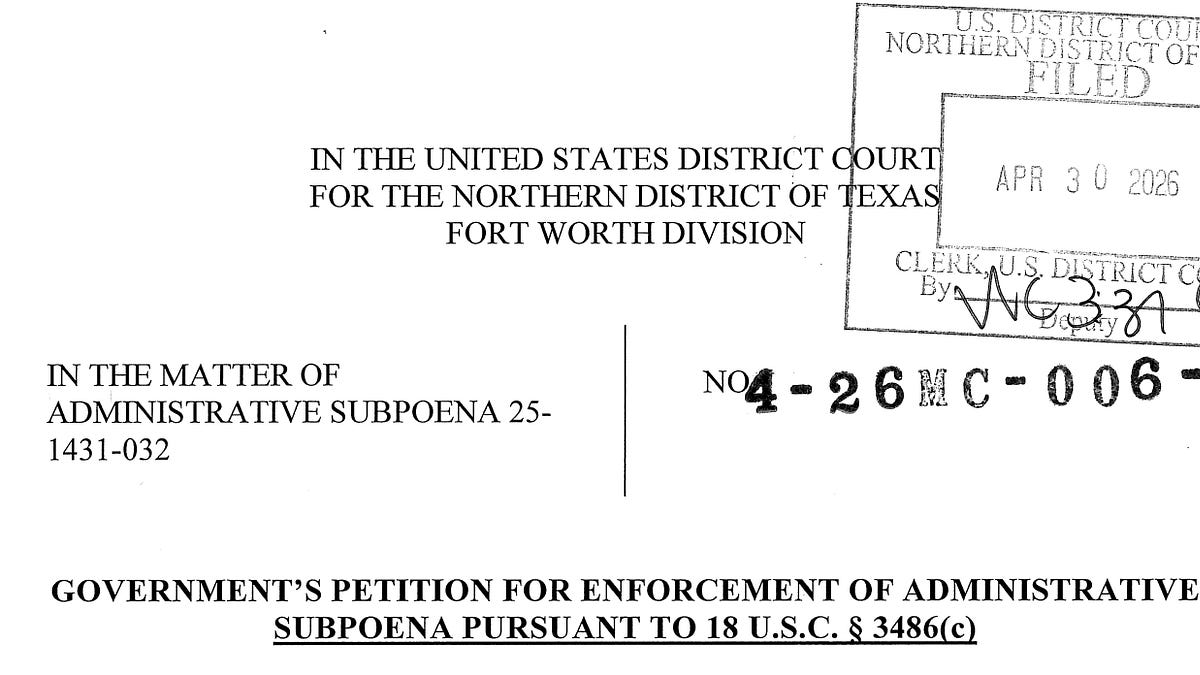
The Fifth Circuit and related district courts issued or advanced rulings with nationwide or cross-state effects, including a mifepristone mailing ban during litigation and a secret DOJ subpoena-enforcement order compelling Rhode Island Hospital to comply by May 14. The article also highlights post-Callais redistricting fallout in Louisiana, where competing three-judge panels are moving quickly amid election-related legal uncertainty. The immediate impact is mainly legal/regulatory, but the decisions could affect healthcare providers, abortion access, and election administration beyond the Fifth Circuit.
The marketable implication here is not ideology; it is procedural arbitrage. When a regional forum can manufacture de facto national outcomes through enforcement venue selection, administrative-stay mechanics, and three-judge-panel sequencing, the first-order effect is legal uncertainty, but the second-order effect is asymmetric delay risk: firms and providers incur compliance costs immediately while injunction reversal risk remains optionality for the state. That tends to favor plaintiffs with political persistence and deep pockets, while hurting entities exposed to broad, hard-to-model regulatory overlays in healthcare, education, and elections administration.
The healthcare angle is the cleanest tradeable spillover. Any provider or academic medical system with meaningful pediatric/transgender-care exposure now faces an elevated probability of subpoena drag, patient-data discovery fights, and reputational overhang, even if ultimate merits relief is likely in some circuits. The important timing distinction is days-to-weeks for headline volatility and months-to-years for operational capex: legal fees, policy changes, clinician retention, and enrollment/mix effects can persist long after the initial order is stayed or narrowed.
The elections angle is a different regime: the current path creates a non-trivial chance of temporary election-administration paralysis in Louisiana, which increases the odds of last-minute court intervention and state-federal conflict. That kind of unresolved process risk usually widens the bid/ask on anything tied to local contracting, voting logistics, and public-sector service execution, while benefiting national firms with diversified state footprints and better compliance infrastructure. The contrarian point is that the consensus may be overestimating the permanence of the legal wins and underestimating the interim damage; in markets, the interim often matters more than the final appellate outcome.
AI-powered research, real-time alerts, and portfolio analytics for institutional investors.
Request DemoOverall Sentiment
mildly negative
Sentiment Score
-0.20
