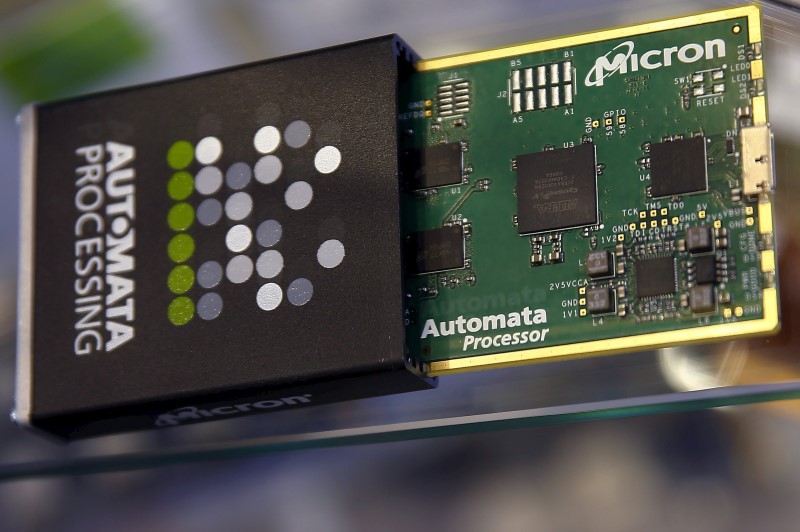
Micron reported adjusted EPS of $12.20 vs $8.79 consensus and revenue of $23.86B vs $19.19B consensus for the quarter ended Feb. 26. Guidance was well above estimates: FY/Q current-quarter EPS forecast $19.15 vs $10.57 consensus and revenue guidance $32.75B–$34.25B vs $22.53B consensus. The board approved a 30% increase in the quarterly dividend; DRAM and NAND pricing and AI/data-center demand underpin the outlook. Shares rose ~2% in after-hours trading; the stock is up roughly 358% over the past year.
Micron’s messaging crystallizes a structural shift: memory is migrating from a commoditized input to a strategic bottleneck in AI stacks. That elevates bargaining power for a handful of suppliers and forces hyperscalers to re-optimize procurement (long-term contracts, vertical integration, custom silicon + proprietary memory channels) — expect multimodal procurement outcomes over the next 6–24 months rather than an immediate, uniform price pass-through. Second-order beneficiaries include server OEMs and system integrators that can capture forum-shifting ASP uplift by bundling memory with optimized AI racks; conversely, legacy OEMs with fixed-price service contracts or low-margin hardware businesses will see margin pressure if they cannot renegotiate. On the supply side, foundry and substrate suppliers will experience incremental lead-time leverage — a single fab delay can shift spot vs contract spreads materially within one quarter. Primary tail risks are classical cyclical dynamics and policy: a rapid capex re-acceleration by non-hyperscaler buyers or a Chinese capacity surge would invert pricing inside 12–24 months; export controls or subsidy programs could fracture regional pricing and create transitory winners but longer-term global oversupply. Near-term catalysts to monitor are contract cadence from hyperscalers, DRAM/NAND inventory data from distributors (weekly/monthly), and any public capex cadence changes from major fabs. Contrarian read: the market may be pricing a permanent paradigm shift into a handful of companies — that’s asymmetric. If AI model efficiency gains or architectural changes (sparsity, compression, offloading) materially reduce memory intensity, downside from current expectations could be swift; hedge sizing should assume a mean-reversion memory cycle on a 12–36 month horizon.
AI-powered research, real-time alerts, and portfolio analytics for institutional investors.
Overall Sentiment
strongly positive
Sentiment Score
0.80
Ticker Sentiment
