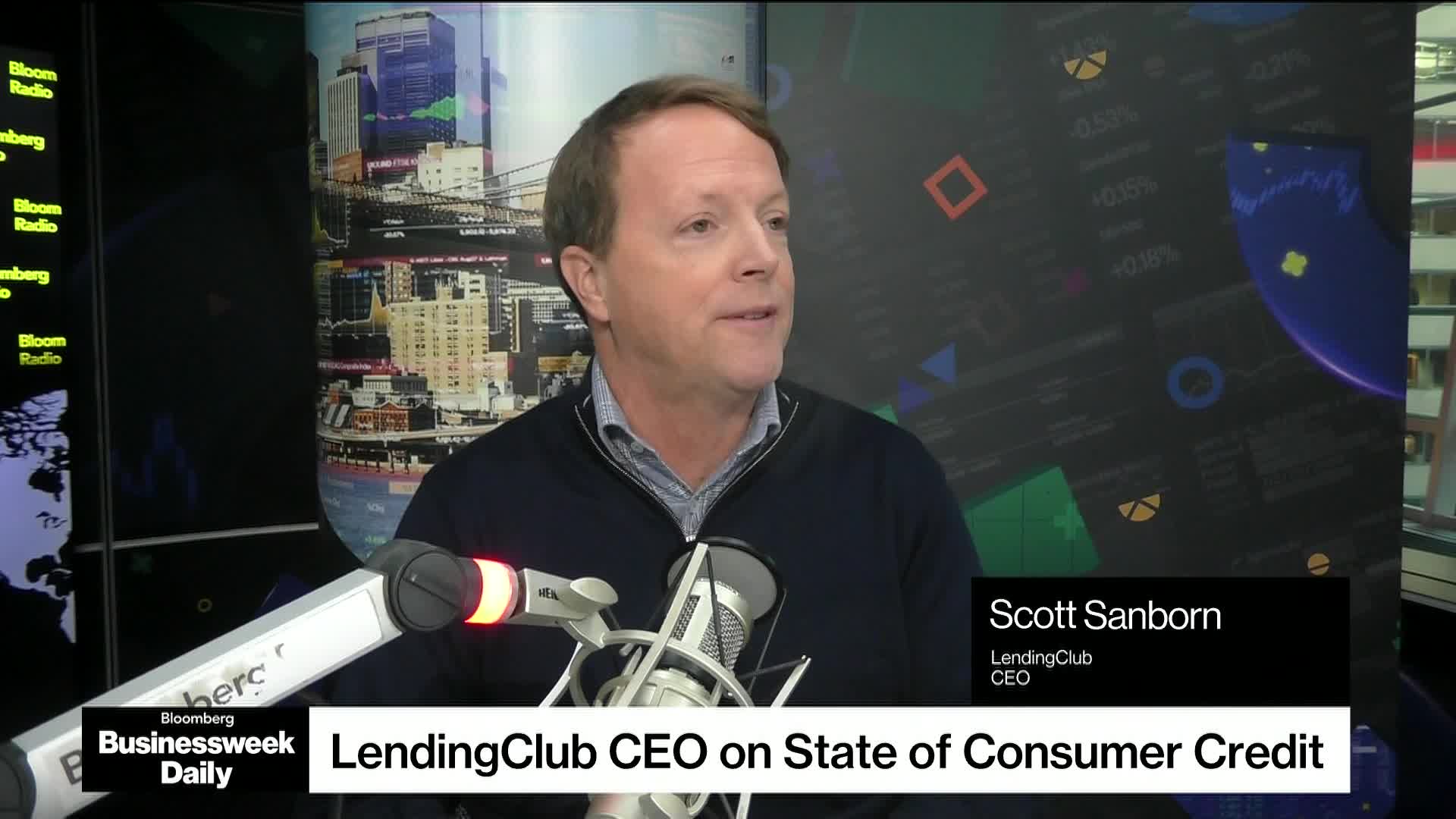
The firm serves a 'middle majority' credit-centric customer base representing roughly one-third of the US population and nearly half of the consumer credit wallet, with average individual income around $125,000 (typical range $80k–$200k). After acquiring a bank in 2021 it began retaining loans on its balance sheet—running over 200 live tests—to refine underwriting and launch products to the marketplace; management reports materially better credit performance (30–40% lower delinquencies, higher recoveries, lower prepayments and fraud) and uses direct-pay features to replace high‑cost credit card debt (card rates noted near 23%, claiming ~700bp savings for customers). The comments underscore durable credit performance and a balance-sheet-led product testing strategy that supports sustainable underwriting advantages versus pure marketplace lenders.
Market structure: Fintech lenders that combine marketplace origination with an owned balance sheet (e.g., LendingClub/LC) are positioned to capture refinance flows from >50% of US cardholders carrying high-rate debt (avg ~23%), so expect share gains vs. major card issuers (COF, AXP, JPM). Better underwriting/testing on a held balance sheet—management claims 30–40% lower roll rates—should compress unsecured ABS spreads by an estimated 25–75 bps if performance sustains, tightening funding costs for top-performing originators.
Risk assessment: Key tail risks are a macro shock (unemployment spike raising 90+ DQ >200 bps q/q), a regulatory clamp on “control of proceeds” or higher capital treatment for held marketplace loans, or a sudden 150–200 bps rise in wholesale funding costs that erodes NIM. Near-term (days–weeks) watch monthly 30-day roll and 90+ DQ prints; medium-term (3–12 months) watch ABS issuance/funding spreads and CFPB/FDIC guidance; long-term (1–3 years) watch capital intensity if held-book scale accelerates.
Trade implications: Tactical allocation favors underweighting card-net-interest-income exposure and overweighting best-in-class marketplace banks. Direct: long LC equity/calls to capture margin expansion and ABS spread tightening; relative: long LC / short COF or AXP to isolate product-cycle; options: buy 6–12 month ATM calls on LC and buy 3–6 month puts on COF as hedge. Size positions to 1–3% of portfolio with stop-losses tied to credit metrics (see decisions).
Contrarian view: Consensus underestimates funding & regulatory risk—markets may underprice capital strain if held-book growth accelerates; conversely, card issuers’ rewards economics are sticky and may sustain earnings despite share loss. Historical parallel: fintech outperformance in benign cycles (2016–19) reversed under stress (2020); if delinquencies remain structurally lower vs. banks, fintech rerating is underdone, but if not, downside is sharp.
AI-powered research, real-time alerts, and portfolio analytics for institutional investors.
Request DemoOverall Sentiment
moderately positive
Sentiment Score
0.45
Ticker Sentiment
