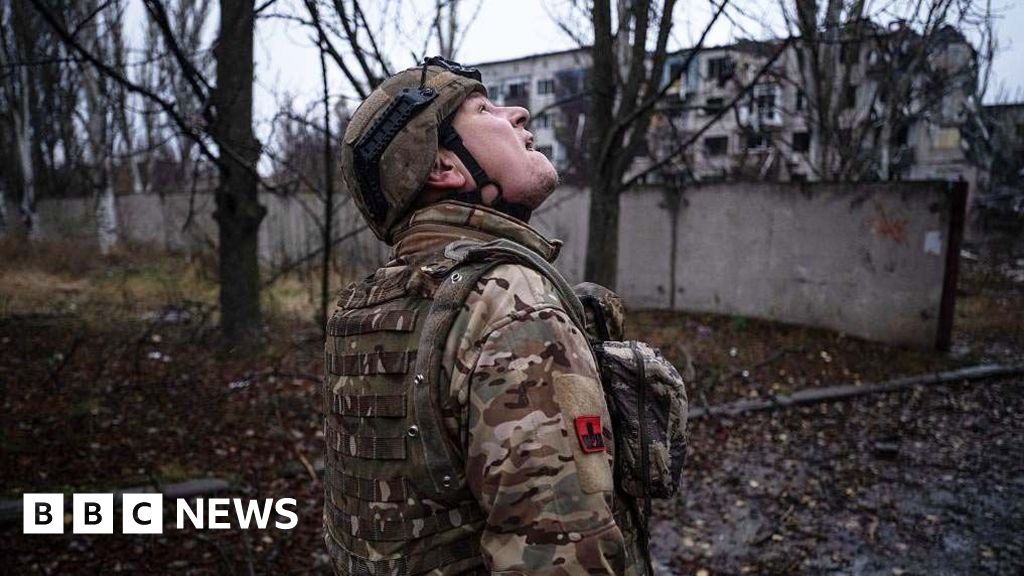
Russia’s war in eastern Ukraine remains a severe frontline risk, with Russian forces reportedly reaching the outskirts of Kostyantynivka, a strategically important city for the defense of the Donbas. The article highlights how drones have transformed battlefield logistics, forcing supply deliveries by aerial drones and making troop rotation extremely difficult, while Ukraine says Moscow is regrouping for a possible summer offensive. Control of the kill-zone still depends on foot soldiers holding territory, underscoring ongoing military and geopolitical escalation.
The key market implication is not a simple escalation trade; it is a logistics attrition trade. Drone-dense warfare reduces the value of heavy equipment relative to ISR, electronic warfare, secure comms, thermal concealment, and last-mile delivery systems, while simultaneously increasing the burn rate of consumables and replacement parts. That shifts marginal spending toward firms that can supply cheap, expendable, software-defined systems faster than the adversary can jam or intercept them.
The second-order effect is on force preservation and rotation. When frontline personnel cannot be cycled out efficiently, operational fatigue compounds and defensive lines become brittle even without a decisive breakthrough. That raises the probability of sudden localized collapses over the next 1-2 quarters, which is more relevant for positioning than headline territorial gains; markets tend to underprice these discontinuous inflection points until they happen.
A subtler read-through is that the battlefield is now a testbed for rapid adaptation. The side that iterates fastest on counter-drone measures, fiber-resistant comms, autonomous resupply, and low-signature mobility will preserve combat power more effectively than the side with better legacy armor. That favors defense primes with exposed unmanned systems, EW, sensors, and battlefield software, but it also creates execution risk for incumbents that are too slow to retool production lines.
Contrarian angle: the obvious ‘defense up’ trade may be crowded, but the underappreciated lag is in transportation and industrial logistics firms that benefit from munitions rearmament, drone component throughput, and stockpiling cycles outside the theater. The more prolonged the kill-zone dynamic persists, the more budgets shift from platform procurement to attritable systems and depot replenishment, which can keep demand elevated for years rather than months.
AI-powered research, real-time alerts, and portfolio analytics for institutional investors.
Request DemoOverall Sentiment
strongly negative
Sentiment Score
-0.55
