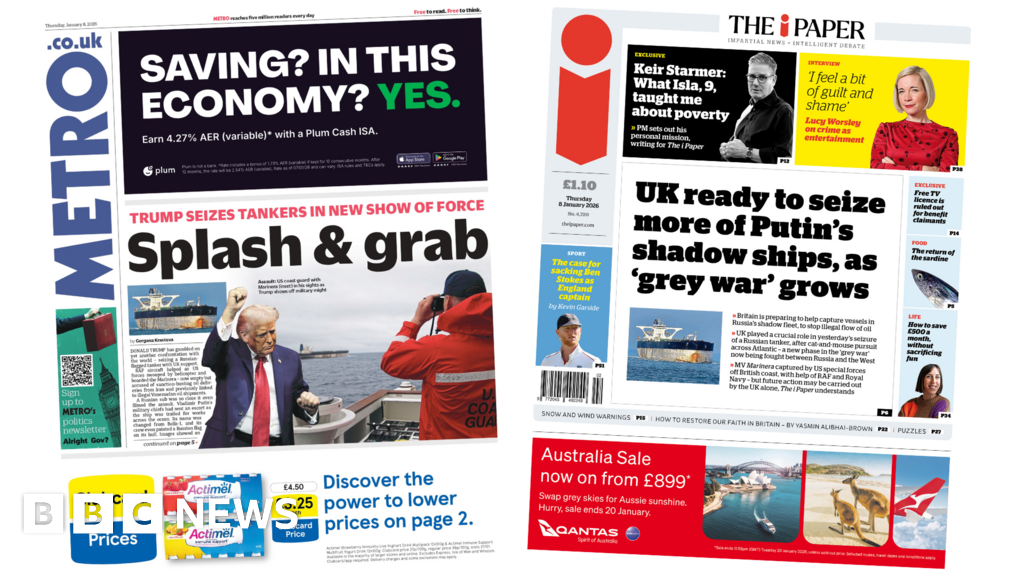
US forces, with operational support from the Royal Navy, have seized oil tankers bound for Russia in an effort to disrupt an alleged illicit 'shadow fleet', underscoring escalating enforcement of sanctions and potential pressure on illicit oil flows. Domestically in the UK, Conservative leader Kemi Badenoch has proposed abolishing business rates for thousands of pubs—projected to cut average pub energy bills by about £1,000—while legislation to lift the two‑child benefit cap is being introduced amid political opposition from Nigel Farage. Separately, an Oxford review indicates many users of GLP‑1 weight‑loss drugs regain weight within two years of stopping, implying longer‑term treatment demand that could affect healthcare spending and pharma sector patterns.
Market structure: Targeted US-UK seizures increase short-term disruption risk to the ‘‘shadow fleet’’ that has been insulating global crude flows from sanctions. Expect upward pressure on Brent/WTI of 3–12% over 1–3 months if seizures continue, plus a multi-week spike in tanker freight (VLCC/Suezmax rates) as vessels reroute or are detained; winners include tanker owners (Frontline FRO, Teekay Tankers TNK, Euronav EURN) and satellite/monitoring vendors (Maxar MAXR, Planet PL) while Russia-facing traders and sanctioned counterparties are immediate losers.
Risk assessment: Tail risks include rapid Russian retaliation (energy export restrictions, cyberattacks on maritime infrastructure) or legal reversals that reverse seizures — each could produce sharp price moves and volatility spikes in oil, freight, and FX (RUB). Immediate window (days): headline-driven oil/FX moves; short-term (weeks–months): insurance premia and freight restructure; long-term (quarters+): structural rise in marine insurance and compliance costs that reduce effective tanker supply.
Trade implications: Direct plays are short-dated Brent call spreads and equity exposure to tanker names and defense/monitoring firms; hedge RUB exposure via short RUB or USD/RUB options. Use pair trades: long tanker equities (FRO/TNK) vs short dry-bulk/container names (e.g., ZIM) to isolate tanker freight upside. Options: buy 1–3 month Brent 10–20% OTM calls or tanker-equity calls; size 1–3% NAV per trade and use 10–12% stop-loss on singles.
Contrarian angles: Consensus assumes seizures permanently reduce Russian exports; history (2019–22) shows traders adapt within weeks via alternative brokers/flags and cargo blending, capping price moves. If enforcement is episodic, insurance-driven freight spikes will be transitory — meaning long-dated oil exposures may be overbought and short 3–6 month volatility fade trades (sell straddles after initial spike) could pay off.
AI-powered research, real-time alerts, and portfolio analytics for institutional investors.
Request DemoOverall Sentiment
neutral
Sentiment Score
0.00
