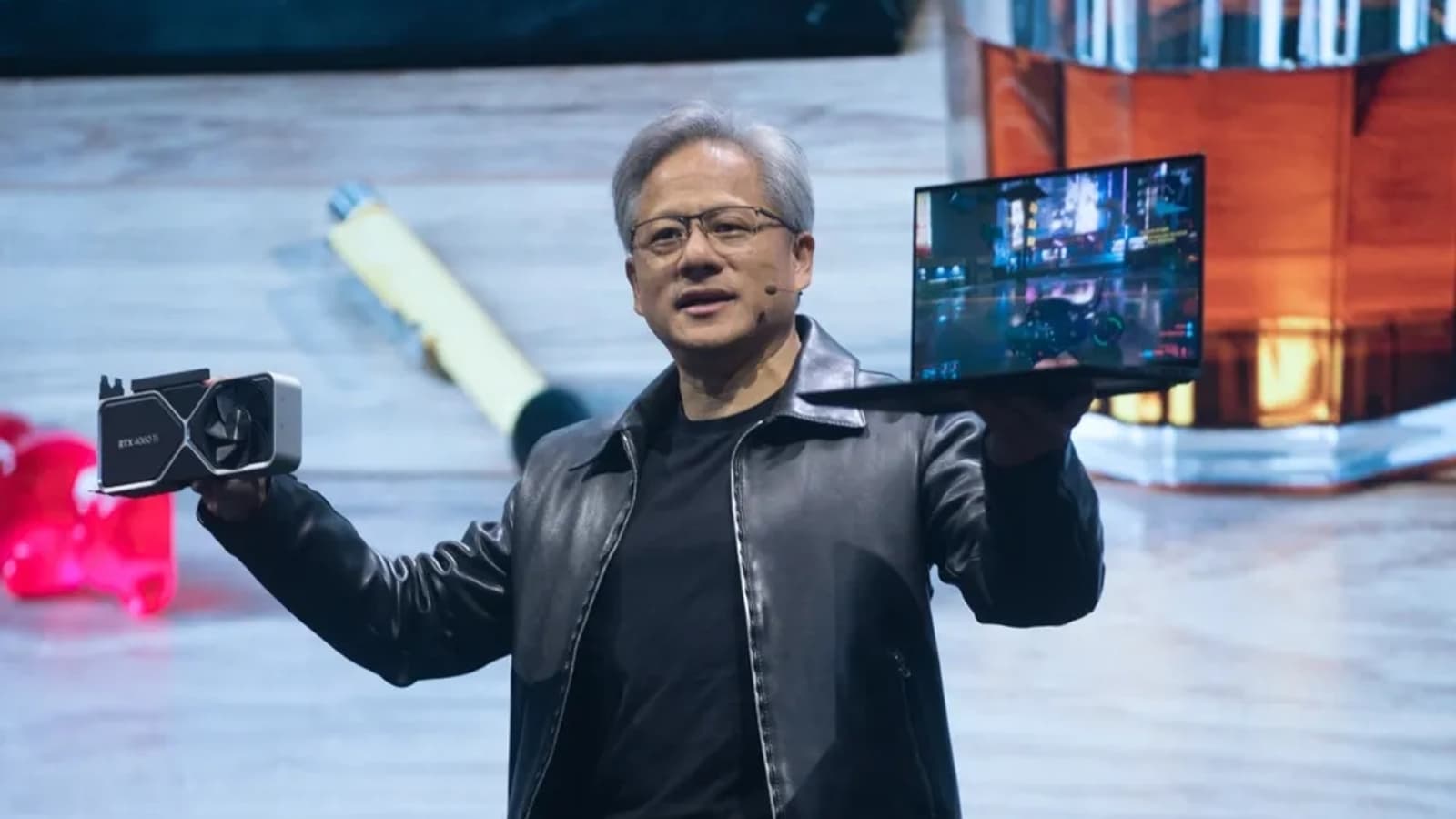
Insider reporting claims NVIDIA has ended production of several GeForce models — including the RTX 5070 Ti and allegedly the RTX 5090 since late 2025 — and is curtailing RTX 5060 Ti 16 GB shipments, with RTX 5080 and RTX 5070 at risk; retailers reportedly face diminished new inventory and rising prices. The insider further alleges NVIDIA will temporarily suspend production in 2026 of all GPUs with more than 8 GB (including mobile SKUs) as capacity is shifted to meet high demand for AI accelerators, contradicting NVIDIA's statement that it continues to supply all GeForce SKUs to partners; this dynamic could tighten consumer GPU supply, lift prices, and signal a material reallocation of manufacturing capacity toward data-center/AI products.
Market structure: Short-term winners are NVIDIA’s SIs and data‑center partners (higher ASPs on H100/H200 lines), foundries (TSMC) and secondary-market GPU sellers; losers are retail OEMs, gaming GPU channels and AMD/Intel if they cannot scale immediately. Pricing power shifts to NVIDIA for high‑margin AI SKUs while consumer GPU ASPs rise due to artificial scarcity; expect 10–30% retail price dislocations on specific >8GB SKUs within 1–3 months. Cross-asset: NVDA equity IV should reprice higher (30–60% implied move potential around earnings), TSM/ASML credit remains supported, and memory/PCB suppliers could see input cost pass‑through; TWD/KRW may strengthen on export flows.
Risk assessment: Tail risks include a major foundry outage at TSMC, US export controls on advanced GPUs, or abrupt AI demand slowdown—each could move NVDA ±15–30% within weeks. Immediate (days): SKU price spikes and IV jumps; short (weeks–months): channel destocking and possible AMD share gains; long (quarters–years): durable reallocation to data‑center revenue if NVDA prioritizes accelerators. Hidden dependencies: HBM inventory, module assembly capacity, and OEM channel contracts; catalysts: NVDA earnings, TSMC capacity guidance, and AMD/INTC product ramps.
Trade implications: Favor defined‑risk long exposure to NVDA via call spreads rather than outright longs to capture secular AI upside while capping drawdown; size 1–2% notional. Pair trade: long AMD (AMD) 1–2% vs short retail GPU ETF/ETR if available to express share capture in gaming. Options: sell premium (iron condors/short strangles) only if 30‑day IV exceeds 1.3x its 90‑day mean; otherwise buy calendar or vertical call spreads 3–6 months out. Rotate overweight semicap suppliers (TSM, ASML) 1–3% for 6–12 months; underweight gaming hardware retailers for 3–6 months.
Contrarian angles: Market may overreact to anecdotal insider claims—NVIDIA’s channel statements historically conservative and product delists often temporary (similar GPU shortages in 2020 resolved in 6–9 months). Mispricings: NVDA IV spikes can create opportunity to sell short‑dated premium; fundamentals still point to high single‑digit to mid‑teens revenue growth in data center over next 4 quarters. Unintended consequence: aggressive reallocation to AI SKUs could open windows for AMD/Intel to grab gaming share, creating mean‑reversion risk for NVDA consumer ASPs over 6–12 months.
AI-powered research, real-time alerts, and portfolio analytics for institutional investors.
Request DemoOverall Sentiment
moderately negative
Sentiment Score
-0.50
Ticker Sentiment
