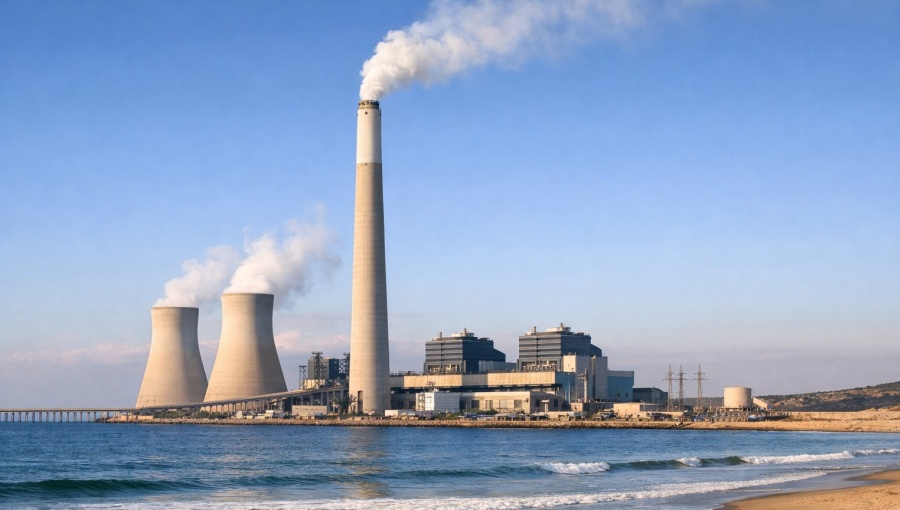
Russia is reported to have given Iran a list of 55 critical Israeli energy targets ahead of President Trump's Power Day deadline (moved to 8pm EST April 7), with the Orot Rabin power station flagged as a ‘Level 1’ target whose loss could significantly disrupt national generation. Israel's isolated grid and concentrated generation/distribution nodes mean damage to a small number of facilities could trigger widespread, prolonged outages; Iran’s switch to China’s BeiDou and reported Russian satellite/drone support increases strike accuracy. Historical precedent cited: Russian strikes this winter destroyed an estimated ~80% of Ukraine’s generating capacity, underscoring the risk of regional escalation and meaningful near-term downside for risk assets and energy/infrastructure exposures.
The most immediate economic effect is an acceleration of procurement and retrofit cycles for layered air-defence, counter-drone, EW and grid-resilience hardware across the Eastern Mediterranean and allied partners. Procurement decision windows compress to 3–12 months (from typical 12–36), favoring firms with near-term production capacity rather than long R&D pipelines; that rotates incremental spend into primes and industrial suppliers rather than early-stage tech.
A second-order reallocation favors distributed generation, fast-deployable microgrids, and industrial backup power — demand that converts orders into revenue within quarters rather than years, benefiting genset and power-electronics manufacturers, and lifting aftermarket/maintenance revenue. Simultaneously, cyber and OT-security vendors gain a durable revenue tail as utilities and large industrials reprioritize resilience spending; expect higher gross margins for vendors with integrated hardware+services offerings across a 6–18 month horizon.
Tail risks are concentrated: a sustained kinetic campaign against energy infrastructure would raise regional insurance/reinsurance premiums and prompt contingency fuel and logistics bottlenecks that could persist for 6–24 months; conversely, rapid diplomatic de-escalation, accelerated deployment of mobile repairs, or effective tactical dispersion of generation would materially blunt the procurement impulse. Key catalysts to watch are public contract awards and emergency budget reallocations (next 30–90 days), inventories and factory utilisation updates (90–180 days), and any export controls that constrain supply of critical components (3–12 months).
AI-powered research, real-time alerts, and portfolio analytics for institutional investors.
Request DemoOverall Sentiment
strongly negative
Sentiment Score
-0.60
