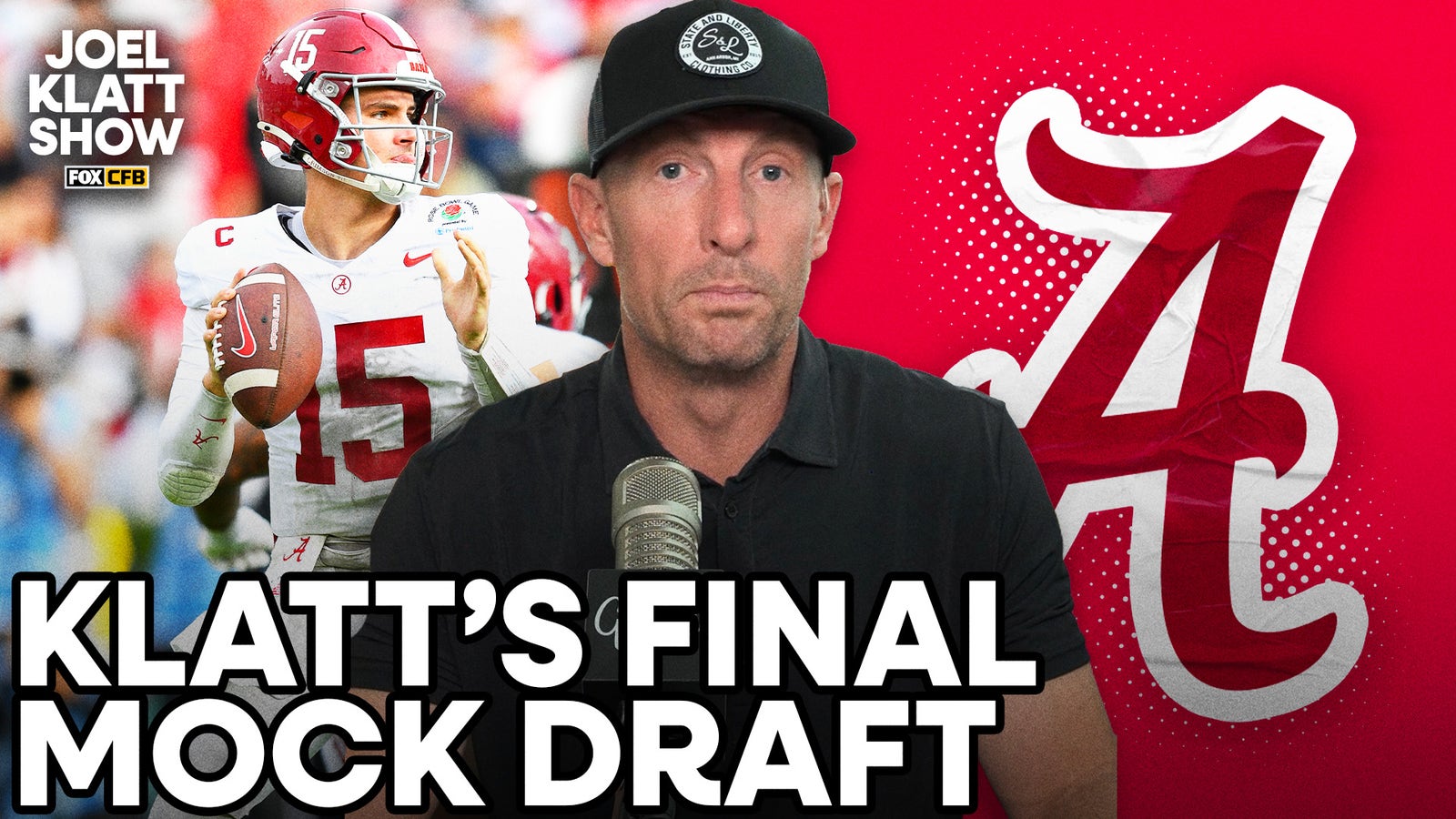
Jay Glazer’s draft-night intel points to Ty Simpson as a likely first-round pick, with possible landing spots including the Jets at No. 16, Steelers at No. 21, or a Cardinals trade-up from No. 34. He also said the Eagles are still seeking a first-round pick for A.J. Brown, with New England the most likely destination, while the Giants may prioritize Arizona State WR Jordyn Tyson with one of their two top-10 selections. The article is largely rumor-driven and likely to have limited direct market impact.
The market is still treating draft-night chatter as entertainment, but the second-order implication is real: quarterback scarcity is being repriced at the margin, and any credible first-round signal for a lower-profile passer can compress the value of trade-back slots in the 20s. That matters most for teams with multiple Day 2 assets, because the cost of securing the fifth-year option is often less about raw draft capital and more about protecting the upside of a cheap QB window; that tends to pull future picks forward and steepens the premium for late-first positioning.
The A.J. Brown angle is less about one receiver than about how hard-cap psychology can distort negotiation timing. A first-round ask on a 28-year-old veteran with multiple years of team control implies the seller is valuing certainty and optionality over immediate fair market value, which can freeze the market until a deadline-like trigger appears. If the asking price holds, the likely consequence is not just delayed action but a widening gap between elite receiver valuations and the rest of the position, because teams will use this as a benchmark in future extension talks.
For the Giants, the key signal is not which prospect they like but that they are behaving like a team optimizing for archetype scarcity rather than consensus board rank. With two premium picks, they can force the rest of the draft to reveal whether the market truly values a playmaker/receiver premium over a less volatile defensive option. The injury history creates a useful contrarian setup: if the room is over-penalizing medical risk, the better trade may be a structured move down from 5 rather than chasing the name at 5.
Contrarian read: the consensus is likely overestimating near-term certainty and underestimating how much draft-night liquidity matters. The first round will probably reward teams with extra flexibility, while the biggest losers are clubs that get anchored to a single premium target and end up overpaying in picks or future salary structure. The sharper edge is to fade public certainty and own optionality into the last hour before each pick, when the probability distribution tightens and prices on both quarterbacks and trades move fastest.
AI-powered research, real-time alerts, and portfolio analytics for institutional investors.
Request TrialOverall Sentiment
neutral
Sentiment Score
0.05
