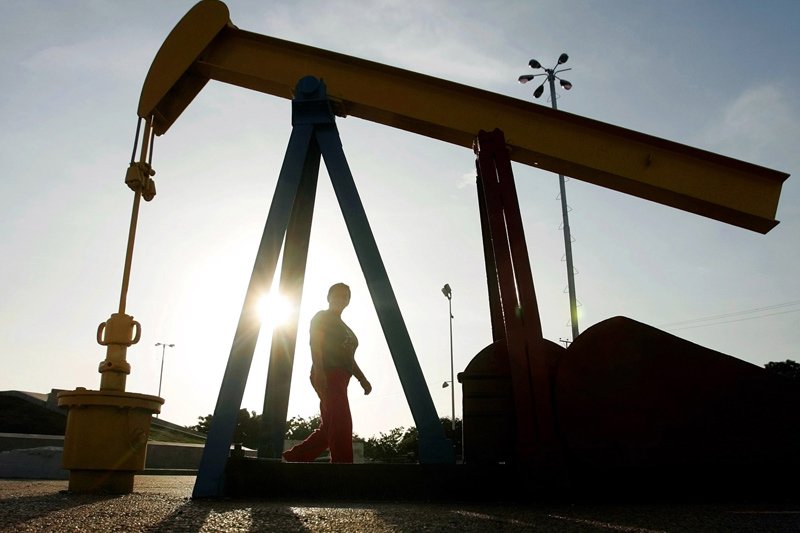
The EIA now expects the Strait of Hormuz to remain effectively closed through the end of May, versus its prior forecast of April, and sees Middle East oil output losses peaking at 10.8 million barrels per day this month. It also lifted its global oil inventory draw forecast to 2.6 million barrels per day for this year, up sharply from about 300,000 barrels previously, implying tighter supplies and elevated oil prices. The update reinforces a risk-off backdrop for equities and energy markets amid the Iran war and supply disruption uncertainty.
The macro read-through is not just “higher oil equals higher CPI” — it is a duration shock. If inventories are now expected to draw at a multi-million-barrel/day pace for months, the market has to reprice both breakeven inflation and the probability that the Fed is forced to hold restrictive policy longer, which is a cleaner negative for duration-heavy indices than for the cash-flow-rich energy complex.
The second-order loser set is broader than the obvious consumer names: airlines, autos, discretionary retail, and chemical/process industries face margin compression with a lag, while the benefit to integrateds is asymmetric because upstream uplift arrives faster than downstream input-cost pass-through. The market also tends to underweight how a sustained oil shock tightens global liquidity via higher headline inflation, which can pressure multiples even in areas not directly exposed to fuel costs.
For Nasdaq, the issue is valuation fragility. Chip stocks already trade as long-duration growth proxies, so any combination of hotter inflation, higher real yields, and Middle East risk premium is a multiple compressor even if earnings estimates barely move; that makes the current setup more vulnerable over the next 1-8 weeks than over a full year. The contrarian point is that the market may still be underpricing the probability of a fast de-escalation headline that collapses the geopolitical premium, so chasing energy upside here has worse asymmetry than fading equity beta via index protection.
The cleanest trade is to stay defensive on duration while expressing the energy impulse through relative value rather than outright beta. If oil remains bid and CPI expectations stay sticky, the highest-conviction winners are balance-sheet-safe producers and refiners; the highest-conviction losers are growth equities with no near-term cash-flow support, especially semis and high-multiple software.
AI-powered research, real-time alerts, and portfolio analytics for institutional investors.
Request DemoOverall Sentiment
moderately negative
Sentiment Score
-0.35
Ticker Sentiment
