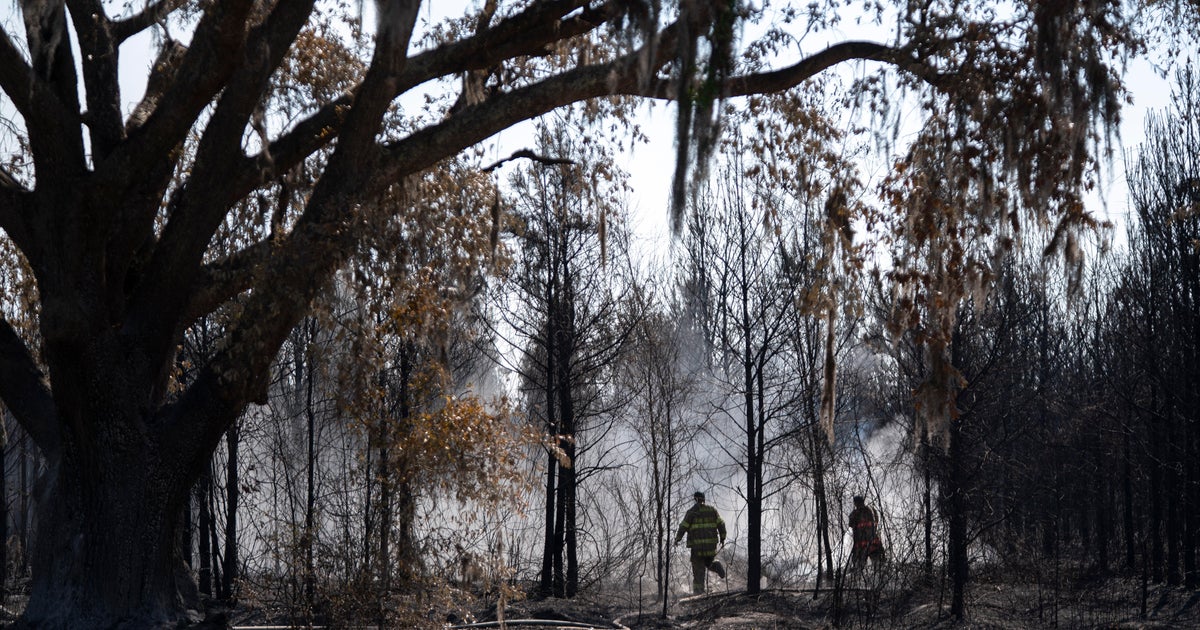
Two massive south Georgia wildfires have burned more than 38,000 acres and destroyed over 100 homes, with the Brantley County fire at 7,500 acres and the Pineland Road fire exceeding 31,000 acres. Extreme drought and high fire activity are worsening conditions, and officials warned these were among the most dangerous fires in the country. The blazes have already caused severe property and business losses and may pressure insurers, local housing, and regional infrastructure.
The immediate market read is not “disaster exposure” in the abstract; it is a localized hit that propagates into underpriced secondary losses across rural housing, small-business credit, and utility reliability. The biggest near-term beneficiaries are actually service providers with equipment, logistics, and remediation capacity in the region, while the losers are uninsured homeowners, small operators with thin liquidity, and any lender concentrated in rural Georgia collateral. The more important second-order effect is that replacement demand will not be clean: labor scarcity, permitting friction, and supply bottlenecks can stretch rebuild timelines from months into years, which delays the economic rebound and increases permanent asset write-down risk.
The infrastructure angle matters more than the headline acreage. If ignition risk is tied to overhead distribution and dry-line conditions, utilities across the Southeast face a wider regulatory and capex overhang, especially where vegetation management and hardening spend were already deferred. That creates a subtle loser/beneficiary split: regulated utilities may see eventual cost recovery, but in the interim the market typically penalizes names with higher rural line exposure and weaker wildfire mitigation disclosure. Defense and emergency-services contractors can also see a small but persistent budget tailwind as states push for detection, response, and grid-resilience spending over the next 6-18 months.
The contrarian view is that this is not automatically a broad housing or insurance systemic event. Because the damage is concentrated in low-density, relatively low-value geography, the aggregate macro impact is likely limited unless fires spread into a larger insured utility-loss event or trigger a wider drought narrative. The bigger mispricing risk is on sentiment: investors may over-penalize regional banks, insurers, and utilities with only indirect exposure, creating a buyable dislocation once claims severity becomes clearer over the next 2-6 weeks.
AI-powered research, real-time alerts, and portfolio analytics for institutional investors.
Request TrialOverall Sentiment
strongly negative
Sentiment Score
-0.83
