

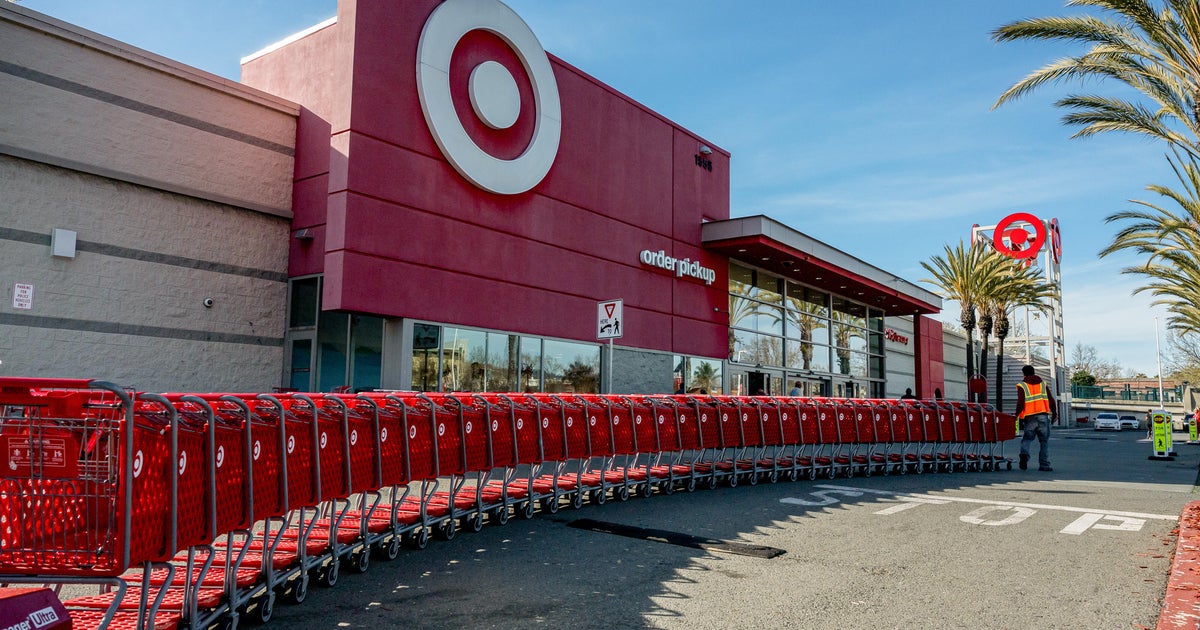
Target reported Q4 results with GAAP EPS of $2.30 ($1.05B) versus $2.41 ($1.10B) a year ago and adjusted EPS of $2.44; revenue fell 1.5% to $30.45B and full-year sales were down nearly 2% to $104.78B. Comparable-store sales declined 2.5% in the quarter, though the company said comps and traffic accelerated late in the period; management issued FY26 guidance for ~2% net sales growth to ~$106.88B and EPS of $7.50–$8.50 (above FactSet consensus $7.30). New CEO Michael Fiddelke is executing operational and merchandising changes amid inventory, staffing and competitive pressures, and the company flagged potential exposure to broader tariff changes — factors that leave near-term fundamentals challenged despite guidance that slightly tops analyst expectations.
Market structure: Target's comp decline (-2.5% last quarter, -3.9% over the broader period) hands share and pricing power to Walmart (WMT) and dollar/discount chains; expect grocers and private-label sellers to gain 100–200 bps of market share regionally over 6–12 months if execution issues persist. The shift signals demand sliding toward staples and value—with discretionary traffic weak—so retailers with superior fulfillment and low-cost structures will tighten margins on peers. Cross-asset: expect a modest widening of TGT credit spreads (20–50bps) and a bump in TGT implied volatility; Treasury demand could tick up in risk-off moves while commodity import costs face a 15% tariff tail risk that pressurizes apparel/mfg margins.
Risk assessment: Tail risks include sustained social/political boycotts or renewed protest-driven store disruptions that could cost TGT 2–4% of annual sales, and a 15% global tariff scenario adding 100–300bps of gross margin pressure for import-heavy categories. Timeline: immediate (days) volatility around the CEO’s annual meeting and guidance cadence; short-term (weeks–months) depend on visible comp re-acceleration or inventory clean-up; long-term (quarters) execution of private-label refresh and staffing changes must restore a 1–3% comp uplift to justify multiple expansion. Hidden dependency: using stores as ship-hubs trades short-term e-commerce margin savings for degraded in-store conversion and higher returns/markdowns.
Trade implications: Direct: establish a tactical short on TGT (2%–3% portfolio) via a 3-month put spread 10–15% OTM to limit capital at risk, targeting a 15–25% downside scenario over 3 months; mirror with a 2%–3% long WMT position (buy 3–6 month 5% OTM calls or buy-and-hold stock) to capture share gains and defensive consumption. Pair trade: go long WMT / short TGT 1:1 sized to beta, target relative outperformance of 6–10% in 3–6 months. Sector rotation: reduce discretionary retail ETFs by 3–5% and reallocate to staples/grocers and logistics names; enter within 5–15 trading days ahead of the annual meeting and re-evaluate on quarterly comps or within 3–6 months.
Contrarian angles: Consensus underestimates brand goodwill and the potential upside from private-label relaunches—if execution fixes reduce out-of-stocks and comps turn +2% sequentially by Q3, TGT could re-rate 10–15% from present levels. The market may be pricing a permanent structural loss; history (Best Buy turnaround) shows operational moves can recover 150–300bps of margin in 12–18 months, so a small, option-weighted long in TGT around major catalysts is defensible. Unintended consequence: aggressive cost cuts in distribution could trigger service degradation and force heavier markdowns during peak seasons, amplifying downside beyond today's consensus.
AI-powered research, real-time alerts, and portfolio analytics for institutional investors.
Request TrialOverall Sentiment
moderately negative
Sentiment Score
-0.40
Ticker Sentiment
