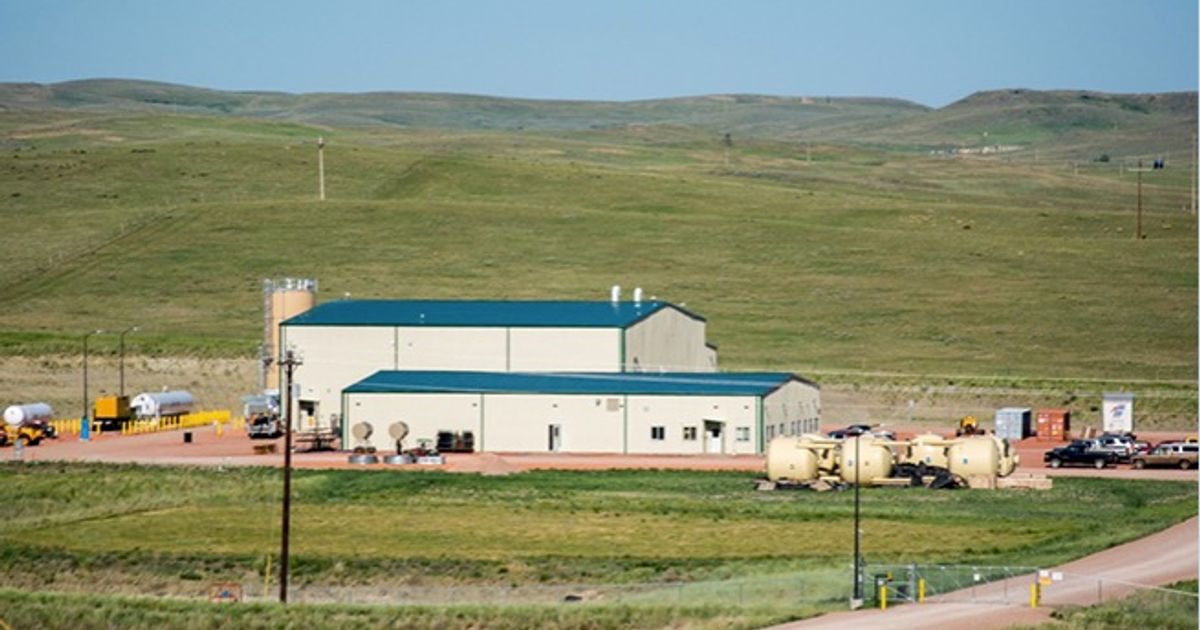
Peninsula Energy has commenced acidification at Header House 16 in MU-4 and reports Header House 14 is tracking ahead of its reset plan (average flows ~15 GPM vs plan 12 GPM; pH reduced to ~3.48 S.U. from ~8.5 targeting <2.0), with all six MU-4 header houses now scheduled for completion by end‑September 2026 (ahead of a November plan). The company maintained CY2026 uranium production guidance of 0.4–0.5Mlbs, noting MU-4 will represent ~60% of forecast production and CPP piping upgrades/commissioning are on time and below budget. U.S. policy tailwinds (DOE $2.7bn enrichment funding and an executive order on processed critical minerals including uranium) provide sector support that could underpin domestic pricing and strategic positioning.
Market structure: Peninsula (ASX:PEN / OTCQB:PENMF) and US ISR peers (UEC, Energy Fuels UUUU) are near-term winners from faster MU-4 acidification (flow 15 GPM vs plan 12 GPM) and CPP upgrades; US enrichment players (Centrus CTRS) and uranium ETFs (URA) also benefit from DOE funding and an EO that can create de‑facto price support. Primary losers are lower‑cost, high‑volume exporters (Kazakh producers) and utilities reliant on cheap spot product if US policy erects import frictions. The net effect is modest near‑term domestic pricing power but not an immediate market‑wide supply shock: Peninsula’s 0.4–0.5Mlbs CY2026 is tiny versus ~50Mlbs US annual consumption, so sector price moves will be driven by policy and aggregate project restarts, not a single mine.
Risk assessment: Key tail risks are operational (failure to reach <2.0 pH within 90 days at HH14/15), regulatory reversal or an environmental incident that halts ISR activity, and secondary‑supply surges from Russia/Kazakhstan which could deflate prices. Immediate (days) market impact should be muted; short term (weeks–months) hinge on March‑quarter production flow and CPP commissioning metrics; long term (years) depends on DOE $2.7bn allocations and potential price‑floor mechanisms. Hidden dependencies: resin storage, water‑purification success, and pipeline corrosion fixes—any delay can flip a bullish narrative quickly. Catalysts: DOE funding awards (next 30–180 days), quarterly MU reports (Mar 2026), and congressional hearings.
Trade implications: Direct: establish size‑controlled long exposure to PEN/PENMF (2–3% portfolio) for asymmetric upside if MU‑4 meets schedule, and add 1–2% in larger producers (CCJ) for liquidity. Use URA 6–12 month call spreads to express sector bullishness (buy ATM, sell ~+30% strike) to cap premium. Pair trade: long UEC (USTicker: UEC) vs short Kazatomprom (LSE: KAP) 6–12 months to play domestic policy premium; set stop loss 20–25% and take profit at 60–100% depending on catalyst delivery. Entry window: initiate positions now to capture upside into Mar–Sep 2026 delivery milestones; exit or re‑balance if MU‑4 misses pH targets by >30 days or CPP commissioning slips beyond Jan 2026 timeline.
Contrarian angles: Consensus underestimates policy durability—an EO mentioning uranium and a multi‑year DOE spend materially raises baseline for US projects, but the market may over‑discount operational execution risk at small caps like PEN. Mispricing likely exists in OTC liquidity (PENMF) where operational improvement could trigger >100% rerating versus ETFs. Historical parallel: Cameco’s restart cycles show supply discipline can prod outsized equity moves; conversely, a rapid influx of secondary material after policy announcements is an overlooked downside that could compress spot gains in 12–24 months.
AI-powered research, real-time alerts, and portfolio analytics for institutional investors.
Request DemoOverall Sentiment
moderately positive
Sentiment Score
0.40
