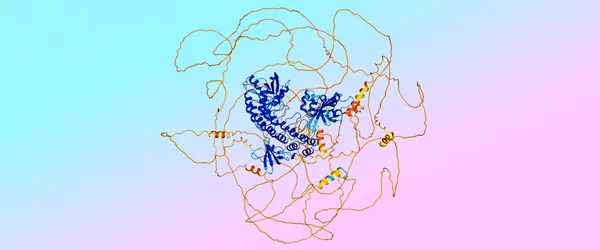
AlphaFold, DeepMind's AI protein-structure predictor, has been adopted by over three million researchers with more than a third in the Asia‑Pacific and cited in over 13,000 papers; regional case studies in Malaysia, Singapore, Korea, Taiwan and Japan demonstrate accelerated drug-target discovery, novel protein-fold identification and the detection of previously unknown viral families. While the technology—whose developers received the 2024 Nobel Prize in Chemistry—significantly boosts R&D productivity and could catalyze licensing, partnerships and downstream biotech deal activity, it remains an enabling research platform rather than an immediate revenue-generating product.
Market structure: AlphaFold-like models reallocate value from bespoke structural-biology services toward compute, cloud platforms, and life‑science tools. Direct winners are GPU/AI infra (NVDA), hyperscalers (GOOGL, MSFT, AMZN) and lab-automation/sequencing leaders (TMO, ILMN) that scale downstream validation; losers are niche structural‑biology CROs and early-stage prediction vendors facing margin compression. Net demand: +10–30% incremental GPU/cloud cycles for drug R&D over 12–36 months; modest downward pressure on single-project wet‑lab revenue but higher overall R&D throughput.
Risk assessment: Tail risks include fast‑moving regulation (EU AI Act, FDA guidance) and IP litigation that can curtail commercial use—low probability but >$1bn impact for large pharma partners. Immediate (days) market effect is muted; short term (3–12 months) expect partnership/news-driven re‑rating; long term (1–3 years) potential structural uplift in drug discovery ROI but contingent on wet‑lab validation rates. Hidden dependency: adoption hinges on access to proprietary protein interaction data and compute budgets, not just model accuracy.
Trade implications: Favor long positions in NVDA (AI compute), GOOGL (DeepMind/IP monetization), and TMO/ILMN (validation instruments) with tactical 1–3% position sizes; avoid/short overvalued AI‑bio small caps and specialized CROs. Options: use 90‑180 day call spreads on NVDA/GOOGL to express upside while limiting capital; pair trade long ILMN vs short XBI to capture tool-versus-small‑cap dispersion. Rotate +3–5% weight into IT (semis/cloud) and Healthcare Equipment for next 6–12 months.
Contrarian angles: Market may underprice the near‑term boost to lab automation (TMO) and overprice standalone AI‑drug discovery startups without validation pipelines. Historical parallel: sequencing era — platform/instrument leaders captured most upside while many application-layer startups failed. Unintended consequence: open models lower entry barriers, compressing SaaS margins and accelerating consolidation—avoid high‑multiple pure‑play AI‑bio IPOs.
AI-powered research, real-time alerts, and portfolio analytics for institutional investors.
Request DemoOverall Sentiment
moderately positive
Sentiment Score
0.45
