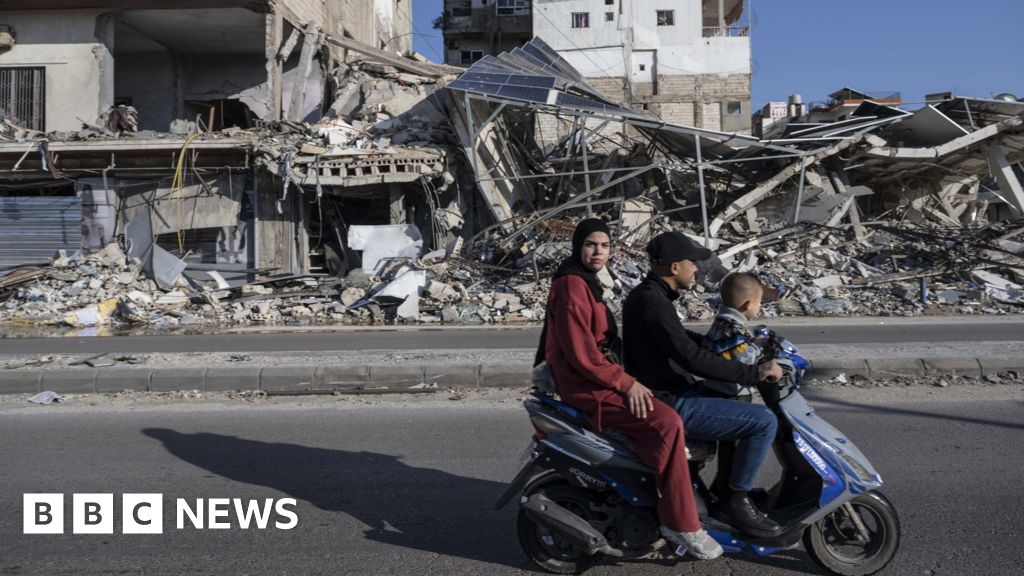
Israel will seize a security zone up to the Litani River (~30 km from the border), with IDF operations that included blowing up five bridges; Lebanese authorities report >1,000 killed (including at least 118 children and 40 health workers) and >1,000,000 displaced. The move signals material escalation with a major humanitarian crisis and increased risk of broader regional conflict, likely prompting risk-off flows, safe-haven bids and higher regional sovereign/credit risk premia. Monitor implications for defense suppliers, regional asset prices and energy risk premia, and potential spillovers to nearby markets.
Immediate market reaction will be a multi-channel risk shock: a near-term war-risk premium in energy and insurance, simultaneous safe-haven flows into gold and vol, and widening of regional EM credit spreads driven by sovereign and bank stress. Mechanically, a sustained supply-disruption premium of $5–12/bbl is plausible within 2–8 weeks if shipping lanes or Levant Basin operations face even intermittent threats, which feeds through to breakevens and inflation expectations and pressures real yields.
Defense demand is the most direct corporate channel: accelerated procurement cycles (munitions, ISR, comms) create a predictable revenue backlog that can be funded within 30–90 days via emergency appropriations or allied purchases. That said, margin capture differs: large primes with fixed-cost leverage (LMT, RTX, GD) benefit faster than smaller specialized manufacturers who need 6–12 months to ramp production and secure supply chains for electronics and precision components.
Second-order contagion will show up in EM funding and insurance markets — Lebanese and regional banking stress can trigger USD funding squeezes, pushing cross-currency basis and EM CDS wider over months. Traders should watch HYG/EMB spreads and shipping insurance (war-risk) indicators; these often lead equity risk-off reversals and create tactical opportunities to buy volatility or cheapen defensive FX positions.
The consensus trade (buy every defense name, buy oil) misses two important moderating outcomes: (1) diplomatic de-escalation is binary and can snap prices back within 1–3 weeks if major restraint or mediating pressure arrives; (2) defense equities may be partially priced for action already — use options structures to retain upside while capping downside if the conflict doesn’t broaden. Position sizing and explicit stop/triggers are therefore essential.
AI-powered research, real-time alerts, and portfolio analytics for institutional investors.
Request DemoOverall Sentiment
strongly negative
Sentiment Score
-0.80
