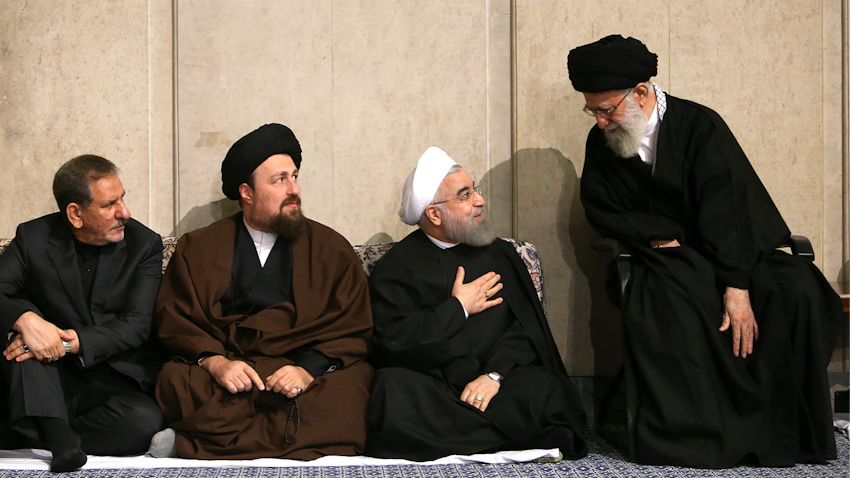
Iran is experiencing a subdued but consequential contest over succession that pits clerical conservatives, pragmatic establishment figures and the Islamic Revolutionary Guard Corps against one another for influence over the next supreme leader. The opaque jockeying — involving the Assembly of Experts, security services and elite institutions — leaves the timing and policy orientation of any successor uncertain, with material implications for Tehran’s approach to the nuclear file, sanctions relief and oil exports. For investors, the chief risks are increased geopolitical volatility that could affect regional energy markets and emerging-market sentiment, rather than an immediate economic shock; policy continuity or a hardline shift will determine the scale of market impact.
Market structure: A contested Iranian succession raises a near‑term geopolitical risk premium that most benefits large integrated oil & gas majors (XOM, CVX) and global gold/mining plays (GLD, GDX), plus US defense primes (RTX, LMT) that win incremental contract budgets. Losers include airlines (AAL, UAL), regional EM sovereigns, and tanker/shoreline service firms; expect 0.5–1.5 mb/d of perceived oil supply risk to lift Brent $3–$12 under baseline stress and $20+ under serious Strait of Hormuz disruption.
Risk assessment: Tail risks are low probability (<10%) but catastrophic (Strait closure → >2 mb/d outage → Brent +$30–$60). Immediate (days) risk = volatility spikes and spread widening; short term (weeks–months) = sanctions enforcement/insurance price moves; long term (quarters–years) = re‑pricing of energy security, higher defense budgets, and persistent EM risk premia. Hidden dependencies: Saudi spare capacity, Chinese/Iranian barter channels, and tanker insurance (P&I) thresholds that can abruptly stop flows. Key catalysts: leader incapacitation, major strike, or coordinated sanctions within 30–90 days.
Trade implications: Take concentrated, time‑limited tactical positions: modest long in XOM/CVX and GLD, paired with hedges in EM and travel. Use options to size convexity: buy 3–6 month call spreads on energy and 1–3 month put spreads on EEM/airlines. Rotate into defense (RTX/LMT) on pullbacks and trim duration exposure if oil stays >$90 for 6+ weeks.
Contrarian angles: Consensus may overstate permanence of supply shock — if Brent >$95 for >30 days, Saudi/OPEC can and historically has leaned on spare capacity, forcing mean reversion in 6–12 weeks. Consider tactical long EM (EEM) on >8% drawdown within 2 months and avoid one‑way long duration bets; inflation‑driven policy tightening is the underpriced secondary risk.
AI-powered research, real-time alerts, and portfolio analytics for institutional investors.
Request DemoOverall Sentiment
moderately negative
Sentiment Score
-0.35
