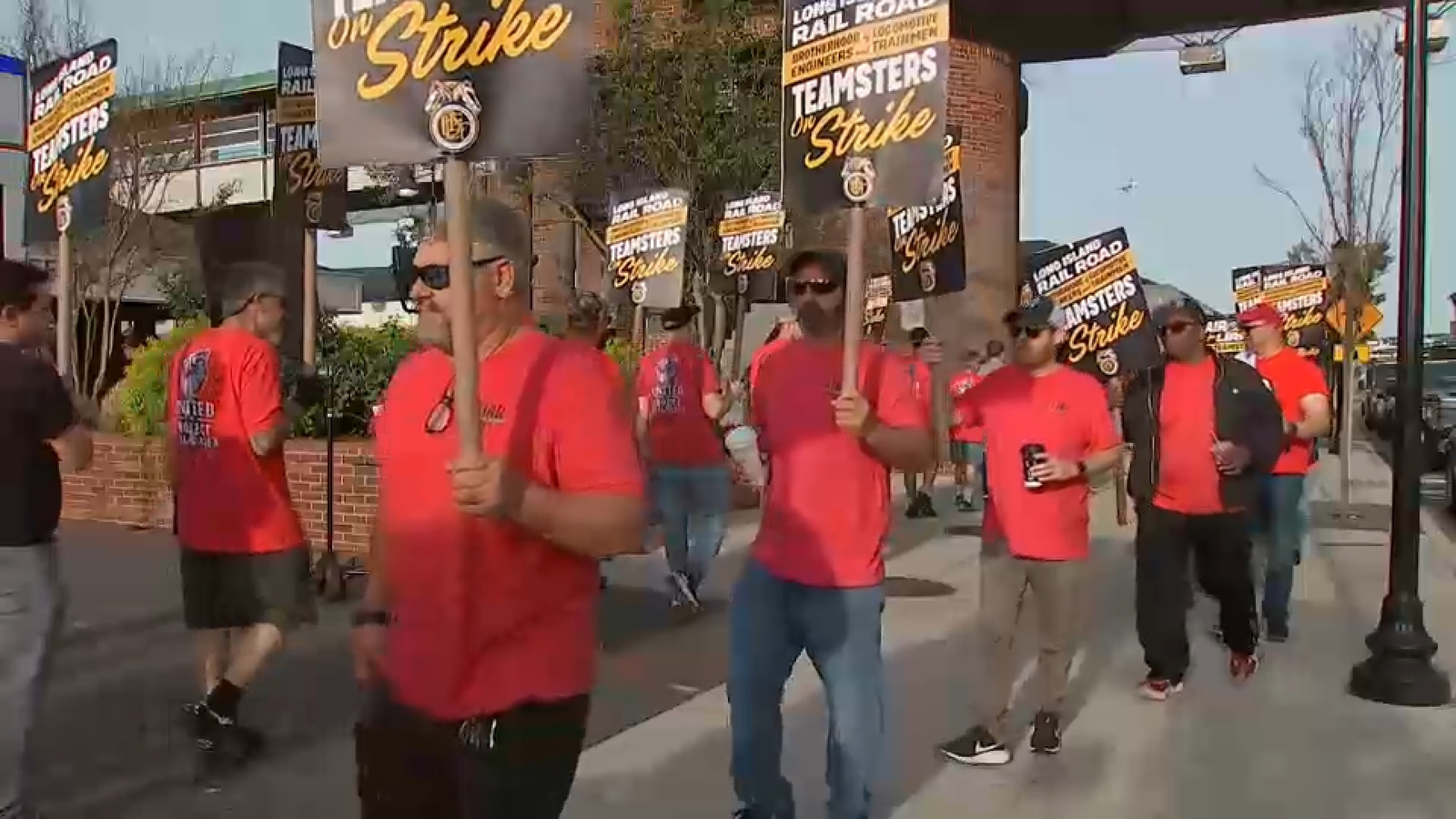
Approximately 3,500 Long Island Rail Road workers, about half the workforce, struck after contract talks failed, suspending service for roughly 300,000 daily riders. The MTA is deploying limited shuttle buses from six Long Island stations to two Queens subway hubs starting Monday, but officials warn the replacement capacity is insufficient. The dispute has already triggered federal mediation and is disrupting commuter traffic into New York City, with potential spillover into the subway system.
The immediate market read is not about one transit system; it is about the probability of a broader public-sector labor template in a high-cost region. A prolonged outage raises the odds of wage concessions elsewhere in unionized infrastructure, which can leak into operating expense assumptions for airports, utilities, and municipal contractors that depend on dense Northeast labor markets. For MTA-adjacent risk, the bigger second-order hit is revenue leakage from recurring commuters who may permanently reoptimize into hybrid work or alternate corridors, making this less a one-week event and more a gradual ridership elasticity problem.
The near-term pressure is asymmetric: congestion costs hit employers, retailers, and service businesses immediately, while any upside to substitutes is more durable if commuters discover workable alternatives. Subways, buses, rideshare, and parking operators can capture share for days, but if the strike extends into a second week, the operational strain starts to show up in lower downtown foot traffic, weaker discretionary spend, and higher absenteeism. That matters because the longer the disruption lasts, the more likely agencies are forced into service subsidies or emergency spending, which is usually negative for credit perception even if headline farebox collections are temporarily protected.
Consensus is likely underestimating the political constraint on a fast settlement: once both sides have framed the dispute as existential, the first deal may still be far from clean. The market should price a base case of a short strike resolving, but a non-trivial tail remains for a rolling work stoppage or costly arbitration that leaves future labor costs structurally higher. That is bearish for transit-linked municipal balance sheets and, by extension, for any asset class exposed to Northeast public finance spreads if this becomes a repeatable playbook.
AI-powered research, real-time alerts, and portfolio analytics for institutional investors.
Request DemoOverall Sentiment
strongly negative
Sentiment Score
-0.55
Ticker Sentiment
