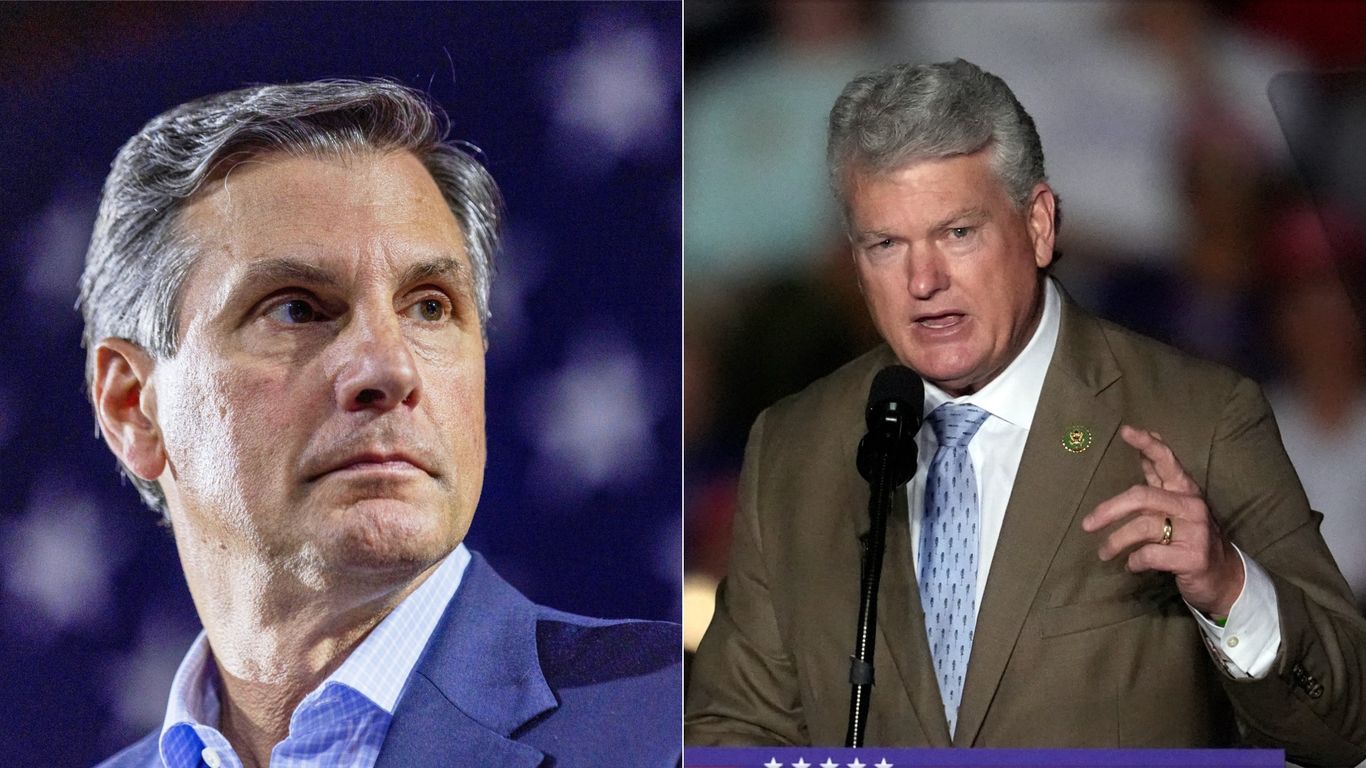
Republicans Mike Collins and Derek Dooley will face off in a June 16 runoff to determine who challenges Sen. Jon Ossoff in Georgia this November. The race is notable because it is one of the few major GOP contests without a Trump endorsement, and Republicans view Ossoff’s seat as a key pickup opportunity. The article is political and directional for the Senate balance but contains no direct market or company-specific financial catalyst.
The immediate market read-through is not about the Senate seat itself but about the probability of a Republican sweep in 2026 and, by extension, the odds of a more business-friendly policy environment in the second half of the decade. The runoff reduces uncertainty, but it does not yet resolve the bigger issue: whether GOP turnout energy can be transferred from primary voters to the broader electorate in a midterm environment that typically penalizes the governing party. That gap matters more than candidate quality because it determines whether this becomes a real pickup opportunity or just another expensive red-state defense.
The second-order effect is on sectors that are most sensitive to federal tax, regulation, and staffing regimes: managed care, large-cap banks, defense, energy, and telecom. A Republican gain in Georgia would be read as validation that suburban and exurban coalition-building is still viable, which would lower perceived odds of sweeping regulatory tightening and make 2026 policy tails less punitive for cyclicals and domestic-capex names. Conversely, if the eventual nominee underperforms relative to expectations, the market will quickly reprice the odds of a blue-leaning Senate map and a higher-for-longer regulatory overhang into late 2025.
The main risk is timeline mismatch: markets tend to overtrade special-election style signals months before they matter and then get little confirmation until fundraising, polling, and national approval data roll in. The more important catalyst window is the next 6-12 weeks, when runoff turnout, donor flow, and any endorsement or outside-spending changes can shift the race from symbolic to probabilistic. The contrarian view is that the market may be overestimating the importance of candidate ideology and underestimating Georgia’s increasingly elastic swing electorate; in that case, the seat remains genuinely competitive regardless of who wins the runoff.
AI-powered research, real-time alerts, and portfolio analytics for institutional investors.
Request DemoOverall Sentiment
neutral
Sentiment Score
0.00
