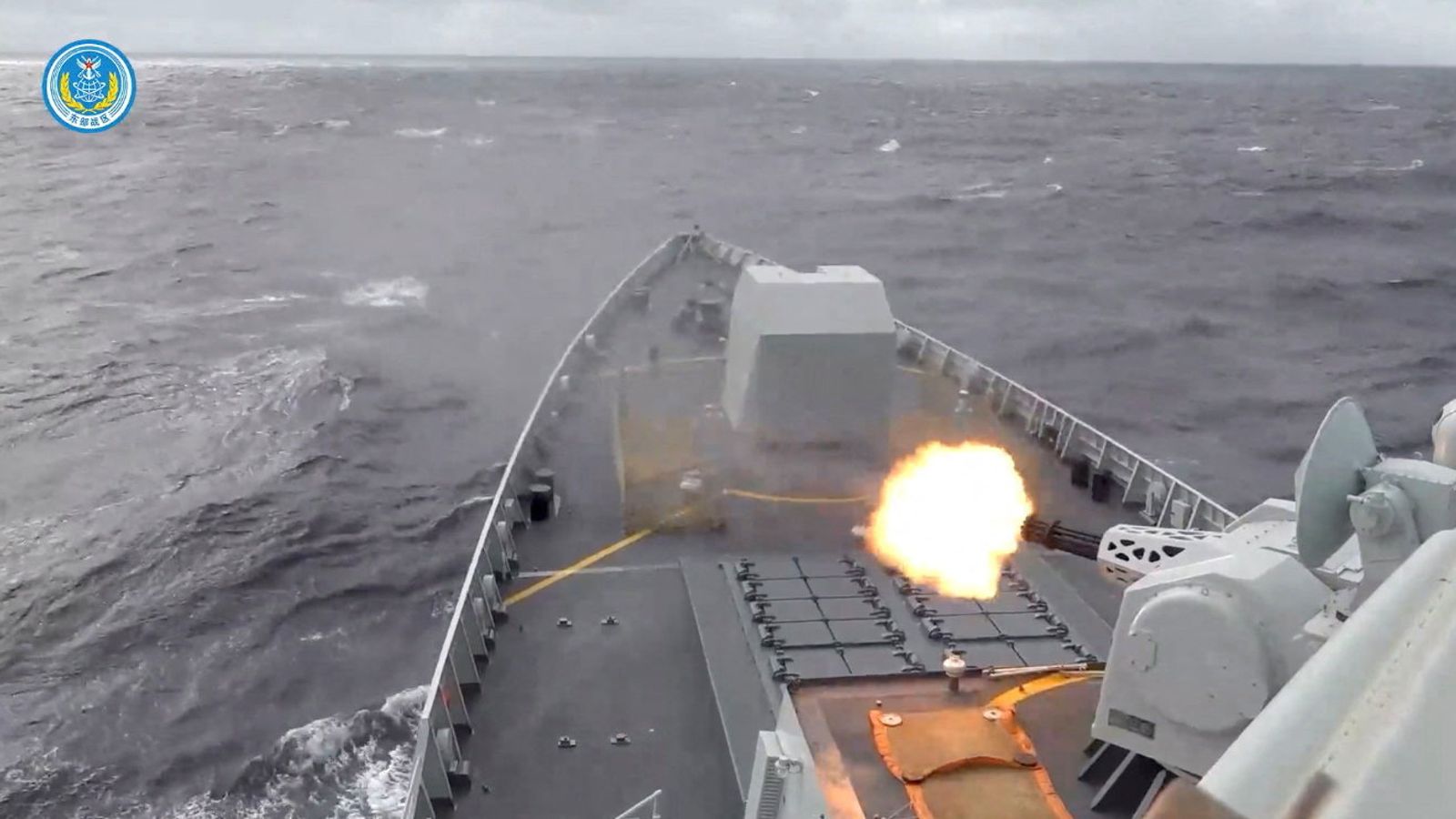
Beijing launched large-scale air, sea and rocket drills around Taiwan, with Taiwan reporting 89 Chinese military aircraft and drones detected and 67 entering its response area as Taipei placed forces on high alert. Chinese statements framed the exercises as deterrence against 'external interference' and included sea-air combat patrols and blockades on key ports; Taiwan's transport ministry said international flights would be diverted or given alternative routes. The escalation increases regional geopolitical risk and the prospect of disruptions to shipping lanes and air traffic, raising downside risks for Asian assets, logistics and travel sectors while benefiting defense-related exposure.
Market structure: Near‑term winners are defense contractors and defence ETFs (e.g., LMT, NOC, RTX, ITA) and specialist logistics/shipping names that can reroute capacity; losers are Taiwan‑centric technology exporters (TSM, 2330.TW via ADR TSM) and Asia‑Pacific carriers (e.g., 0293.HK Cathay). Expect pricing power for defence suppliers to edge up 5–15% in a 1–3 month window as procurement dialogue accelerates; shipping spot rates could rise 10–20% if routings avoid Taiwan straits for weeks.
Risk assessment: Tail risk is low‑probability/high‑impact — a blockade or kinetic incident that removes >30% of advanced wafer output would spike chip prices and core inflation for quarters and force USD safe‑haven flows; immediate shock window is days–weeks, systemic supply‑chain reconfiguration plays out over 6–24 months. Hidden dependency: western tech OEMs’ just‑in‑time inventories are 1–2 weeks — a short disruption cascades quickly; catalysts to watch are formal Chinese naval blockades, US/Japan force posture changes, or sanctions announcements.
Trade implications: Tactical trades favor 1) 2–3% portfolio long in ITA or split LMT/RTX for 3–9 months, 2) buy 90‑day 25‑delta calls on LMT/RTX sized 0.5–1% to capture volatility, and 3) hedge with 6–12 month 10% OTM puts on TSM or the EWT ETF sized to cover 2–3% Taiwan exposure. Rotate cash from cyclical Asia travel/leisure into energy (XLE) and specialised semicap leaders (ASML, LRCX) for 6–18 months.
Contrarian angles: Consensus assumes prolonged supply shock; history (1996 Taiwan crisis) shows most market impact is compressed into weeks while capex and routing adapt over quarters. That implies defense equities may be initially overbought — use option structures to limit premium paid and consider buying high‑quality semicap names (ASML, AMAT) on >10% dips as beneficiaries of onshoring over 12–36 months.
AI-powered research, real-time alerts, and portfolio analytics for institutional investors.
Request DemoOverall Sentiment
moderately negative
Sentiment Score
-0.50
