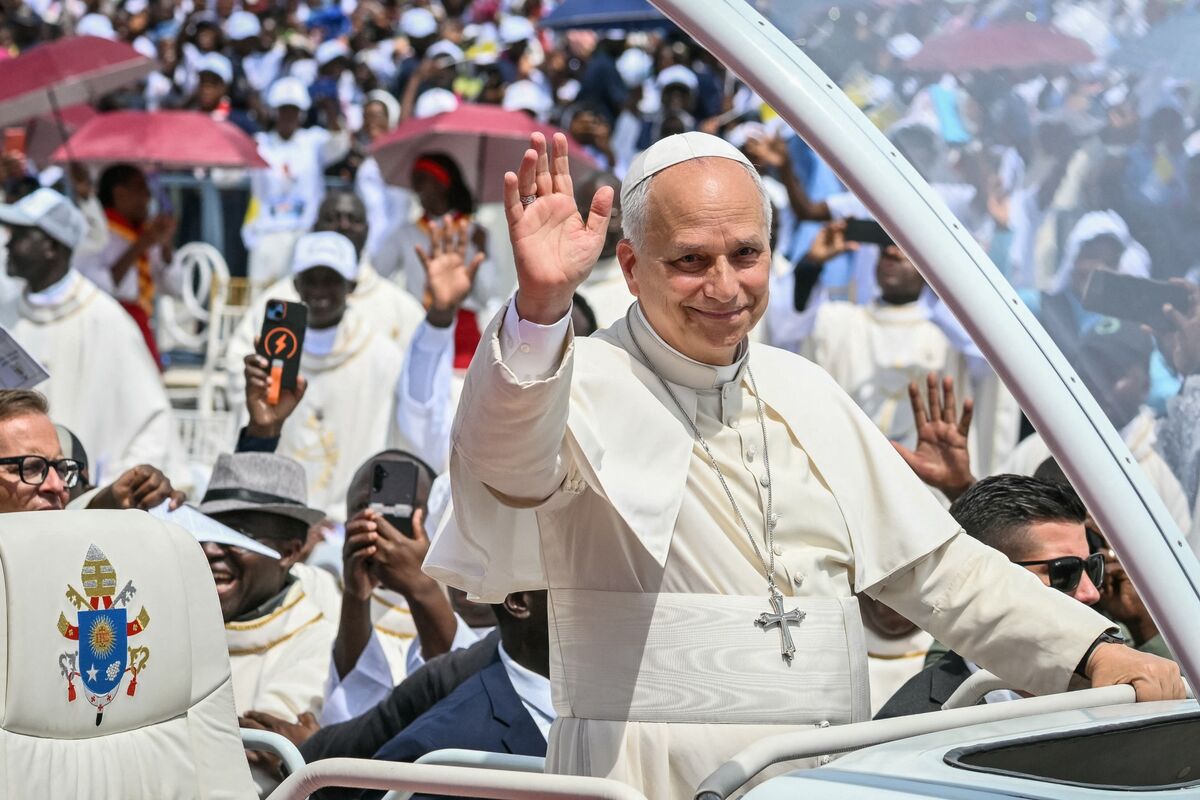
Pope Leo XIV will launch his first encyclical on artificial intelligence on May 25, with Christopher Olah, co-founder of Anthropic and a machine learning expert, attending the event. The article is primarily a factual announcement about the Vatican’s AI-focused policy messaging and Anthropic’s unexpected presence. No financial figures, corporate guidance, or direct market-moving implications are disclosed.
This is less a direct AI monetization event than a legitimacy event. A high-profile institutional signal from the Vatican can help normalize AI governance as a board-level issue, which modestly favors the largest model providers and enterprise vendors with compliance, auditability, and policy teams — and disadvantages smaller, less transparent builders that rely on speed over process. In practice, the near-term winner is not a specific product but the category of “trusted AI,” where scale, distribution, and governance overhead become competitive moats.
The second-order effect is on procurement rather than usage. Large enterprises and public-sector buyers often follow the lead of respected institutions when setting acceptable-use frameworks, so this can slow reckless deployment while accelerating budget for safety layers, model monitoring, and human-in-the-loop systems over the next 6-18 months. That favors picks-and-shovels exposure to governance tooling, data lineage, and secure enterprise infrastructure more than consumer-facing AI apps.
The contrarian view is that symbolic endorsements can also raise the bar for AI vendors: once the discourse shifts from capability to ethics, reputational risk rises for any company seen as cutting corners on model behavior, content controls, or training data provenance. That is a subtle headwind for the most aggressive frontier-model narratives if the market was already pricing in rapid, frictionless adoption. In the short run, this is probably not a large P&L catalyst, but it reinforces a medium-term rotation toward quality, compliance, and enterprise trust.
Tail risk: if the AI governance debate hardens into policy or procurement constraints over the next 3-12 months, it can compress growth expectations for application-layer names while expanding budget share for security and compliance vendors. If the event remains purely symbolic, the market impact fades quickly; the tradeable edge is in betting on who captures the compliance spend, not on the headline itself.
AI-powered research, real-time alerts, and portfolio analytics for institutional investors.
Request DemoOverall Sentiment
neutral
Sentiment Score
0.10
