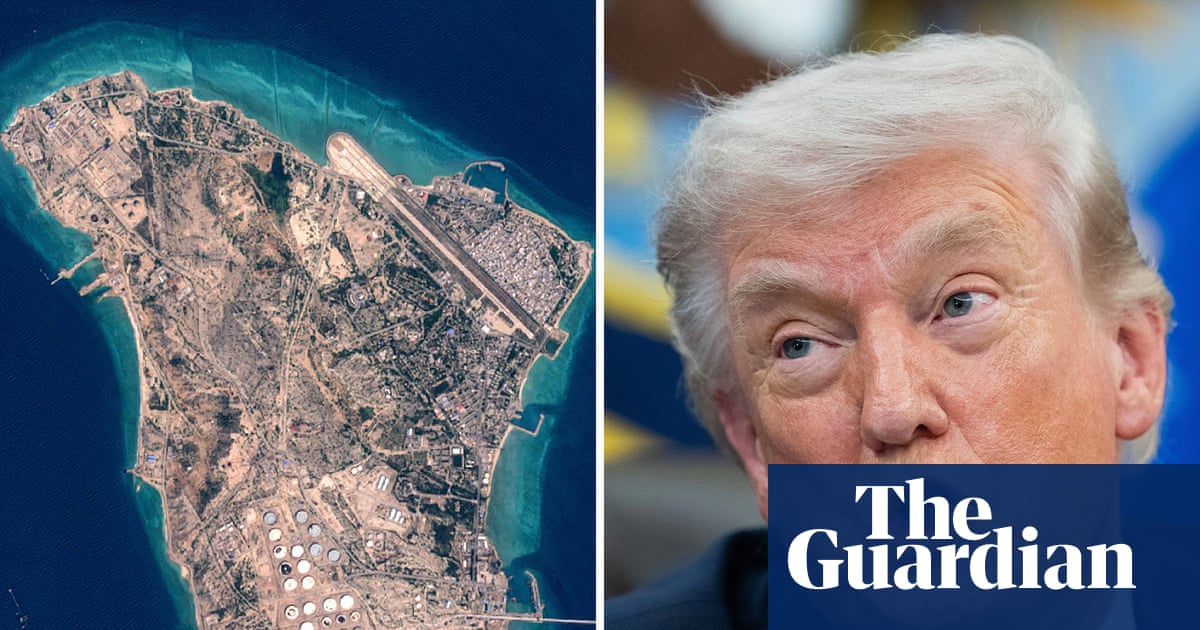
Trump’s public call to seize Kharg Island and “take the oil in Iran” targets the hub that handles roughly 90% of Iran’s oil exports amid attacks including a loaded crude tanker at Dubai and Iran’s effective blockade of the Strait of Hormuz. Analysts warn such a move could push oil prices to $200–$300/barrel and trigger massive, multi-year disruptions to global energy supplies and the broader economy, while generating windfall profits for oil majors and prompting more US drilling. The rhetoric has already injected volatility into markets and materially raises geopolitical risk, implying a sustained risk-off environment for portfolios.
A tactical escalation-risk premium in Persian Gulf transit will behave like a financial circuit breaker: immediate (days–weeks) spot-price spikes and shipping/insurance cost shocks, followed by a measured supply response from US shale within 3–9 months. Mechanically, a 0.5–1.5 mb/d effective reduction in seaborne flows typically translates into a $20–60/bbl spot shock before demand elasticity and strategic stock releases bite; meanwhile freight and insurance costs can double in 48–72 hours, amplifying refining regional spreads.
Second-order winners are not just producers: tanker owners, specialty insurers and defense contractors capture asymmetric upside during kinetic phases, while refiners tied to secure feedstock corridors and LNG import terminals will see margin dispersion across regions. Conversely, large integrated majors face political/legal counterparty risk and slower marginal supply response relative to nimble US E&Ps, which can monetize price spikes fastest but are capital-constrained if the shock persists beyond a single-cycle (6–12 months).
Key catalysts to watch as potential reversers are coordinated SPR releases and rapid diplomatic guarantees (days–weeks), a sustained shale ramp (3–9 months), or demand destruction once transportation costs and consumer prices breach psychological thresholds (>$120/bbl Brent, 2–4 quarters). Tail outcomes remain binary: limited disruption normalizes within months; a protracted chokepoint or targeting of export infrastructure pushes systemic risk toward high-inflation/recession territory and forces structural capex repricing across energy and defense for years.
AI-powered research, real-time alerts, and portfolio analytics for institutional investors.
Request DemoOverall Sentiment
strongly negative
Sentiment Score
-0.75
Ticker Sentiment
