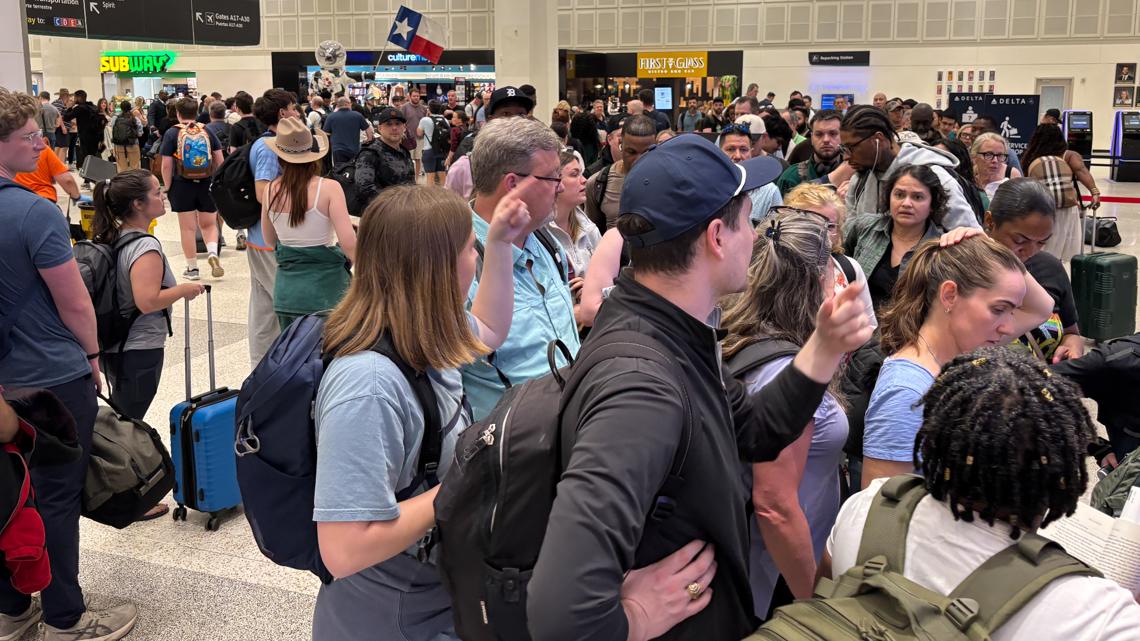
IAH experienced TSA wait times of four to five hours amid the partial federal government shutdown that began Feb. 14, with Mayor John Whitmire attributing delays to a federal staffing impasse and allocation decisions. Whitmire told The New York Times he believes the TSA’s National Deployment Office sent 40 of 50 extra officers to Hobby, worsening lines at IAH. The city says it cannot control federal agents and is preparing for a heavy event weekend (Houston Open, Astros opener, NCAA Sweet 16), warning similar multi-hour delays could recur if the shutdown continues.
The operational issue is less a one-off inconvenience and more an asymmetric capacity shock: federal resource allocation concentrated at one airport creates localized supply-demand mismatches across the metro air network, amplifying crew misconnects, gate/channel congestion and irregular operations. Even a small increase in irregular ops (5–10%) tends to cascade: delayed crews and aircraft reduce daily aircraft utilization, raising per-seat costs and spot recovery costs (hotel, rebooking, crew overtime) that hit margins within days and cash flow within the month.
Near-term catalysts are binary and short-dated. A quick federal redeployment or targeted contingency (contract screeners, voluntary overtime) can normalize flows in days and reverse price moves; conversely, a prolonged impasse through a high-traffic weekend or a holiday period would flip this into a revenue shock lasting weeks as cancellations and reputational effects depress bookings. Over months, repeated episodes raise structural risks: corporate travel policy shifts, modal substitution for short hops, and greater airline incentive spend to retain passengers.
Winners and losers extend beyond headline carriers. Airlines with flexible point-to-point networks and bases at the less-impacted field can capture exchange traffic and incremental market share, while hub-dependent carriers face outsized disruption costs. Ancillary ecosystems (parking, ground transport, on-site retail) suffer transient revenue declines but recover quickly if the episode is acute — however, if these events recur, concessions and parking operators face measurable multi-quarter revenue erosion and contracting pressure from airports revising concession terms.
AI-powered research, real-time alerts, and portfolio analytics for institutional investors.
Request DemoOverall Sentiment
mildly negative
Sentiment Score
-0.25
Ticker Sentiment
