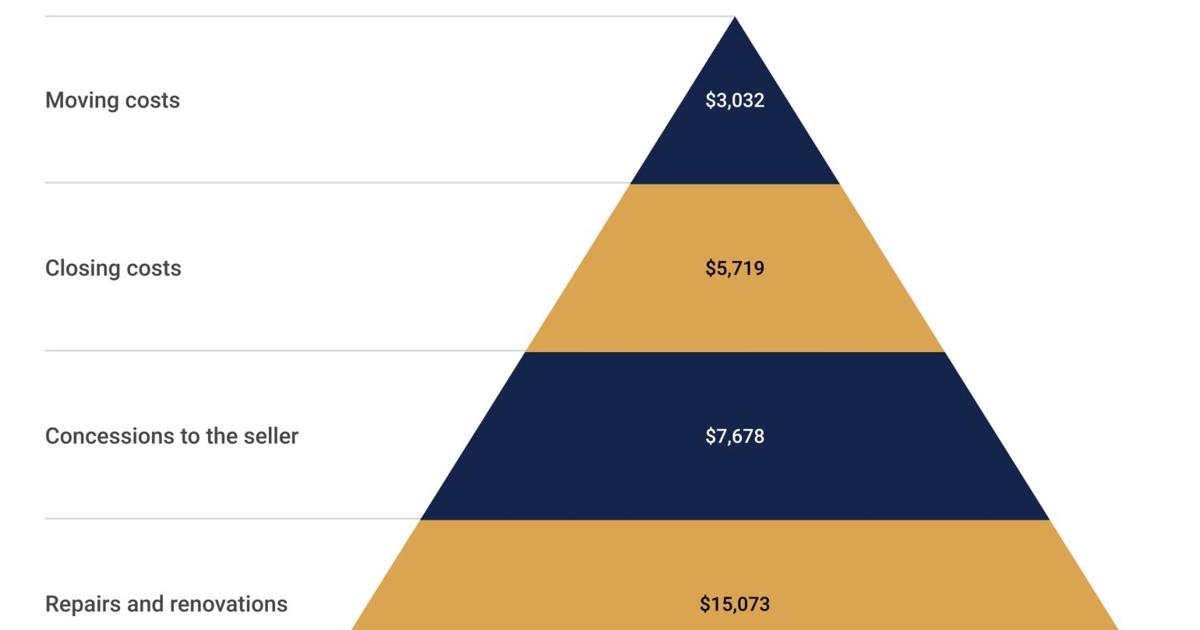
Recent buyers spent an average $31,502 on home-buying expenses beyond the down payment vs $8,083 expected (≈4x), including $15,073 on first-year repairs, $7,678 in seller concessions, $5,719 closing costs and $3,032 moving costs. If buyer-paid agent commission at 2.82% is included (~$15,058), total extra costs rise to ~$46,560. The purchase strained finances: 32% cut discretionary spending, 26% depleted savings, 18% took on debt, and 75% reported significant financial impact within the first year; first-time buyers fared worse, paying ~30% more in additional expenses ($36,460 vs $28,260) and exceeding budgets at higher rates (61% vs 44%).
Buyers entering homeownership with stretched balance sheets are reallocating spending toward maintenance and short-term liquidity, which re-routes demand away from premium discretionary categories toward value and DIY channels. That shift is not neutral for supply chains: more frequent small-ticket purchases (paint, flooring, fixtures) benefits scaling national big-box distributors and private-label SKUs while reducing order volatility for specialty contractors and premium furniture makers. A parallel structural pressure is on transaction economics: upward pressure on who pays for intermediation (agent commissions, closing services) accelerates migration to fee-disaggregated, tech-enabled brokerages and closing fintechs that can automate or bundle ancillary services. Sellers and platforms that internalize or standardize those costs will win market share from traditional brokerages and fragmented local service providers over a 12–36 month horizon. Key tail risks are straightforward: a housing price correction or faster-for-longer rate shock would reverse repair-driven spend and raise delinquencies among recently stretched buyers, compressing revenues across purchase-dependent servicers and retailers. Conversely, regulatory action or a high-profile legal challenge to commission practices would materially accelerate market share gains for tech-enabled agents and fee-for-service models within 6–18 months.
AI-powered research, real-time alerts, and portfolio analytics for institutional investors.
Overall Sentiment
mildly negative
Sentiment Score
-0.15
