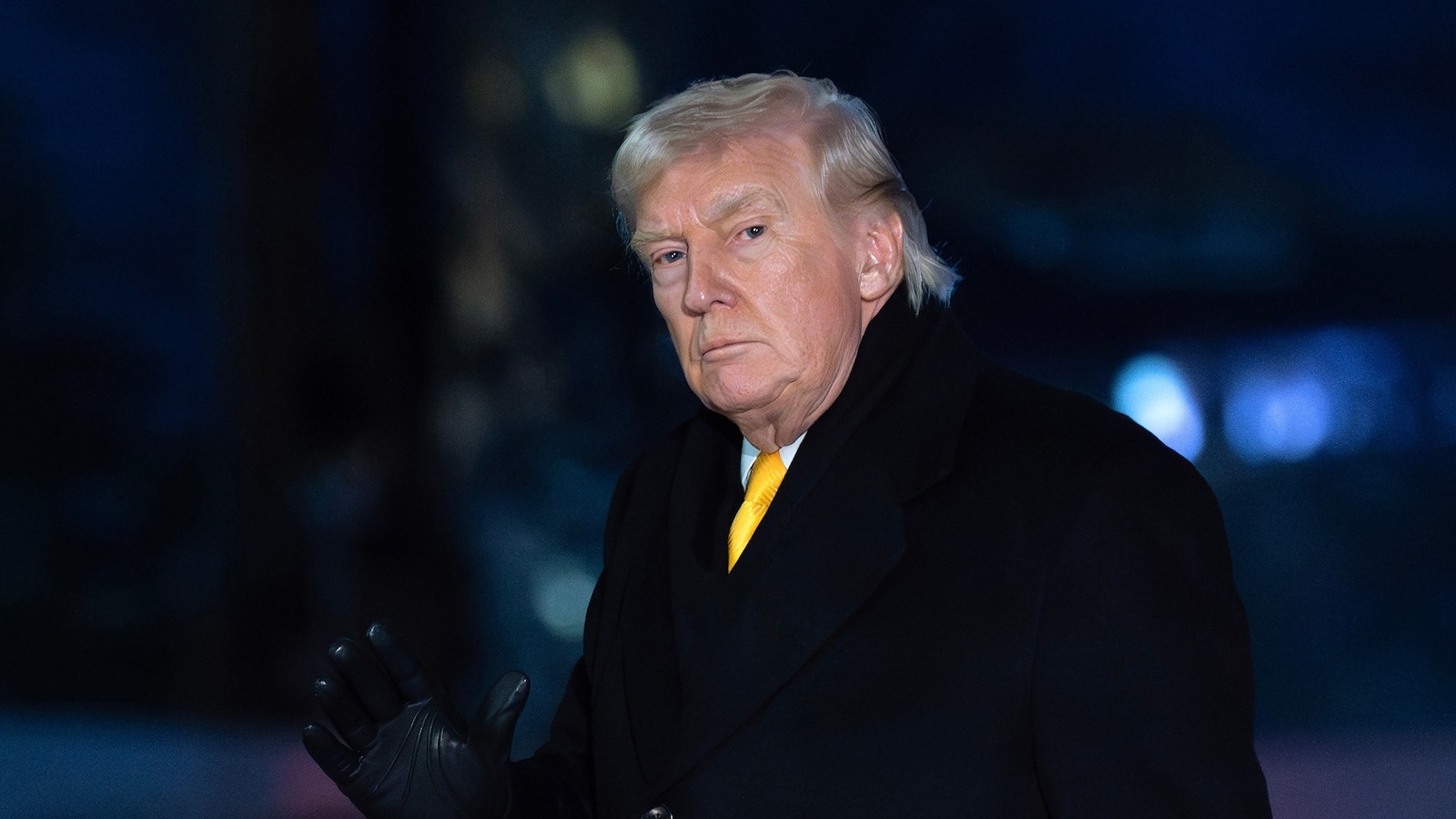
President Trump has invited only Republican governors to the White House portion of the National Governors Association winter meeting, breaking a longstanding bipartisan tradition and excluding Democratic governors including NGA Vice Chair Wes Moore and Jared Polis from both the session and, in Polis and Moore’s cases, the bipartisan dinner. The White House says Democrats were invited to a separate dinner and defends the President’s discretion over guest lists; critics and the NGA say the move politicizes federal-state collaboration and drew public rebukes including accusations of a racial undertone from Moore. The episode underscores heightened partisan tensions around federal engagement with state leaders and possible reputational and governance frictions, though it has minimal direct market implications.
Market structure: This is primarily a political, not macroeconomic, shock — winners are firms and contractors tied to Republican-governed states and short-duration federal cash managers; losers are Democratic-state muni credits (MD, CO) and regional banks concentrated there. Expect modest muni/Treasury spread dispersion: +10–30 bps widening for affected states over 1–3 months if cooperation delays occur; pricing power shifts are localized, not national.
Risk assessment: Tail risks include reciprocal state-level boycotts, litigation over federal-state coordination, or targeted withholding of federal grants; probability 5–15% but could cause 100–200 bps muni spread moves and regional deposit flight if sustained. Immediate: headlines-driven volatility (days); short-term (weeks/months): localized muni underperformance and outpatient grant delays; long-term (quarters): entrenched federal-state friction could rerate political-risk premia in state debt.
Trade implications: Tactical defensive posture favored — shorten duration to hedge headline risk and buy asymmetric downside protection on equities ahead of event-driven volatility. Reallocate small muni exposure into Treasuries/IG for 3-month windows, and consider concentrated longs in federal-contracting names with exposure to GOP states for 6–12 months.
Contrarian angles: Consensus will treat this as noise; underappreciated is the operational risk of delayed grant matches and procurement timing that can shave 1–3% off quarterly revenue for small/mid-cap contractors in affected states. Historical parallels (state-federal standoffs 2017–2019) show short-lived market moves but persistent cross-sectional dispersion that savvy relative-value trades can capture.
AI-powered research, real-time alerts, and portfolio analytics for institutional investors.
Request DemoOverall Sentiment
neutral
Sentiment Score
-0.05
