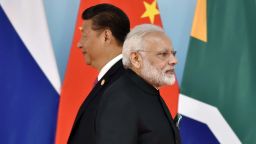
Chinese President Xi Jinping and Indian Prime Minister Narendra Modi met, signaling a strategic rapprochement driven by shared US tariffs and Western scrutiny over their ties with Russia. This meeting, amidst new US tariffs on Indian exports linked to Russian oil purchases, underscores India's pivot toward China and Russia, potentially reshaping geopolitical alignments and global energy trade flows, evidenced by Chinese refineries now absorbing Russian crude previously destined for India.
A significant geopolitical realignment is underway, signaled by the meeting between China’s Xi Jinping and India’s Narendra Modi, which marks a strategic rapprochement driven by shared economic pressures. The primary catalyst is the imposition of steep US tariffs—an initial 25% followed by an additional 25%—on Indian goods due to its purchases of Russian oil. This has strained Washington-New Delhi relations and is pushing India towards the China-Russia-led Shanghai Cooperation Organization (SCO). While the meeting produced a stated agreement on "border management" and follows other de-escalation measures like restarting direct flights, significant underlying friction from the deadly 2020 border conflict and persistent mistrust remains, justifying the "mixed" and "uncertain" sentiment signals. The most immediate market consequence is a material shift in global energy trade; the article explicitly reports that Chinese refineries are now absorbing Russian crude shipments previously destined for India, whose demand slipped following the US tariffs. This dynamic suggests US trade policy is inadvertently strengthening the Sino-Indian economic relationship, with direct consequences for energy supply chains.
AI-powered research, real-time alerts, and portfolio analytics for institutional investors.
Overall Sentiment
mixed
Sentiment Score
0.15
Ticker Sentiment
