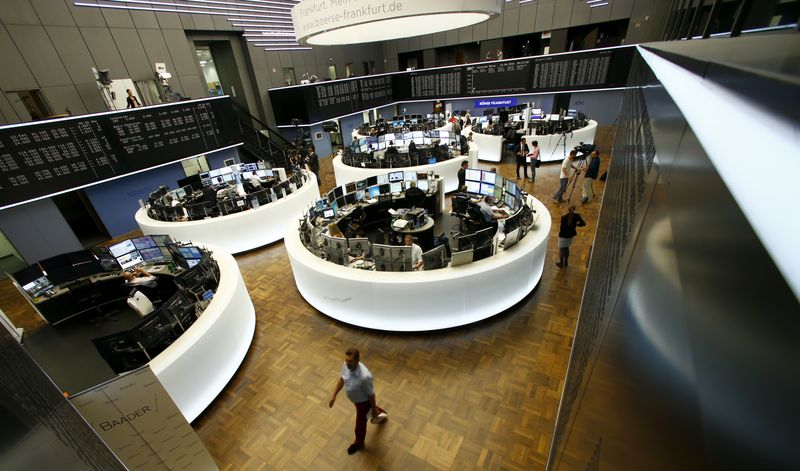
Oil surged above $115/barrel after Houthi attacks on Israel, with Brent futures reported up ~3.0% intraday (quoted $108.55/bbl at 03:09 ET in the article). The conflict widened as US Marines deployed and reports of potential US strikes/ground plans for Iran raised supply-disruption risk, with analysts warning a Bab al-Mandab closure would dramatically amplify a global shipping crisis. European stocks were mixed at the open (Stoxx 600 flat; DAX -0.2%; FTSE 100 +0.2%) while bond yields ticked higher, increasing inflation and central-bank rate concerns for investors.
The immediate transmission mechanism is not only higher energy P&L for final consumers but a calibrated transfer to logistics and capital goods: sustained crude volatility will raise bunker and jet fuel costs by an estimated 20–30% within 4–8 weeks, which typically translates into a 3–6% hit to airline CASM and a 5–12% rise in containerized freight rates once chokepoint insurance premia are repriced. That wedge between commodity revenue and distribution costs is a multi-quarter shock that permanently re-rates short-cycle operators (airlines, parcel carriers, container shippers) while boosting free cash flow for upstream producers and pipeline/tolling businesses.
Second-order effects will determine policy reaction speed. If the oil shock persists >3 months, we should expect real yields to move up as CPI-forward breakevens re-anchor higher, squeezing duration-sensitive equities and catalyzing EM capital outflows; if the shock is contained inside 6–8 weeks by either diplomatic de-escalation or targeted SPR releases, the financial tightening will be milder and commodity-sensitive rallies will roll over. Watch shipping insurance & charter markets as a real-time barometer — a 15–30% jump in time-charter rates historically precedes material margin compression for global trade-exposed names within 30–60 days.
On positioning, favor convex optionality into producers with low near-term capex (they convert price to FCF quickly) and short-duration tactical hedges against transport demand destruction. Technology names tied to secular AI demand (SMCI, APP) are resilient structurally but vulnerable tactically to a risk-off draw triggered by a pronounced rise in real yields; treat them as buy-on-weakness longer-term while funding positions from cyclicals that would underperform if the conflict broadens.
AI-powered research, real-time alerts, and portfolio analytics for institutional investors.
Request DemoOverall Sentiment
strongly negative
Sentiment Score
-0.60
Ticker Sentiment
