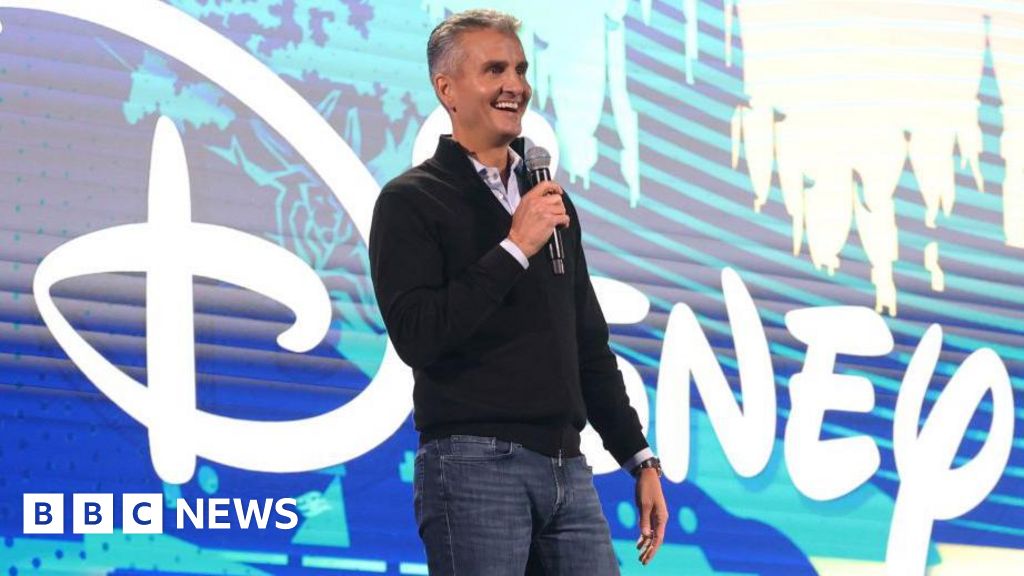
Disney has named Josh D'Amaro, a 28‑year company veteran and chairman of Disney Experiences, as CEO effective 18 March; he oversees 12 theme parks, 54 resorts, 185,000 employees and a division that generated $36bn in revenue last year. D'Amaro will receive a $2.5m base salary, at least $26.3m in equity annually and a $9.7m bonus for the year; shares dipped ~1% on the news. The appointment signals a tilt toward the reliably profitable parks business as Disney navigates streaming losses, political headwinds and investor frustration, and analysts warn that content execution remains critical to sustaining the company's valuation.
Market structure: The appointment of Josh D'Amaro crystallizes a tilt toward Disney's highest-margin, most reliable cash generator — Experiences ($36bn revenue, 185k employees). Short-term winners: park suppliers (contractors, IP licensors), cruise operators (CCL, RCL) and travel/leisure stocks; losers: high-leverage content vendors and segments exposed to linear advertising and streaming margins. Cross-asset: expect modest equity volatility in DIS (+/-5-10% moves), small widening in Disney credit spreads if content risks surface, and limited FX impact; fuel costs remain the main commodity exposure for cruises.
Risk assessment: Tail risks include a political/regulatory escalation (state-level sanctions or content targeting) or a content crisis causing >5M subscriber bleed and a $1–3bn EBITDA hit in 12–24 months. Immediate (days): muted equity reaction; short-term (weeks–months): governance and messaging execution risk around March 18 handover and the summer parks season; long-term (12–36 months): outcome depends on whether IP/content investment is deprioritized. Hidden dependencies: parks' earnings rely on a steady pipeline of franchise content and favorable local/regulatory relations; labor or supply-chain disruptions are second-order risks.
Trade implications: Tactical: establish a 2–3% long position in DIS equity with a 12-month horizon targeting +15–25% upside if free cash flow stabilizes, use a 15% stop-loss. Hedge via 0.5–1% notional 3–6 month ATM put protection or buy a 9-month DIS call spread to lever expected upside while capping premium. Pair trade: long DIS (2%) / short NFLX (1%) to express park-led resilience vs pure-play streaming secular pressure. Rotate 2–4% from pure-media names into Travel & Leisure (CCL, RCL) ahead of summer demand; enter within 2–4 weeks and re-evaluate after May quarter results.
Contrarian angles: The market may underweight operational upside from a parks-first CEO — conservative estimates suggest parks could add $1–3bn incremental EBITDA over 12–24 months through price mix, capacity and F&B/merchandising improvements. Conversely, consensus may be underestimating political risk to ESPN and content, which could depress valuation multiples if ad/sports rights revenues fall >5% year-over-year. Historical parallel: Chapek's parks-to-CEO move failed under pandemic shocks; absent a systemic shock this time the odds favor operational execution, creating a potential underpriced asymmetric upside.
AI-powered research, real-time alerts, and portfolio analytics for institutional investors.
Request DemoOverall Sentiment
mixed
Sentiment Score
-0.05
Ticker Sentiment
