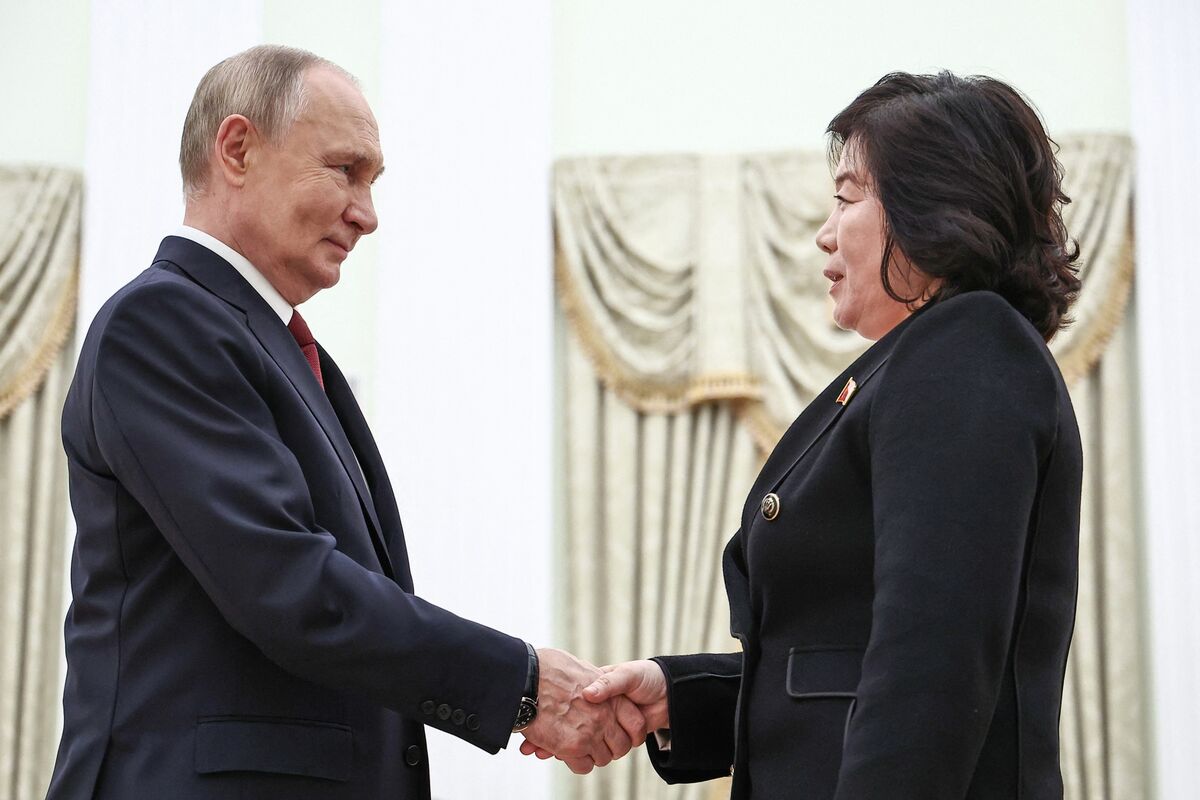
Russian President Vladimir Putin met with North Korea's Foreign Minister Choe Son Hui in Moscow, confirming the continued deepening of military cooperation between the two nations. Putin stated that bilateral relations are progressing "as planned," a development that underscores evolving geopolitical alignments and could have implications for international security dynamics and existing sanctions regimes.
Russian President Vladimir Putin's recent meeting with North Korean Foreign Minister Choe Son Hui signals a continued deepening of military cooperation between the two nations. Putin's statement that relations are "proceeding as planned" underscores a deliberate and strategic alignment. This development carries a moderately negative sentiment score of -0.4, indicating market apprehension regarding geopolitical stability.
The strengthening ties, particularly in military aspects, suggest evolving geopolitical alignments that could challenge existing international security frameworks and sanctions regimes. With a market impact score of 0.55, this event is perceived to have a noticeable, albeit not severe, influence on global markets. The primary themes identified are Geopolitics & War and Infrastructure & Defense.
While no specific tickers were identified as directly impacted, the broader implications for defense spending, commodity markets, and supply chains in regions affected by geopolitical tensions warrant attention. This strategic partnership could lead to increased volatility in sectors sensitive to international relations and defense policy.
AI-powered research, real-time alerts, and portfolio analytics for institutional investors.
Request DemoOverall Sentiment
moderately negative
Sentiment Score
-0.40
