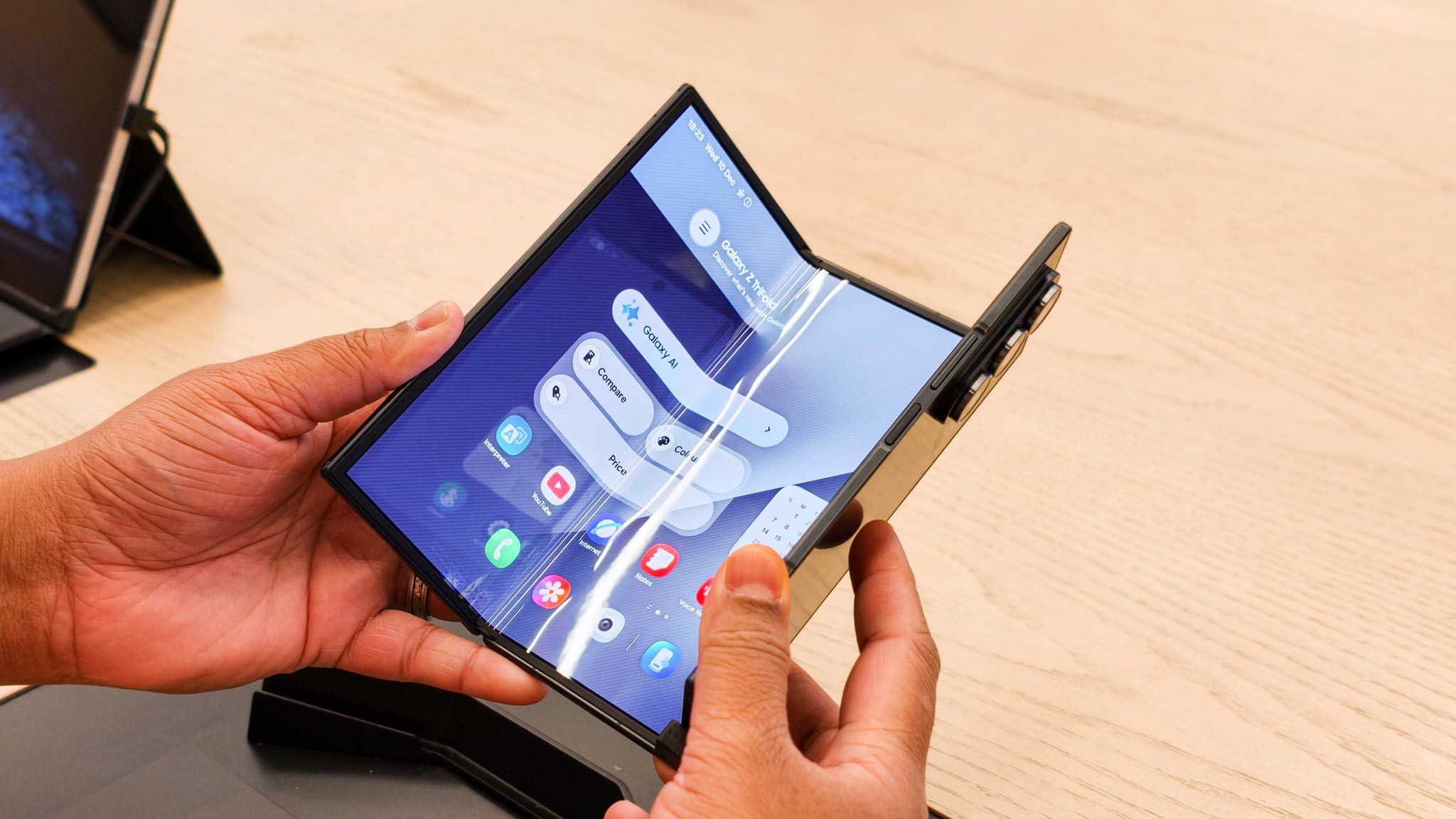
Smartphone makers pushed form-factor and AI innovation in 2025 — Samsung launched the Galaxy Z Trifold (Dec. 1) and released the Galaxy XR headset (Oct.), while Google, Meta and others baked advanced generative AI into devices and XR products. Ultra‑slim models such as the Galaxy S25 Edge (5.8 mm) and iPhone Air (5.6 mm) underperformed, reportedly prompting Samsung to sunset the Edge line. Concurrently, a patchwork of U.S. tariffs (initially 10% then 20% on China, 25% on Canada/Mexico, reports of spikes up to 145%, and a 25% smartphone tariff before temporary exemptions) created supply‑chain and pricing uncertainty, spurring actions like Samsung’s reported S25 production ramp and OnePlus raising Watch 3 prices. These developments boost long‑term device monetization and platform opportunities but introduce near‑term margin and demand risk tied to trade policy and uneven consumer uptake.
Market Structure: AI and XR becoming core features shift value to software-anchored platforms (GOOGL/GOOG, META) and to component suppliers for sensors/optics; handset OEMs with flexible form-factor roadmaps (Samsung, Android partners) gain share at the expense of single-product incumbents that fail to pivot. Tariff-driven input-cost volatility increases pricing power for vertically integrated firms and those with domestic fabs; a sustained 10–25% tariff regime would compress gross margins for AAPL-like OEMs by an estimated 200–400 bps if not offset by price increases.
Risk Assessment: Tail risks include abrupt tariff re-escalation (>50% effective duties) or an AI model safety/regulatory crackdown that reduces monetization; both could knock 10–30% off consensus 12-month cash flow for platform ad revenues. Immediate (days) risk is sentiment volatility around trade headlines; short-term (weeks–months) is shipment/supply confusion; long-term (quarters–years) is structural adoption of XR/tri-folds and AI services altering ARPU mix. Hidden dependencies: app ecosystem lock-in (Android optimization for tri-folds) and key supplier concentration (optics, memory) create single-point operational risk.
Trade Implications: Favor long GOOGL and META exposure to AI/XR secular adoption; favor selective short or underweight AAPL if tariffs or execution on new form-factors disappoint. Use options to express asymmetric views: buy 9–18 month LEAP calls on GOOGL/META and buy 3–6 month puts on AAPL as tariff re-pricing insurance; hedge equity-long tech exposure with 2–5% allocation to 10Y Treasury duration or inflation-protected notes if tariffs spike.
Contrarian Angles: Consensus assumes smooth transition to foldables/XR—missed risk is slower consumer upgrade cycles due to higher device prices from tariffs and trading down to mid-range 5G/AI phones; if tariffs normalize or subsidies appear, AAPL downside could be overdone and become a tactical buy. Historical parallel: 2010s tablet hype benefitted ecosystems (apps, services) more than device OEMs; this suggests platform players (GOOGL, META) will capture disproportionate long-term value even if hardware sales fluctuate.
AI-powered research, real-time alerts, and portfolio analytics for institutional investors.
Request DemoOverall Sentiment
mixed
Sentiment Score
0.05
Ticker Sentiment
